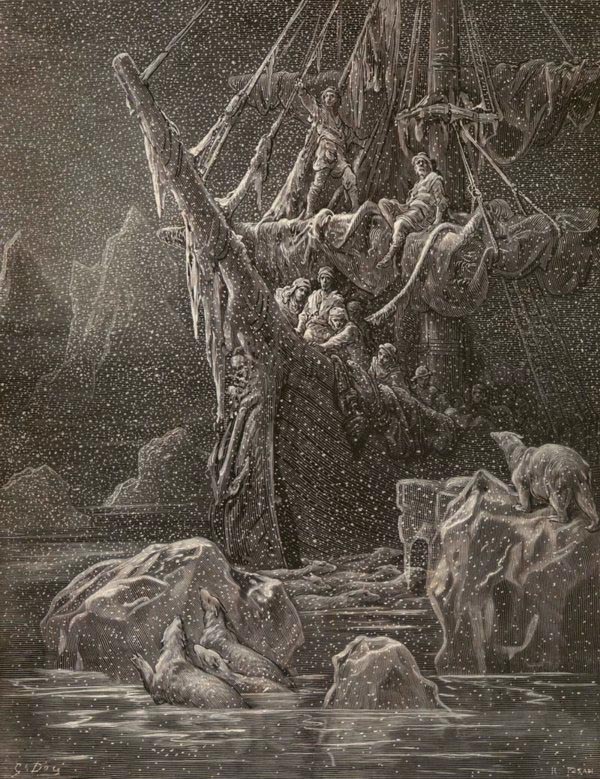
Writing is a journey, both imaginary and physical. My first book took me to the Arctic to 'catch the colours' of the Northern Lights. Then I hunkered down to catch the wind-blown voices of polar explorers on Shackleton's 1914-17 Endurance expedition. More recently I'm obsessed by space: the race, the rockets, the final frontier.

Hear a BBC Radio Leicester interview about my space poetry at: http://www.bbc.co.uk/programmes/p03wfpyp
Explore my digital narrrative PHILAE'S BOOK OF HOURS, published by the European Space Agency, at:
https://rosetta-art-tribute.tumblr.com/post/144241709712/siobhan-logan-philaes-book-of-hours

My prose-poetry collections FIREBRIDGE TO SKYSHORE
and MAD, HOPELESS & POSSIBLE are both published by Original Plus Press at:
http://thesamsmith.webs.com/originalpluschapbooks.htm

Contact me for signed copies or bookings at:
https://twitter.com/siobsi

Visit the writers' development service I co-run at: https://www.facebook.com/TheWritersShed/


About Me

My photo
Leicester, East Midlands
As a storyteller, my work crosses boundaries of myth, science, history and spoken word. It has been presented in the British Science Museum, Ledbury Poetry Festival, National Space Centre and the European Space Agency website. In 2014 I ran a digital residency on WW1 for 14-18NOW and Writing East Midlands. I teach Creative Writing at De Montfort University and have experience of leading school events, workshop tuition and mentoring. In addition, I co-run The Writers' Shed, a service for writers, at: https://www.facebook.com/TheWritersShed/

Wednesday, 26 March 2014

Adventures, Authors & Workshops

There's been a lot of discussion about the merits of HE Creative Writing courses recently but I want to raise a cheer for WORKSHOPS. I have much enjoyed both leading and participating in such events and they have been vital to my development as a writer. With this in mind, my writers' group, LeicesterWriters' Club, run workshops several times a year for members. We have just had one such Day Out and I came away feeling happily jiggered, with all my writing muscles toned and ready for the long-distance running that is a writing career. In a packed weekend, we covered how to assemble and pitch poetry collections, generate narratives from random prompts, and manipulate viewpoint. My own offering was a session on writing reviews as I've been doing some for this blog.

with thanks to Lindsay Waller-Wilkinson

Leading a workshop is always a good way to crystallise your own understanding of a genre or technique. A writer never stops learning, especially when teaching. Back in October 2013, I ran a workshop for adults on Voicing Your Writing as part of the Everybody'sReading literature festival. Participants ranged from newbie writers to published authors but all suffered from 'public-speaking' nerves. You never know what will click most with individuals or different groups but we did a bit of everything. Over a flapjack-fuelled hour, we assembled body-words, hummed songs, warmed-up throats & mouths, practised abdominal breathing and throwing our voices and explored the mysteries of winning over an audience. The latter proved to be the most appreciated element for my workshopees. One writer, a seasoned ex-teacher, said she always expected an audience to throw things at her. Happily, she is now immersed in a popular library speaking tour promoting her first novel. Another emerging poet has gained the courage to run the gamut of Leicester's lively open-mic scene since the workshop. My tip was simple - 'remember audiences are always your best friend because they want you to enjoy entertaining them.'

With children, I find the special pleasure is sharing my enthusiasm for storytelling in whatever form. Some years back, I was invited to perform my Northern Lights poetry to an assemblyhall full of 7-9 year olds. Since my poetry is for adults and quite complex, I wasn't sure how this would work. But they seemed genuinely excited and fully engaged with the performance. After a lively interactive session of Arctic warm-ups, reindeer quizzes and football chants, I then announced a workshop on story-writing. 'Oh noooo - not stories!' groaned a group of boys which quite shocked me. Of course, in practice, it wasn't stories they hated but writing which seemed the Devil's Work to them. With some skilled teacher guidance however, they came up with wonderful narratives in response to the question - 'Where does your flying reindeer take you?' To a World Cup Final on Mars - which is made of chocolate apparently. With an abundance of imagination and curiosity, these Reluctant Writers showed they wanted adventures not endless assessment ... but that's another story.


I also want these kids to feel that creative writing or storytelling is not the exclusive domain of adults, specialists or author-geniuses. The craft of narrative or verse can be taught. For myself, there's no question that attending writing classes have sharpened my techniques and stretched the flexibility of my writing voice. I love the throw-away, no-pressure, playfulness of workshops just as much as the Holmfield kids did. Over the years, I have learned how to cast off poetry conceptions with John Gallas, grasp poetry as show-not-tell-business with Liz Lochead, understand the function of line-breaks with Mimi Khalvati, plumb the power of taboos with John Siddique, sense out the musicality of poetry with Jean Binta Breeze and explore the nature of our creativity with Mario Petrucci. Each of these experienced practitioners has enriched my writing practice and I look forward to many more such encounters in the special environment that is the workshop.

Friday, 21 March 2014

Hyper Texts & Applique Astronauts

As I prepare for a weekend of workshops with Leicester Writers' Club, I'm still enjoying the harvest from last Saturday's publishing fair - States of Independence. This wonderful event is organised very year by the team at DMU's Creative Writing Department and is a highlight in the packed cultural calendar of Leicester and the East Midlands. Indeed the dozens of indie publishers came from far and wide and the rooms of the Clephan Building were thrumming with free workshops, book launches, panel discussions and readings. That's if you could tear youself away from corridors lined with bookstalls. The one laden with luscious-looking poetry chapbooks was especially seductive - how often do you get to browse such a range of contemporary poets and chat to the editors? And while you were burning the plastic and amassing a rucksack of new purchases, you were also greeting new and old writer friends because everybody was there ...


I particularly enjoyed book launches by Margaret Penfold - for her marvellous novel Patsy set in the British Mandate of Palestine - and Caroline Cook - for her chapbook Primer, an exquisitely packaged volume of poetry by Soundswrite Press.  A panel discussion on Digital Poetry was quite mind-blowing on new possibilities for poetry as an art form blended with e-technology. Questions like: can the hyper-text become the text? do we need a fixed entry/exit point into a poem? can the text play simultaneously with other aural/visual/ tactile media? is the 'reader' the 'performer' of the text in the interactive world of e-communication? I have no idea of the answers to these questions. But just as the printing press transformed our approaches to narrative and invented the novel - so I do think we will reach a point where we stop just 'loading up' poetry texts onto the computer and pretending it's a page - and begin to create in new ways that the screen ennables.

And as for the tottering pile of new books I brought back, the first I reached for was an Oystercatcher Press chapbook by Lucy Sheerman: Rarefied (falling without landing). I was inevitably drawn in by the beautiful image of an astronaut who seems to have been stitched out of applique. It turns out to be inspired by a documentary about the Apollo wives, who were not only trapped in a media circus throughout the Apollo years but who subseqently suffered a spiralling rate of divorce. I remember watching that progamme and thinking 'someone will write poems about those wives.' The dozen poems in this sequence are haunting, lyrical, witty, sad, mysterious and - spaced out. Distances open between their ten lines. Separation ruptures. Loss leaks out. I especially liked her referencing of the myth of a spellbound Theseus abandoning Ariadne on an island after their love- affair:

'... she finds him gone again.
... She just looks upon the moon and the stars,
gifts he gave to the dark and empty skies.
Incongruous as rain in the desert.'

I am sure I will be returning to this chapbook, even as my own space obsession grows. And my reading will be deepened by this interview with the poet on her experience of writing it.

Monday, 24 February 2014

My Writing Process - the Blog Tour

I was delighted to be invited to join in the 'My Writing Process Blog Tour', having always been fascinated to hear how other writers go about their business. My lovely Leicester poet friend Jayne Stanton asked me to follow her in the chain.  You should check out Jayne's posting but here is my own take on the 4 basic questions asked of writers about their 'process':


1) What am I working on?

A collection of poems about the Space Race and the rocketeers who made it happen. Tentative title: Desert Flowers by Moon-fire - The Men Who Raced to Space. Of course, that's really two titles - because I want this book to straddle the poetry and non-fiction divide, as my two previous books did. Having completed a sequence of 32 poems, I'm now working on some prose essays to sit alongside the poetry. My notion is that this is the first of 3 books because I'm itching to get out into space with the astronauts next - and then the Voyager space probe now travelling beyond our solar system. Journeys feature heavily in my work so far from indigenous peoples of the Arctic to Edwardian polar explorers, all navigating extreme landscapes. So it seemed natural to move out into that ultimate wilderness of space ...
 

2) How does my work differ from others of its genre?

Well, if my main genre is poetry, mixing it with non-fiction seems unusual. Fortunately, my editor at OriginalPlus, SamSmith, is a man of many genres himself. In my first book Firebridgeto Skyshore: A Northern Lights Journey, he enabled me to combine lyric poems with travelogues, essays about mythology and science and woodcut illustrations by my sister. My Northern Lights book appealed to aurora enthusiasts as much as poetry lovers and feedback showed the mix of material was appreciated. I'd like my current book to be picked up by space geeks as well as those who want their poetry to transport them in time and place ...
 
 
3) Why do I write what I do?
Some novelist friends asked me recently if I might return to writing fiction which is where I started. But I seem to be addicted to themed poetry collections, each relating an epic tale rooted in history, in 'fact' and biography, in geography and science. In the world of modern poetry, narrativeverse seems rather old-fashioned. But I like to write in sequences which offer a story arc as well as the 'intense moments' and 'micro-universes' of a lyricpoem. It's a challenge to let each poem breathe and not be overwhelmed by the narrative function. But poetry was once THE vehicle of choice for storytelling. Think of those fantastic story-poems by the Romantic poets - TheRime of the Ancient Mariner or Keats' Eve of St Agnes - or go right back to Beowulf or Dante's Inferno. It's the immediacy of voice, the rhythms of the bard 'singing' the story, as well as the intricate patterning of metaphors across a large canvas that I enjoy.


4) How does your writing process work?

With poetry I found myself released from the 'work' of fictionalising into the accessibility of the 'real'. I love the excavation of the historical, the scientific, the biographical - the total immersion in a specific time and place. On reading Hilary Mantel's WolfHall, I realised I too am trying for that richly textured world, the smells and sounds of a culture going about its business. In that 'other country' of the past, I find my imagination breathes differently. So an initial wave of research comes first - books, films, SpaceCentre visits or You-Tube clips. It's amazing what you stumble across on Google Images. I'm writing a poem about the Russian engineer Korolev's childhood - and I find photographs of a museum in his home-town where they've reconstructed his mother's house. These borrowed details become the movie set of my poem, now 'dressed' for action. A poem needs that 'right-there' quality.
After research, there follows a quite intense, rapid period of writing first drafts. I've picked out 'moments' in the story arc that I want to zoom in on, stretching from 1902 to 1977. It takes a few months to get 20 or so poems mapped out. I read them aloud at LeicesterWriters' Club; I need to 'hear' them with an audience of listeners. Then lots of editing. I find poems benefit from being 'left in the dark' like a tray of seedlings for many months. When I return I re-enter the world of the poem afresh and see that it's about something else or has to arrive at a different place. Here dissatisfaction is my best friend. I need to listen to it and stop settling for quick fixes; I need to worry at some of these poems like a dog. Others I need to woo, circle with sidelong glances. Editing is creative too. It takes me in at a deeper level of the excavation. Sometimes all I can see is the rim of the trench, the glint of a coin ...

More research follows - the beauty of the specific often illuminates a poem. I assemble a new palette of words, a semantic field bringing its distinctive music. Yesterday, researching sedan cars from the 30s, I found vintage car dealers onYou-Tube lovingly detailing the selling points of restored models: white-wall tyres, split wind-shields, headlamp buckets and 'suicide doors' now enter my language. Sometimes ready-made metaphors leap out at me. I came across an account of the Cuban Missile Crisis where Korolev's wife served up watermelon to his anxious men. That detail became my 'Martian Watermelon' poem. And that is how poetry can offer a path into history that is wholly different from non-fiction.


http://static.ddmcdn.com/gif/nasa-space-race-2.jpg


I also consider how one poem interacts with another elsewhere in the sequence. Recurring themes and imagery offer a wider textual cohesion that needs tweaking across the collection. Reviewing the story arc - I write new poems to fill in gaps. But by now, the poetry is nearly done and I am turning to prose and even ideas for illustrations. And I am beginning to enjoy the wholly different rhythms of writing non-fiction, the elasticity of this after the compressed music of poetry. Eighteen months on, I am still in the throes of an obsession and I am writing for people who are likewise passionately curious and who love how words sing even in the darkest of stories.
 
Watch this space for news of the 3 writers I've chosen to pick up the baton on this Blog Tour ... First up is  New Romantics 4 novelist Margaret Cullingford:


Margaret Cullingford, Mags to her friends, escaping the rumpus of a university department, decided to generate uproar she could control. She realized a long-term ambition to write fiction, and published her debut novel LastBite of the Cherry [eBook and paperback] in October 2012. Publication of her second novel, Twins of a Gazelle is imminent. Mags lives in Leicestershire with her long-suffering partner and their cat.


Sunday, 9 February 2014

FLTH - Guerillas in Love

'From Leicester to Hollywood' is a wry comedy about the urgent realities of independent film-making - and also a love story. In this Blue City we know about the power of stories. What with our king buried under the car park and our 'fairytale' football triumph in 2016. This film has also bided its time in post-production limbo. But with some nifty footwork by HIVE Films, it has come back stronger and with a special added ingredient. This mockumentary-with-charm now boasts a voice-over by Warwick Davis, a long-term fan of indie cinema. It's a perfect fit. A veteran of this genre, he brings exactly the faux-earnestness and genuine warmth needed.

Credit: http://www.bbc.co.uk/mediacentre/latestnews/2013/lifes-too-short-vid.html?lang=cy

This is a low-budget/ NO budget movie. Its story-within-a-story is an 'under-dog' narrative of guerrilla film-making. A down-at-heels director, (formerly a logistics manager) is persuaded by his charlatan producer to make a movie for the record-breaking low of £43 to get 'guaranteed PR'. In the real world, the support of Leicester's Phoenix cinema seems to have helped - the arts complex features often as a location in the movie - offering the right vibe for this 'from-the-ground-up' indie film. In places, it evokes fond memories of that bio-flick about the legendary B-movie director Ed Woods - such as inserting a snow scene into the film just because it happened to be snowing in Leicester that day - 'a backdrop' money couldn't buy' intones Davis' voice-over.

Credit: https://twitter.com/rodduncan
I enjoyed the pastiche/homage style of filming. The snow-scene is shot as a colour-tinted music video, camera circling our woolly-hatted heroine. Other episodes include an art-house love scene with heroine in red dress wading through a rape field ablaze with yellow. But the dominant style is that of shambling mockumentary realism, a little dog-eared and smoke-stained, shot in empty pub function-rooms and warehouse floors. Writer Rod Duncan has revealed that actors' improvisation was crucial to the film's naturalism. Sometimes his writerly bon mots needed to be cast aside in favour of a muttered-in-the-moment authenticity. But scenes always had their 'through-line' which the actors could hold onto when letting loose - as in the wonderfully expletive-strewn 'Not the Blue Ray' scene. So glad that scene makes it into the trailer.

The film-within-the-film is an 'epic romance' shot in Leicester's side streets and by-ways. Rhys Davies, the real RD, coaxed beautiful performances out of his actors. In the 'talking heads' documentary interviews, Olwyn Davies evinces a sweet fresh naturalism and James Murton totally nails a gently self-mocking portrait of an up-for-anything student actor who sheds clothes at the drop of a clapper-board. His performance is unself-conscious but deftly comic throughout, as understated as The Office's Tim. But a comedy needs its grotesques. Sylvana Maimone's Producer is deliberately stagey. A woman always performing herself, she could have stepped straight out of the PR-spun world of Twenty-Twelve. She also reminded me a tad of Frasier's agent Bibi, whose voracious amorality I always adored. A rather more tortured soul is the film's protagonist, the mock-Director played by Christopher J Herbert. He serves up the cringing realism of a character whose ambitions for his hand-crafted film are 'epic' but who cannot bear to be fixed by the camera's gaze himself, delivering his CU lines into his straggly face hair or faux-leather hat. Yet he carries the film by making the viewer care about his 'journey' from pitch to premiere.


Credit: http://hivemedia.co.uk/video-production-leicester-about/

Indeed the film has a lot of heart as well as hip indie wit. It conveys the underpaid, possibly never paid, passion of guerrilla film-making. And it even draws us into the fictional romance of the two 'leads', cast  because they have the vital 'chemistry' of  just-found-each-other lovers. In Duncan's clever script, their passion waxes and wanes in inverse order to the scripted romance. But the film creates a genuine lump-in-the-throat moment in a moving climactic scene between Olwyn Davies and James Murton. Although Duncan jokes about the script being mangled and tossed away in the editing room, in fact, the shaping of the story arc is one of the film's most satisfying elements. It is beautifully patterned, working through an elliptical orbit which perfectly counters the mockumentary's air of shambolic realism.

Can I also mention that this film was a 'crowd-funded' venture in which local people invest in home-grown film-makers and where the production calls in favours and conjures small-daily miracles to keep the cameras rolling? Suresh Dippy's suitably dour Editor literally eats, sleeps and lives on the mixing board in a 'borrowed' editing suite. It's a precarious business as this indie-comedy explores but HIVE productions have by now mastered their guerrilla art. FLTH more than re-pays the investment and offers a finely crafted indie gem that will tickle your funny bones and make you care not only about its lovers but the guerrillas behind the cameras. All we want to complete the story arc is a carpeted procession of director Rhys Davies, writer Rod Duncan and actor Warwick Davis to pick up the Oscar. What are the odds? 5000-1? Bring it on.

Friday, 25 January 2013

Five Voices Leicester


A city that boasts some 35 languages spoken in our streets deserves an on-line Gallery of  Writers to give voice to that clamour of stories and cultures. Grassroutes is a project hosted by the University of Leicester which 'is designed to foster local, national and international appreciation – as well as critical recognition - for the best of Leicestershire's writing.' They have sought out examples of 'transcultural writing from the 1980s to the present ...' and their website is well worth a look, featuring many faces familiar to me but so many discoveries too. It makes you realise how the city is positively buzzing with literary inspiration. We are fortunate to have a number publicly funded organisations that promote literature and writers and one of these, WritingEast Midlands, collaborated with Grassroutes on a commission which went to the talented AnitaSivakumaran.


The resulting poetry sequence of 'FiveVoices Leicester' are not so much dramatic monologues as poetic dialogues. I really enjoyed the strong sense of diverse Leicester voices - these poems have the wonderful immediacy of conversations overheard on a bus or in a queue. And Sivakumaran reveals that as a new arrival to the city, she would 'chat to the locals' and this gave her the idea for their form. My favourite poem is probably Auntie from the Nuffield Sauna.
 
On first reading I found the use of indirect as well as quoted speech a little confusing as to who was saying what. But it repays a second reading or better still reading aloud. One voice, that of the self-declared 'Auntie', rattles along, gathering up the poet's brief answers into her own torrent of conversation.

'Call me Auntie,' she says. 'Come sit down.'
She comes here every day. Keeps her fit.
Should she pour more water? I will?'

Sivakumaran has a great ear for the idioms of this kindly, bossy voice with its tag questions: 'I must be Gujerati no? No?' English phrasing with an Indian twist from a British Asian who's 'never been' to the subcontinent she speaks so much of. The listing conveys the older woman's curiosity and the barrage of questions with which she gently bullies her newly adopted 'niece':

My family, fortune, friends?
My height, weight, sun, moon and stars and their respective houses?
My expectations of matrimony?

There is a very winning humour here: 'she needs good girls in her family'. But more than that, the recurring lines about adding water to fire up the sauna deftly reveal an underlying theme:
'Closest she gets to tropical heat ...
Ooo baba, the heat is now roasting.
It must be like this all the time, no, over there?'
I found this quite haunting - a Leicester woman who apparently longs to connect to that lost 'homeland' by re-creating its tropical heat in an English sauna. It's a typical throwaway comment from a second or third-generation child of immigrants whose identity is still referenced by a faraway, never-visited place. Instead, place names and foodstuffs locate her cultural belonging: 'Eat ghar ka khana ... good for baby'.
As the 'Auntie' bustles about, ready to return 'to some cool English weather', I was left wondering about the implied relationship of the younger woman who sits quietly, towel-wrapped, in the background of the conversation. This poet's persona is somewhat reluctant ('Before I can back out') when she's snared in the intimate space of the sauna but something passes between them that goes beyond family credentials. And now I liked that Sivakumaran has held herself back in the dialogue and left that space for the reader to sense out the subtlety of this exchange.

Equally engaging are The Butcher on Queen's Road ('A good strong cleaver like this ... chops clean'), The Neighbour reclaiming her cat ( 'a bit of a stray myself') and two others poems that feature local writers reminiscing and aspiring to be part of a 'centre of the arts for the New England'. While you're at it, take a look on the Gallery page at Sivakumaran's powerful poem Citizens which particularly resonates after recent events in India. I cannot get over the image of a man in the street cupping his penis 'as if holding a chick'.

Sunday, 18 November 2012

Sea Lines


Some places just seep into the silt of your imagination ...


Friday 16th November 3pm Low Tide


Sea mists rolling in from a grey horizon - grey skies swallowing the town long before dusk. Dark colours on the beach - strands of wrack livid as purple-black bruises on the green boulders. Gulls squabbling in a cleft above. The shore eerie as a Susan Hill story, desolate even with other beachcombers strolling in the gloom. Far off at the sea's edge, a line of groynes seem a spooky gathering of figures, watchers stilled with their own grave purpose.


Saturday 17th 11am High Tide


The waters just turned, sea mud slathered onto shingle, the waders smacking shells on the pebbles. One gull repeatedly swooping up to drop a hapless mollusc from the air, to hear its crack.

When we return after lunch in unexpected sunshine, the same sound-scape rises of march warblers, sea cacklers, bird calls curling up to haunt the foreshore. We crunch over broken razor shells, the barnacled feeding grounds. Striped and punctured bootprints between the spiky Vs of claw tracks and tiny fingers of sand, casts poked out by the worms below.

I follow silvered rivulets looping and unfurling like yarn in the sand to run into pools of skywater, blue puddles. At the tide-line, we are mesmerised as ever by the sprawling ribs of a wrecked boat, a skeleton that might have been Viking wood or gun-boat metal but is now welded by sea-creatures into their own thing.

 
As we turn for the harbour, we curve back into the fortified lines of vivid green rocks, the shambles of the cliffs - shattered red and white stone. A thunderous blue is moving across the glittering Wash and we know how quick it changes Hunstanton's skies. Only minutes from this surf-boom lies our retreat, Cori House. Time for afternoon tea and complimentary cookies at our favourite B & B.

Any time of year, this place enchants. Lucky me - this weekend by the sea was my birthday treat.

Sunday, 23 September 2012

Lost in Space


Space Walk at National Space Centre
For a poet writing about space, what could be more exciting than a day at the National Space Centre? This year, I've swapped derring-do tales of polar exploits for the even more epic story of space travel. Leicester's spectacular museum is packed with real rockets, space suits, lunar samples and a wealth of information. Delivered in well-constructed bite-sized narratives, the displays are both fun and inspirational. Today, for instance, I'm vying with kids to climb inside the replica Mercury capsule and fiddle with the buttons. Or sit on a seat shaking with the simulated tremors of a launch lift-off. But I'm still waiting to talk Yuri Gagarin down from his lone orbit on the control room monitor. Hang in there Yuri!


Exhibitions in the Rocket Tower chimed perfectly with the current poem sequence I'm writing about rocket designers Werner von Braun and SergeiKorolev. There were even parts of von Braun's V-2rocket on display. The complex and often dark context of the Space Race is vividly outlined in a time-line on the walls but you can sit in a replica 60's living-room to listen to the historic lunar landing of 1969. I was particularly delighted to see the story also featured first edition copies of Jules Verne’s' 'Round the Moon' and HG Wells' 'War of the Worlds' - sci-fi classics that inspired a generation of rocket scientists. Fiction often anticipated and suggested features of design that later appeared in real rockets like the three or four stage structure.

In the same way, the Space Centre is very canny about engaging the imaginations of today's children by using the cultural icons of our own time. My husband was quite giddy at being greeted by costumed versions of Star Wars troopers, Dr. Who, Batman, Stargate SG-7 and numerous apes in overalls. Indeed burly blokes of a certain age were queuing alongside toddlers to be photographed with the Dark Lord - 'Cheers Darth!' Hats (and helmets) off to the cast of Movie Mania - the Space Centre's themed weekend, who kept hundreds entertained all day. In the Booster Café, children jostled Planet of the Apes extras to jump up and down under the rocket boosters that blasted off every 5 minutes. Genius!


I particularly admire how this museum keeps tots and space geeks simultaneously enthralled. In the Planetarium, CGI effects dazzled all while serious science about the CERN Particle Collider or astronomical imaging of the Big Bang were deftly explained. In front of a Martian landscape used for testing real probes, a huge interactive 'table' allows you to access up-to-date NASA podcasts on Curiosity’s current exploration of the Red Planet. This centre is at once a multi-layered theme park and a conduit direct into cutting-edge science.


Personally, I was totally space-hyped by the time I was dragged away. But thanks to a free Annual Pass, I'll be back soon. I don't remember the Space Centre being this cheap - only £13 for an adult's day ticket. And if you book in advance and tick the Gift Aid box, you get upgraded automatically to an Annual Pass. As I start work on my rocket poems, hanging out by the Soyuz spacecraft, the Thor-Able rocket and Vostok simulator will be invaluable. Meanwhile Gagarin is still orbiting patiently in the time-warp that is Level 2. 'Poyekhali Yuri!'