Writing is a journey, both imaginary and physical. My first book took me to the Arctic to 'catch the colours' of the Northern Lights. Then I hunkered down to catch the wind-blown voices of polar explorers on Shackleton's 1914-17 Endurance expedition. More recently I'm obsessed by space: the race, the rockets, the final frontier.

Hear a BBC Radio Leicester interview about my space poetry at: http://www.bbc.co.uk/programmes/p03wfpyp
Explore my digital narrrative PHILAE'S BOOK OF HOURS, published by the European Space Agency, at:
https://rosetta-art-tribute.tumblr.com/post/144241709712/siobhan-logan-philaes-book-of-hours

My prose-poetry collections FIREBRIDGE TO SKYSHORE
and MAD, HOPELESS & POSSIBLE are both published by Original Plus Press at:
http://thesamsmith.webs.com/originalpluschapbooks.htm

Contact me for signed copies or bookings at:
https://twitter.com/siobsi

Visit the writers' development service I co-run at: https://www.facebook.com/TheWritersShed/


About Me

My photo
Leicester, East Midlands
As a storyteller, my work crosses boundaries of myth, science, history and spoken word. It has been presented in the British Science Museum, Ledbury Poetry Festival, National Space Centre and the European Space Agency website. In 2014 I ran a digital residency on WW1 for 14-18NOW and Writing East Midlands. I teach Creative Writing at De Montfort University and have experience of leading school events, workshop tuition and mentoring. In addition, I co-run The Writers' Shed, a service for writers, at: https://www.facebook.com/TheWritersShed/

Tuesday, 2 January 2018

A Writers' New Year Workout

Okay, 'tis the season of lists and resolutions.  Let's limber up to answer the Call of this year's Writing Adventure. We're a sedentary bunch, us writers, so here's an 8-step workout to try from the comfort of your desk – or bed even. Pick a few exercises and don't sweat it.


    1. Warm-Up: Review 2017

    Feeling a bit sluggish post-Christmas? Sometimes it's a morale booster just to recognise the time and effort you've invested in your writing practice over the past year. If you don't already keep a running list of acceptances, successes, publications etc. it's a good habit to get into. However small or great, these are worth recording. Very handy when you have to put together a biography for a submission or if you find yourself applying for funding or a writing-related opportunity. Note the month and which publication or event you were involved in. And give yourself a pat on the back for getting your work out there.


         2.  Set Timer for 2018 


       First up, fish out that new calendar, (courtesy of Leicester Writes website), and plot out those key dates. East Midlanders like myself live in a region absolutely packed with writers' events. But your area will have its own highlights. In March 2018 alone, I've just pencilled in the WEM Writers Conference 2018 (3rd March), States of Independence Indie-publishers' fair (10th March) and Cultural Exchanges festival (26th Feb - 2nd March). Then there's monthly dates for LeicesterWriters' Showcase events, as well as Novel Exchanges, and Shindig and WORD for the poets amongst you. And don't forget the Writers' Shed programme of Saturday Masterclasses kicking off again in February 2018.

    1. Running on the Spot: Your Process

    Every writer does it differently – but YOUR PROCESS is the one that gets the job done for you. If someone was to interview you and ask you how your writing happens, what would you say? Do you make a date with your writing everyday for however long? (a very good tip a writing friend once gave me.) Is there a time of day that works best for you? Or is that determined by work routines, family commitments etc? Is there a place or ritual that gets you in the frame of mind to write? Maeve Binchy lights candles. Some people put on music. Others prefer the bustle of a busy café. Know your own process and nurture it. It's where the magic happens.


    1. Star Jumps: Your Brilliant Career

    Maybe you're already published and you're managing the expectations of editors, agents and readers, whilst staying true to your own interests and writing passions. Or maybe, your family and friends think of writing as your little hobby. If you've committed to a writing practice, take the time to consider where you want to go with it. Be your own coach. Jot down where you'd like to be with your writing in a year's time. And in 5 years' time? Start to set yourself some goals for the next few months and ease yourself in with smaller targets for January. 

    Talk to your writing friends about these goals - and if you don't have any, find some on-line or join local writing communities. I've benefited hugely this year from attending groups like Leicester Writers' Club, The Speculators and Poetry Stanza. Leicester Writes is an open friendly group that meets once a month in a city café and welcomes new writers for chat and networking. On-line, The Writers' Shed is happy to talk to you about your goals and how you can move towards them.


    1. Skipping: Current Writing Projects

    Take a good look at any current writing projects you're pursuing. What's working well, what are the stumbling blocks? Is there any research you need to do – whether on-line or visiting places or ordering new resources. If you're quite advanced with a project like a novel or screenplay or poetry chapbook, you might benefit from the input of other writers. See step 4 for writing communities. Consider working with an experienced mentor in your field. WEM has a scheme for writers to apply for or you can talk to people at The Writers'Shed about your goals and needs. The Writers' Shed also offers manuscript critiques for that book you're honing. At the same time, it's good to keep yourself open to potential new projects – jot down ideas that have been kicking around in your back-brain for a while.


    1. Forward Lunges: Up-skilling

    No writer has to do it all alone. Why re-invent the wheel when you can borrow the expertise of people who've been there already? One thing you can do to take your writing to the next level is invest in a course that addresses writing skills you're trying to improve. These could be one-day courses, weekend retreats or a longer course, such as:
    • Arvon Retreats have a good reputation. They offer tutored retreats for 4 or 6 days. Courses are also available. Look at who the tutors are first. They're not cheap but you can apply for a grant.
    • WEM – Writing School. This writing school has been running in Leicester for over 60 years with an excellent track record of supporting developing writers. It now runs courses taught by published professionals in Nottingham too. I'm teaching a 6 week course on 'Building Your Poetry Collection' from mid-Feb. 2018 onwards on Sat. mornings in Leicester. But there's something there for everybody whatever your genre. 
    • The Writers' Shed is a new service for writers, based both on-line and in the East Midlands. Pitched at writers who are wanting to take their work to the next level, we offer manuscript critiques, one-to-one mentoring and a series of Saturday masterclasses on key skills to build towards publication. There are also free on-line resources to dip into. Pop in and browse our shelves. 


    1. Dumb-bells & Resources

    Yes, your shelves are groaning but there's always room for one more essential writing guide or must-read book. If you appreciate the craft of modern short stories, I can recommend the sumptuous anthologies produced by Dahlia Publishing (who are also running the Leicester Short Story competition again this year.) On my own wish-list is a new 'How to be a Poet' handbook from Nine Arches Press editor Jane Commane and the inimitable Jo Bell. If you're wrestling with novel plotting or screenplays, I'd always recommend Robert McKee's 'Story' and a friend has lent me Christopher Vogler's classic study of  The Hero's Journey. 

    Of course, January is the month of overdrafts and tax returns. So this month, I'm also hoping to dip into on-line resources from authors including Niki Monaghan, Damien Walter and Rod Duncan. Duncan is offering free pod-casts on 'Selling Your Novel' covering everything from cover letters to synopses. Find links to these at The Writers' Shed. And don't forget, apart from the world wide web, there's your local library. I happen to know Leicester's Central Library has an excellent creative writing section. Use it while it's still there!


    1. Cool-Down with a Good Book.


    Well, that's the heavy lifting done. Now for that tottering pile of To Read books by the bed. Two favourites from 2017 I'd recommend are the gorgeous 'What We Thought We Knew' by Mahsuda Snaith and Jeanette Ng's delicious gothic fantasy 'Under the Pendulum Sun.' And I can't wait for a new Gas-Lit Empire novel from Rod Duncan, 'The Queenof All Crows', out this month. Why not get a bit of light exercise re-shuffling that pile and then curl up with a book you'd quite forgotten about? It's what the dark days of January were invented for. 

    Thursday, 19 October 2017

    What Publishers Want

    This morning I'm sifting through interviews with publishers and editors to see what gets them excited. Straight from the horses' mouth, as it were. And since that is a betting term, it's quite apt because everybody, whether publisher, author or reader, is taking a gamble on whether this book is going to prove a winner.

    Publishers are looking to sell books. We're talking large numbers of sales that bring in a healthy profit. They're panning the slush pile for story-gold. So far, so obvious. When it comes to your novel submission, publishers are inundated with potential books in a given genre, all written to a certain standard. What makes yours stand out from the crowd? To take a bet on backing your book, publishers want to know that readers are going to be excited by it, will be recommending it to their friends, will be coming back for more. So what are those elusive qualities that drive a runaway success for a novel? In listening to industry professionals, I'm finding certain themes recur.

    'Say what you want about some popular authors or creators: they know how to move someone. To get people to keep turning pages. Keep buying books. Keep telling friends about them.'

    Dan Blank, founder of We Grow Media

    So we all want that emotional hit when we've invested time in a novel – it has to get under our skin and, as Blank says, resonate. It stays with us afterwards, that emotional echo of a book we loved, even if it's disturbed or perplexed us. Personally I want a story that leaves me shell-shocked but not in an obvious, manipulative way. But there's that page-turning quality as well. A book that's made me hungry, that's kept me up at night because I can't sleep not knowing what's happened to that character I've grown to care about and worry about.

    'All right, so I want an original voice. Now that’s different from an original story, because I really do believe that old saying that there’s only seven stories in the world — there might be more, hopefully there are. But, it’s not that you always have to completely come up with a new storyline, but you do have to have a new way of telling it. Your unique voice, as a writer, has to come through, and I have to engage with that voice. It has to draw on my emotions, one way or the other... it has to be something that is confident enough that it draws me in and it’s a really well-managed tool to tell the story. And stories are really important to me, so it has to have a story that I can think about while I’m doing the washing up. It has to linger in my head...'
     
    Bernadette Foley, Editor & Publisher at Hachette, Australia.

    Foley touches here on another elusive quality: narrative voice. The voice of a book is its personality. It's a voice whispering in your ear – as intimate as radio, even more so because it's right in your head. And the narrative voice embodies the story. It grows out of the story, it's the only way to tell that particular story. As Foley says, 'well-managed tool to tell the story.' This might be the voice of a character-narrator or it might be the voice of a landscape of events or all of those. But when you hear it, it casts a spell and you're hooked.

    'Because I’m only sent a chapter, and you can tell in a chapter, it’s essentially, maybe it’s what I’m looking for. I’m looking for either really good raw writing style, that I think will have a great story. Or if in my dreams, a manuscript arrives, or a chapter arrives, and the narrative voice is really distinctive, and the reader has, I just really want to keep on reading… So narrative voice is probably the most important for me...When you’re reading, observe the craft of how the person, how the author has set up a great narrative voice, how they’ve developed characters, whether the characters are likable... You know, just look at every aspect of the craft. How they’ve moved their plot along, the structure, and so on. So that’s my first thing. Read a lot, and read for the craft... Go back to your favourite novels and look at why they are so good.'

    Louise Thurtell, Publisher at Allen & Unwin

    Thurtell hones in on the impact of narrative voice but she also advises writers to study the structure and pace of the novels they admire. It's that page-turning quality again we're looking for. A while back, I picked up the American classic novel Moby Dick. I knew that the subject matter really appealed to me. He's got whales, icebergs, the wild landscape of Newfoundland and its surrounding oceans, the story of men locked in a boat for years on end and an obsessive captain driven by a desire for revenge. Perfect book for a long winter read. When I read the opening page, the first person narrative leapt out and seized me. 'I could follow this narrator to the ends of the earth,' I wrote on Facebook. But then ten chapters in, we were still marooned ashore while the hero negotiated his way onto a whaling ship. I have to confess, I floundered, I ground to a halt. I will get back to Moby Dick, honest, I'll stock up on rations and hunker down for the duration. But as a reader in the 21st century, like the rest of us, I'm looking for the storytelling to have that page-turning, can't-put-it-down quality. And as a novelist, that's a challenge I have to meet myself.

    So here's a group of publishers in 2015, talking in The Guardian about books they did publish and why they were successful. You'll notice the same themes coming through:

    'Between the World and Me by Ta-Nehisi Coates takes the form of a letter from the author to his teenage son. Along with his powerful, personal and provocative history of race in America, Coates also shares his hopes and fears for his son’s future. Rarely are such “urgent” books written in such mesmerising prose.'

    Hannah Griffiths, Publishing Director, Faber
    'Drugs, dubstep, eco-terrorism, racial politics, failing marriages, birding, sex (in a canoe), the nuclear family: it’s all here. As the New York Times said: “You don’t read Nell Zink (The Wallcreeper) so much as step into the ring with her.” She is a total one-off, a wild voice out of nowhere which seems to have no precedent. We will be hearing much more from her over the coming years.'
    Nicolas Pearson, Publishing Director, 4th Estate
     
    'Claire Fuller’s rich and humane Our Endless Numbered Days introduces us to Peggy, one of the most vivid child narrators I’ve encountered. Abducted by her survivalist father to live in a remote forest cabin, she seeks escape through music, nature and books. It is a dark and massively suspenseful story which abounds with references to fairytales.'
    Juliet Annan, Publishing Director, Fig Tree/ Penguin


    An urgent book in mesmerising prose, a one-off wild voice, a vivid child-narrator and massively suspenseful story. We'd all love to have written those books - but how? The Writers' Shed notes that precisely these qualities are often talked about but rarely taught. That's why the first Masterclass in our new series will address Narrative Drive & Narrative Voice. We hope to drill down to the techniques that can make your book stand out from the heap on the slush pile table. And have your readers celebrating the book they couldn't put away. To find out more, pop over to The Writers' Shed and take a look. You'll find other free resources there on the shelves too.
     

    Sunday, 18 June 2017

    The Jewellery-Box of Story

    Short on words, long on lasting impressions. This I think is what we're looking for in a good short story. That they drill down deep into our imagination, suggesting themes, vividly realised worlds, character secrets, at a level somewhere below the surface of the text. So we the readers are drawn into using all our intuitive resources to excavate their meanings. And when we find ourselves down there, the emotional clout of the story is so much more because we have constructed it with our own memories and feelings, our guesses and hidden knowledge of the human heart.
     
    Well that is what we hope for. I'll admit I find short stories devilishly difficult to write but worth the hard sweat when I finally make it through my usual fog of doubt to shape something that works. If there was a formula, I'd apply it every time but each story is a new journey with its own demands. However I'm always more than happy to read other author's tips.
     
    Jacob Ross is a man who knows his craft and in his introduction to the Peepal Tree Press anthology Closure, says: 'Humans have always valued the short story as a way to make sense of the world, and their place in it.' I love reading classic short story writers like Raymond Carver or Anton Chekhov but reading contemporary anthologies is key to learning how storywriters are making sense of OUR world right now. And that means language and form are being stretched in new ways to evoke that.
     
    Award-winning writer Rebecca Burns offers her own tips in a forthcoming anthology by Dahlia Publishing. Burns was a judge for the Leicester Writes Short Story competition 2017. She identifies several winning factors in these stories: the ability to 'make time stand still'; 'a killer first line' or alternatively plunging the reader into 'a fully-formed, fleshed-out world'. She addresses the crucial economy of the short fiction form - in maybe 2000 words, the writer needs to find ONE moment that can illuminate all the pressures acting on a character. And vivid settings and rich backstories need to be sketched in just a few sentences.
     
    Since I have two stories being published this month in different anthologies, I'm reflecting on what I've learnt so far about crafting these short-form tales.
    1. I'd agree with Burns about the compression of storytelling. And I think my own stories have benefitted from getting shorter so that my focus has to get much clearer. My story in the Leicester Writes anthology is just 1,705 words. That took a lot of whittling down but the editing is like sculpting the story with a chisel to get a sharper, cleaner outline. This is where the sweat and tears comes in.
    2. That 'moment' has to reveal the main character's essence but the story also needs a click, a definite sense that at one point something has changed or been realised. It mustn't be so elusive that the reader misses that heartbeat. I don't want my reader to feel the ending was too obvious but neither do I want them to wonder what on earth it was all about.
    3. We're working in miniature here, like crafting jewellery. Or more like the jewellery-box because structure is the mechanism of a short story. It has to deliver. In my story 'Switching Off the Metronome' I gave myself 4 scenes to plot the twists and turns of a crime-story. I was delighted then that judge Nina Stibbe commented on how the narrator wrong-footed her as to the guilt of my protagonist: 'She leads you this way, then that ... (until) with only a few sentences to go, she's switched it all around again. Brilliant. Powerful.'
    4. None of this matters if you haven't got a compelling character with something to lose at the centre. I don't mean your protagonist has to be sympathetic. In my 'Metronome' story, the narrator may or may not have committed a terrible crime. But short fiction brings us very close in to a character and unpeels tightly-wrapped layers. I do character quizzes and such-like to learn what their values and quirks are, before and sometimes during the writing. A local writer I much admire, Bead Roberts, used to say; 'Put your characters up a tree and stone them.' This is when we really see what they're made of.
    5. Then it's a case of rummaging through the tool-box of story. Setting is often a good trigger for me in bringing a story to life. 'Metronome' is partly set in a police-station - I borrowed freely from TV dramas and a few Google pics. And I wanted to capture the atmosphere of those tense police interrogations in my dialogue. But in another story 'Red Feet', inspired by the fairy-tale 'Red Shoes', it was more about weaving a pattern of imagery that played with the colour and dance motifs and Gothic allusions. Different elements come to the fore in different stories.
    Anyway I'm rather pleased to find my characters in such interesting company in these two anthologies. The Leicester Writes Short Story Prize 2017 Anthology Vol. 1  will be launched on Friday 30th June at the 2017 Leicester Writes festival. If you're a writer of short fiction, do yourself a favour and book in for the workshop with prizewinner Catherine Menon at 3pm earlier that day.
     
    My other story appears in the recently released Mrs Rochester's Attic, a gorgeously Gothic anthology from Mantle Lane Press. Billed as 'Tales of Madness, Strange Love and Deep, Dark Secrets', it's available in hardcopy, Kindle edition or as an MP3 download for the ridiculous price of 79p. Now that's really cutting it fine.


    Saturday, 18 March 2017

    'And Still I Rise': HIDDEN FIGURES Review

    Sometimes you have to admire the maths. What a finely tuned script this was from Allison Schroeder, delivering uplift or burn-up at exactly the right moment in a beautifully predicted orbit. So here comes the man holding out a chalk to NASA's 'smart girl' Katherine, posing a test. It's a visual motif that recalls the day her elementary schoolmaster demonstrated his faith in her latent genius for numbers. Turns out you can make quadratic equations look elegant on a blackboard and make jotting sums look like the breakout action of a heroine. You've seen the trailers, right? She smashes it out of the park and no-one in the auditorium is going to begrudge the inevitability of that victory.
     
    Equally impressive were the calculations behind intersecting stories of three remarkable women embodying different talents within the sprawling NASA machine of 1961. The gifted mathematician Katherine Goble calculating the trajectory of America's first astronauts. The natural engineer MaryJackson working in a Supersonic Pressure Tunnel, once she's battled the segregation barrier at  night-school. And the 'coloured computers' unofficial supervisor Dorothy Vaughan who has the foresight to teach herself a new computing language when NASA invests in an IBM. She actually invents a job not only for herself but her entire team. If Civil Rights protesters outside are facing dogs, water cannons and live rounds, she too displays courage in the face of career death when she insists 'we come together or not at all'.
     
    The pay-load here is that this mind-boggling story is TRUE. I've been researching a book about the Space Race for some years now and I'd come across one article about one of these pioneering women. So I was blown away by the sight of that room full of 'coloured computers' and how integrated these women were into the NASA story. How on earth did they get access to colleges and university degrees? We glimpse in the film the support of their community and families helping power their journeys and they way the women looked out for each other within the corridors of NASA. This is a key theme of the book by Margot Lee Shetterly which inspired the film. Likewise this feel-good vehicle fresh out of Hollywood gains real buoyancy from warm-hearted performances by actresses Taraji P. Henson, Octavia Spencer and Janelle Monáe.
     
    But beyond the 'Hidden Figures', we are clearly supposed to be rooting for the US of A and Kennedy's project of beating the Commies to the Moon. Kevin Costner's earnest gum-chewing chief has a big speech about how the winners of the race get to make the rules for what happens in space. There's an implication that NASA is strictly about the science where the Ruskies are all about spying and nuclear war-heads. And so here comes JohnGlenn, a blonde cowboy in silver-suit, flashing smiles straight out of a 1960's toothpaste advert. Gagarin by comparison is an uncomfortable historical footnote that cranks up the narrative pressure.
     
    No matter that this is a country which treats its black citizens as untouchables, a point made by the separate 'coloured coffee pot' Katherine's white-male colleagues introduce into the Space Task Group room. (A lovely supporting role here for The Big Bang Theory's Jim Parsons as the sour-faced Head Engineer.) Yes, there is grit too in the tank along with a ton of sugar to fuel the combustion needed. But it could certainly have explored more the racism within and without NASA. The movie's story arc gives the impression that once Kevin Costner has wrestled the 'Coloured Bathroom' sign down with a hammer (an entirely fictional scene), discrimination was dumped in the bin for good.
     
    Overall the relentless upwards trajectory of the narrative sweeps away any close interrogation of that history. Pharell Williams has spoken of the challenge to match the 'ascension' of the women and his poppy soundtrack does just that. It propels our emotions bang on target. My advice is – don't fight it. Strap yourself in and relish the G-forces of optimism and indignation. Personally I enjoyed the ride so much I postponed a comfort break indefinitely in sympathy with Katherine. And that's gotta be worth a few stars in any review.

    Friday, 24 February 2017

    A Portal of Worlds

    Beyond the heavy wooden doors, oaken floor-boards are greyed by age and the walls clad in dark green enamel tiles. Downstairs doors swoosh open like a Tube carriage to reveal locals sat at computer booths along the wall. But I am drawn to the magnificently curving staircase with its stone-flagged steps and wrought-iron balustrade, topped with brass railings worn smooth by a century's hands. It's as generously wide as the idea of the building itself and as I ascend, my boots send out a satisfying ring on stone. This echoing atrium reminds me of all those Victorian libraries, favourite haunts of my childhood, Hogwartian portals to multiple worlds.
     
     
    Today I am visiting that rare beast, a public library that has survived numerous culls by the Philistine hordes of government. What tugged me back to explore Leicester's Central Library was a rather lovely event staged by librarians there last week, one of a series of Write-On readings which are celebrating local writing. On a rainy Monday evening they welcomed us in to hear readings from Dahlia Publishing's shortfiction anthology, 'Lost and Found'. I was hugely impressed by this series of events showcasing Leicester authors. It's hosted by the Library on a ZERO budget but with lashings of goodwill. A really good turn-out despite the deluge outside and they made us very welcome with tea & biccies at half-time too. They have more readings planned and it's a great initiative for booklovers and writers to be supporting. And now there's an excellent review by literary blogger Emma Lee
     
     
    So a week later I am ascending to the realms of  Literature, History and Non-Fiction though I find Newspaper collections, Maps and Musical scores here too. This upper floor is wrapped in a warm hush. No 'SSH' signs - just the quiet of minds absorbed in discovery or work. I wander off for a browse and find an excellent section on Writing Craft, next door to a more comprehensive Poetry section than I've seen in any bookshop. They even have a copy of my first book Firebridge to Skyshore which is rather thrilling because in a way it all started here. In libraries where a shelf-lined maze of learning and legend devoured the hours like a Narnia adventure. Installed in a comfy chair, I spend a very happy, productive afternoon, thumbing through chapters and stitching characters for my latest fictional venture. Next week I've promised myself I'll root out my old library card and become a Borrower once more ...


    Meantime my current bedtime reading is Neil Gaiman's 'Odd and the Frost-Giants', a perfectly-formed icicle of a book. The hardback features an original children's tale by Gaiman and gorgeous illustrations by Chris Riddell encrust its pages or open picture-windows framed by silvered carvings. Gaiman's language probes the narrative with all the delicacy of that icicle. His hero, a gawky 12 year old boy with a winning smile and broken leg, is named Odd for the 'tip of a blade'. His companions are grumpy Norse gods who've been magicked into a depressive bear, a conceited fox and a monosyllabic eagle. The frost-Giant has eyes 'the colour of lake ice just before it cracks and drops you into freezing water'. Its shaggy mane has the tortured forms of a frozen waterfall I remember from Iceland. His breath is frosty steam for a voice 'like the howl of winter wind'. Beyond this enchantment of place, Gaiman's tale delivers wit, peril, humour, ingenuity and just a smidgen of sadness. It's a book my younger library-immured self would also have adored.

    Friday, 10 February 2017

    Trainspotting's Return Trip


    “Nostalgia, that’s why you’re here.You’re a tourist in your own youth.”
     
     
    Aren't we all, Sick Boy? Personally I'm finding the tug of 80s songtracks and period movies irresistible. Recently it's been anything with David Bowie in, especially that 1983 Vamp Noir THE HUNGER with Bowie and Deneuve slinking around to the throbbing wail of Bauhaus' "Bela Lugosi is Dead". Today's matinee at the Phoenix Arts Centre was T2 TRAINSPOTTING, simultaneously a 90's throwback and a 'now' movie for our out-of-control Noughties.
     
     
    Genius. So funny and raw and sad and sordid and soulful and crazy and swaggering too. The original T1 cast obviously relished getting their teeth into these mid-life stranded characters who launched their acting careers. Ewan McGregor and Johnny Lee Miller may be on a sabbatical from Hollywood but it's Ewan Bremner - wrestling his face and body into so many quirky grimaces - who's the pulsing heart of the thing, dodgy deathwish notwithstanding. The women are largely wry onlookers as the men lug around their backstories in a battered carry-all. Even an incandescent Begbie can't get it up these days.


    I relished the flashbacks to the gory 'glory days' of Trainspotting 1 and even their 70s childhoods. Also loved the soundtrack stuttering into brief silence early on for a nod to David Bowie. And the rainy Edinburgh cityscapes oozing more with melancholy than menace. Then screenwriter John Hodge's 'Choose Life' rant in the middle is a glorious throat-clearing gob of invective. But still the film fizzes with a kind of joy too, from the sly humour to the gorgeous photography and punchy songs that keep on coming. Like Renton's bedroom bop to his old LPs in the final trippy shot, Danny Boyle has still got the moves.
     
    I wondered if T2 would disappoint after the break-out originality of the first film. But Boyle proves the sequel was more than a cash-in on 90s nostalgia. Irvine Welsh, whose later novel 'Porno' was raided for the new script, believes they've actually surpassed the first film. And the photo above certainly does it justice. Just compare it to that cocky fuck-you 1996 poster. 'First there's an opportunity - then there's betrayal.' Are you ready? Here comes the crash.

    Sunday, 5 February 2017

    Venus Unshelled

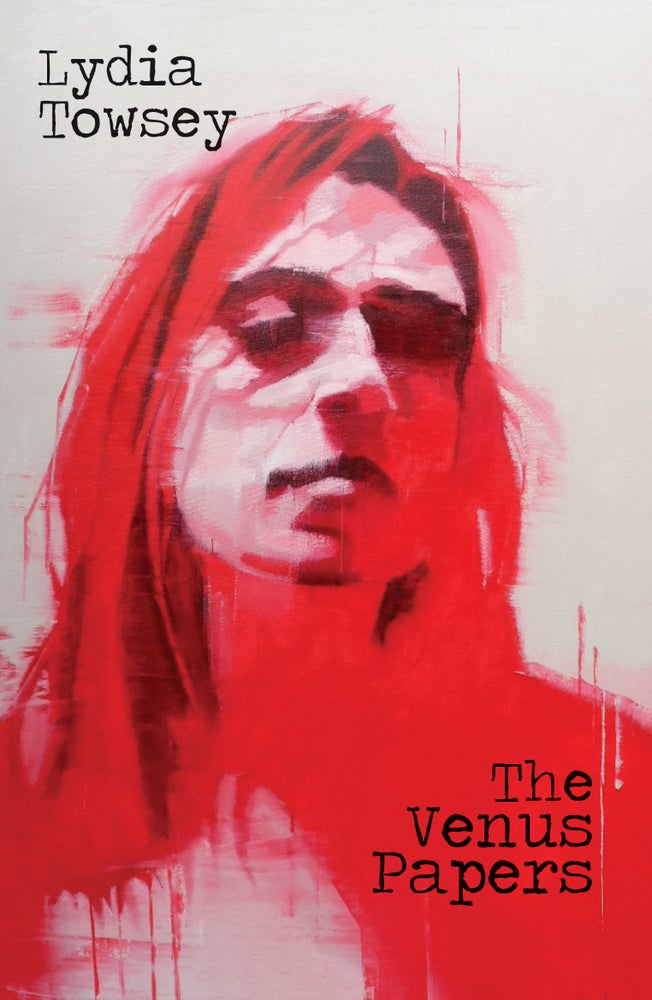
    For a feast that feeds the eye and ear in equal measure, it's hard to beat the unique fusion of performance poetry and figurative painting in Lydia Towsey's show THE VENUS PAPERS and its companion Scott Bridgwood exhibition. For one night only we enjoyed a consummate storyteller and a ravishing smorgasbord in one building. Throw in the wine and cupcakes and it was practically Dionysian.
     
    Credit: http://www.uffizi.org/artworks/the-birth-of-venus-by-sandro-botticelli/
     
    At the exhibition preview, there was plenty of time to immerse ourselves in the intimate and sensuous world of Bridgwood's nude sequence. I can't remember such a compelling 'muse' narrative since I came across Andrew Wyeth's Helga paintings. My favourites here were probably the earthy brown 'boxed-in' series but I also loved the cool aqua blue in certain paintings. And how the figures morph from charcoal sketching to broad-wash strokes to knots of solid flesh that insist on their female presence. The exhibition is open till Sunday the 12th February at the Attenborough Arts Centre on Lancaster Road Leicester (or take a peek at Bridgewood's on-line gallery). Gorgeous work.
     
     
    Credit: Ambrose Musiyiwa & http://www.renaissanceone.co.uk/events/ 
     
     
    Credit: Ambrose Musiyiwa
     
    Meanwhile over in the theatre Lydia Towsey was impish, seductive, sad, satirical on the turn of a verse-line in her VENUS PAPERS show. Her deft performance took in a range of characters but we were always rooting for her modern washed-up migrant Venus. I loved the props - an ingenious pink plastic sculpture strung with light-bulbs to serve as her Botticelli 'Birth of Venus' shell; a pop-up book with scenes from Renaiisance art to Tabloid headlines; and then there were was musical accompaniment, clever sound effects and slapstick murders from her two accomplices David Dhonau and Ola Szmidt. It was a magical hour, an odyssey through memory and contemporary urban landscapes with a woman wholly in command of her craft. The show came courtesy of Renaissance One but Towsey's accompanying poetry collection from innovative indie press Burning Books is also well worth seeking out.
     
     
    It's a while since I've been up to the Attenborough Arts Centre for an event. Sitting in the Princess of Wales Hall always makes me nostalgic because one of my very first shows, 'Stories Drummed to Polar Skies' was staged here. It's a great venue with decent stage, intimate but properly theatrical, and ideal for a poetry performance event like Towsey's. I was delighted to also visit the new Gallery extension which provides much-needed exhibition space for visual art in Leicester. Bridgwood's canvases of his Venus muse had room to breathe here and performance and painting spoke to each other throughout the evening in teasing allusions. Delicious.

    Friday, 2 December 2016

    Believing the Spin

    Frost pinching at your window? Nightfall chasing your heels home? Perfect time for a good book or two or three, the bigger the better. Can I mention how much I'm enjoying THE CREATION MACHINE by Andrew Bannister ? I meant to save this one for summer hols reading but it turns out to be a good hefty winter tale, transporting me to a far galaxy populated by various lifeforms and strange but vividly realised planets.
     
     
    The world-building is superb but most of all, it is the characters in peril who keep me up late worrying what's going happen next and how they're going to get out of THAT one ... And quite the most impossible and engaging romantic entanglement I've followed in a while, threaded through a dark fable of political machinations and genocide that strikes dystopian echoes from our own fucked-up world. I give you just the opening paragraph which you can read on the usual book preview sites:
     
    ''The thousand and third day of Fleare's imprisonment dawned cold and clear. Frost fuzzed the stone battlements of the Monastery, and the plains fifteen hundred metres below were veiled in mist. Fleare paused halfway through her daily walk up the Shadow Stair and gathered the thin prison fatigues into folds around her as if that would help keep out the cold. It didn't."
     
    Credit: http://www.sffworld.com/2016/05/interview-with-andrew-bannister/
    See what I mean? Who doesn't want to know what the Shadow Stair is but more importantly, how can you not be rooting for this emaciated but determined political prisoner Fleare? Bannister evokes the new world of the Spin galaxy with great economy and deft painterly strokes. But he absolutely resists the temptation to over-describe or explain. I am right there in a few phrases. Loved the 'frost fuzzed'. And already the story is on the move. The narrative voice is quite original to my ears; although the frequent humour sometimes made me think of Pratchett or even the Hitchhiker, it is more acidic in its bite. This voice grabs you by the scruff of the neck and hauls you into the adventure. The pace and scope of the narrative is as relentless as the ambition of the Spin's competing overlords. As all the reviews have suggested, it is a hell of a debut from a writer who gets straight into his stride and obviously has far more story stowed away in the hold.
     
    Creation Machine needs no plaudits from me but believe the hype. It's a thumping good read and a roller-coaster ride. I'm delighted to see on Bannister's website that a further two novels set in the Spin are rattling down the pipe-line. I'll be strapping myself into the passenger seat, ready for just about anything as soon as Bantam Press can patch up the ship.

    Friday, 11 November 2016

    Tommy's Scarf

    Before the day closes, here is my act of remembrance. Back in 2014, this poem was inspired by the statue of an Unknown Soldier in Paddington Station. The Tommy is wearing a long hand-knit scarf over his uniform and reading a letter, perhaps from home.


    Scarf


    Her tapped-out knit-one-purl
    was a private Morse code
    as much lullaby as distress-call
    between Field Service Postcards
    from France. Her autumn spent
    picking up and slipping stitches
    to shoulder you from afar.
    Today it is a coil of python
    a slithering bundle of welted yarn
    wrapping your jugular: a ribbed
    belt of bullets machine-gun issue
    pulling your bowed head to assent.
    Then it was a muffler, her umbilical
    shawl of twice-ravelled wool
    that clicked and twitched
    over many a clock-ticked night
    into a candlewick fabric, elastic
    boy-looped, long as a man:
    a fleece itching with unsaid words
    still warm with smells of her.
    Did she cosset you, Tommy?
    Fuss and mither you? Dab
    spittle to polish you, tidy a wisp
    of hair under your trench cap
    when you defied her at last
    and donned Kitchener's Blue?
    Before this tasselled winding-cloth
    you lay cat's cradled in a weft
    of barbed-wire bindweed
    that snagged on her name and stuck
    for the two days it took to die.
    A jagged casting-off attended by
    No Man's rats and bluebottles.
    Your fingers laced around her letter
    in a certain light, are skeletal
    but stubby nails, bent eyelashes
    and boy-man jutting chin, are molten
    unresolved, alive in metal.


    Published in the Letters to an Unknown Soldier Anthology, ed. by Kate Pullinger & Bartlett  Nov. 2014. Written as part of a residency I led for 14-18-NOW and WEM in August 2014.

    Friday, 7 October 2016

    How We Learned to Love our Machine

    The room is a hush of people studying computers. On screen, a black window with white grid-squares and pulsing green line. The heartbeat. We watch it for five more tense minutes leaping and spiking and then – the zig-zag falls away to a background fuzz. We know it's flat-lined when the Operations Manager removes his headphones and begins to embrace the other engineers, almost all men. In their black crew-shirts, they are mourners at an interment.
    The Machine is dead. The Machine is broken, an abandoned shell on a desolate body. Indeed that jittery green line was already a ghostly echo because the deed was done 40 minutes earlier at the other end of the solar system. Rosetta was instructed to self-terminate on impact, for a 'clean ending'. The Machine has been 'passivated', some will say killed. The press conference has turned into a wake.


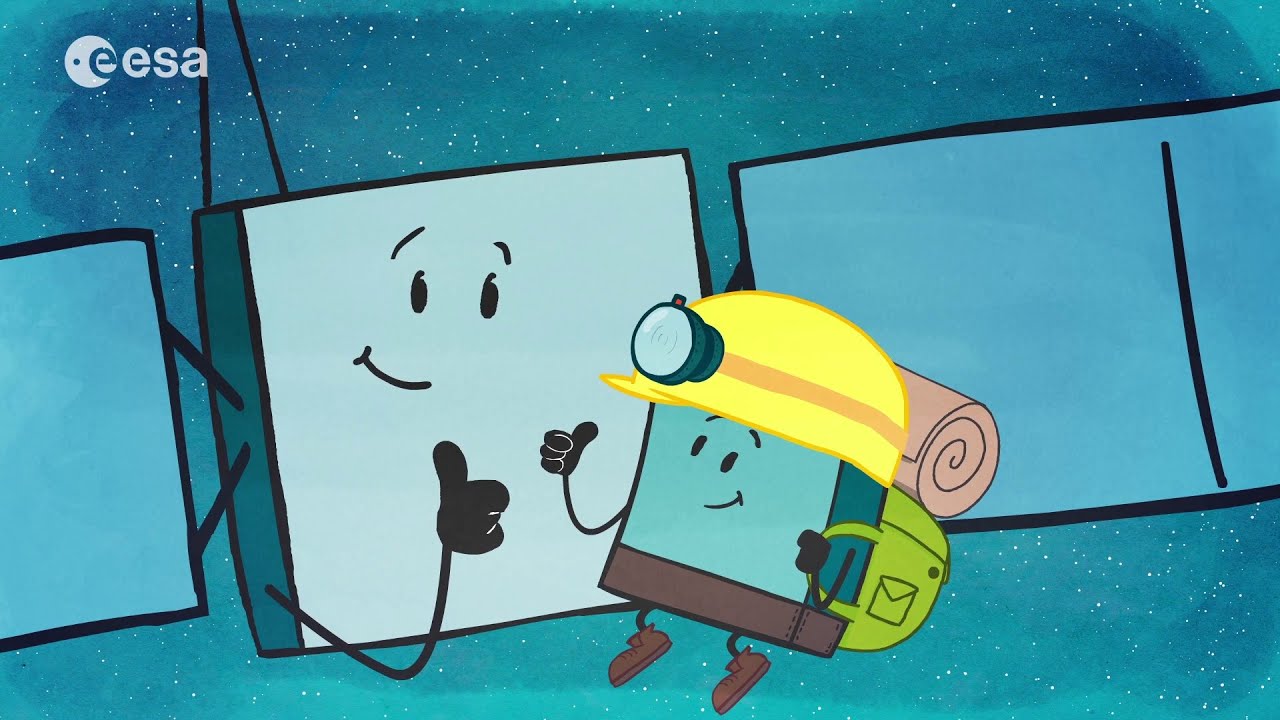
    As I sat riveted to the livecoverage of Rosetta's descent from ESA headquarters at Darmstadt, the high emotion emanating from that inner sanctum was unmistakeable. At times during Rosetta's two year long dance with comet 67P, the anthropomorphism seemed mainly a device to engage the public. The cartoon cuteness of mother-ship Rosetta and its adorable bot-child Philae. The Twitter-feed messages: #AreWeThereYet? The cuddly toys. But it turns out that no-one had bonded emotionally more than the engineers and scientists who lived with this project for decades. Here are some of the comments from that gathering at Darmstadt:
    'Everybody is very sad but it's a spectacular way to do it.'
    'Now it's time to say sleep well, Rosetta.'
    'Philae was such a brave little boy, sitting in a ravine, still doing fantastic science.'
    'It's like Sleeping Beauty – I keep hoping some Prince Charming from ESA or NASA might come to wake Rosetta up.'
    'It's like cosmic euthanasia – we just pulled a plug – a very sad day for me.'
    'Bugger.'
     
    That last muttering was from Matt Taylor being interviewed live by BBC'sSkyat Night. Grief was obviously catching because Chris Lintott introduced the programme as marking the 'extraordinary feat' but also the 'tragedy' of the Rosetta mission. The last act of Hamlet it wasn't – and there was much elation at a perfect descent from Rosetta capturing one last dust-jet of data as it drifted down to the comet. Still – why did so many Earthlings 'have something in their eye'?


    In truth attributing human characteristics to our machines is nothing new. For centuries we've given our ships, cars and flying machines personal pronouns and names, often female ones. We routinely project human emotions and personalities onto objects. If Tom Hanks can paint a face on a football and talk to it in Cast Away, no wonder we loved TheClangers and Robbie the Robot? Borg-like, we are more and more hard-wired into a dialogue with our technology as it wraps itself around our lives. There you see; personification again. Our daily use of IT may just be re-programmingthe way we communicate, use language and think. Meanwhile the TV series HumanBeings explores android-human relationships with the latest robot technology that is already here.
       
      Credit: AP Photo/Showtime, Joe Schram
     

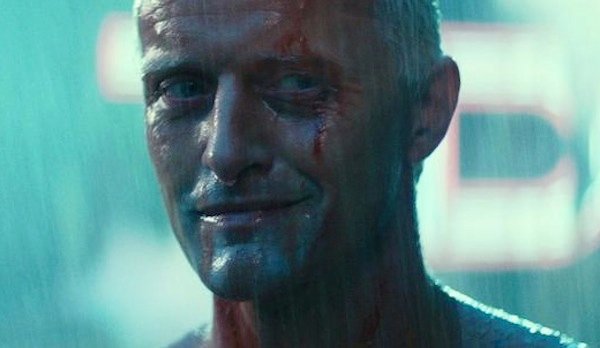
    Responding to a Rosetta fan on Twitter recently who was lamenting the crash-landing plan, Matt Taylor referenced the Replicant's last speech in BladeRunner:

      @tomgauld @newscientist IT IS A ROBOT!!! It has seen things you people wouldn't believe... Time for electric sheep @ESA_Rosetta


    We would believe it because, thanks to Rosetta's OSIRIS cameras, we peered onto the cometary surface of 67P like space tourists at the portholes. But Rosetta and Philae revealed to us not only an alien world but also ourselves. In a week when Teresa May invited us to discard the humanity of our foreign-speaking neighbours, our identity as citizens of the Blue Planet (or PlanetNowhere according to May), is put in doubt. Could some of us more easily project humanity onto a washing-machine sized box on a comet than an immigrant or refugee? One striking thing about the ESA Rosetta mission is that it has involved such complex communications in many languages in numerous European countries to construct and operate this machine across the solar system. It is a miracle of co-operation and far-sightedness without borders. That might be more futuristic than the technology. Or not. Perhaps that spirit is as tough – and as fragile – as the aluminium skin of Rosetta's craft. We should cherish both.