Writing is a journey, both imaginary and physical. My first book took me to the Arctic to 'catch the colours' of the Northern Lights. Then I hunkered down to catch the wind-blown voices of polar explorers on Shackleton's 1914-17 Endurance expedition. More recently I'm obsessed by space: the race, the rockets, the final frontier.

Hear a BBC Radio Leicester interview about my space poetry at: http://www.bbc.co.uk/programmes/p03wfpyp
Explore my digital narrrative PHILAE'S BOOK OF HOURS, published by the European Space Agency, at:
https://rosetta-art-tribute.tumblr.com/post/144241709712/siobhan-logan-philaes-book-of-hours

My prose-poetry collections FIREBRIDGE TO SKYSHORE
and MAD, HOPELESS & POSSIBLE are both published by Original Plus Press at:
http://thesamsmith.webs.com/originalpluschapbooks.htm

Contact me for signed copies or bookings at:
https://twitter.com/siobsi

Visit the writers' development service I co-run at: https://www.facebook.com/TheWritersShed/


About Me

My photo
Leicester, East Midlands
As a storyteller, my work crosses boundaries of myth, science, history and spoken word. It has been presented in the British Science Museum, Ledbury Poetry Festival, National Space Centre and the European Space Agency website. In 2014 I ran a digital residency on WW1 for 14-18NOW and Writing East Midlands. I teach Creative Writing at De Montfort University and have experience of leading school events, workshop tuition and mentoring. In addition, I co-run The Writers' Shed, a service for writers, at: https://www.facebook.com/TheWritersShed/
Showing posts with label book review. Show all posts

Friday, 2 December 2016

Believing the Spin

Frost pinching at your window? Nightfall chasing your heels home? Perfect time for a good book or two or three, the bigger the better. Can I mention how much I'm enjoying THE CREATION MACHINE by Andrew Bannister ? I meant to save this one for summer hols reading but it turns out to be a good hefty winter tale, transporting me to a far galaxy populated by various lifeforms and strange but vividly realised planets.
 
 
The world-building is superb but most of all, it is the characters in peril who keep me up late worrying what's going happen next and how they're going to get out of THAT one ... And quite the most impossible and engaging romantic entanglement I've followed in a while, threaded through a dark fable of political machinations and genocide that strikes dystopian echoes from our own fucked-up world. I give you just the opening paragraph which you can read on the usual book preview sites:
 
''The thousand and third day of Fleare's imprisonment dawned cold and clear. Frost fuzzed the stone battlements of the Monastery, and the plains fifteen hundred metres below were veiled in mist. Fleare paused halfway through her daily walk up the Shadow Stair and gathered the thin prison fatigues into folds around her as if that would help keep out the cold. It didn't."
 
Credit: http://www.sffworld.com/2016/05/interview-with-andrew-bannister/
See what I mean? Who doesn't want to know what the Shadow Stair is but more importantly, how can you not be rooting for this emaciated but determined political prisoner Fleare? Bannister evokes the new world of the Spin galaxy with great economy and deft painterly strokes. But he absolutely resists the temptation to over-describe or explain. I am right there in a few phrases. Loved the 'frost fuzzed'. And already the story is on the move. The narrative voice is quite original to my ears; although the frequent humour sometimes made me think of Pratchett or even the Hitchhiker, it is more acidic in its bite. This voice grabs you by the scruff of the neck and hauls you into the adventure. The pace and scope of the narrative is as relentless as the ambition of the Spin's competing overlords. As all the reviews have suggested, it is a hell of a debut from a writer who gets straight into his stride and obviously has far more story stowed away in the hold.
 
Creation Machine needs no plaudits from me but believe the hype. It's a thumping good read and a roller-coaster ride. I'm delighted to see on Bannister's website that a further two novels set in the Spin are rattling down the pipe-line. I'll be strapping myself into the passenger seat, ready for just about anything as soon as Bantam Press can patch up the ship.

Friday, 23 January 2015

'Puny' and the Angels


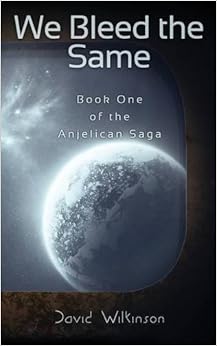
The cover of We Bleed the Same features a shaven-headed human figure staring out of a large porthole window at an alien planet. It thus promises an old-fashioned space adventure. But the title also alerts to us a story that wears its conscience on its sleeve. It recalled for me Shylock's urgent cry against racism in 'The Merchant of Venice': 'If you prick us, do we not bleed?' We return to this slogan when our protagonist, Danny Parque wakes up in a hospital bed on a Federation ship; the medics are 'blind to the affiliations of our patients.' Good news for Danny as he's the enemy until proven otherwise. Suffering multiple fractures and radiation sickness, he's already been through the wars and his mettle thoroughly tested. He started in chapter one as a Government Press Officer living a cushy life on the Imperial planet of LaMarque. But when the Governor proposed a return 'to the gulag' for the planet's uranium miners, Danny risked all and soon found himself outlawed. It's a theme that recurs throughout the novel. Later during his sentence aboard an Imperial Navy ship, his mentor 'the Yak', recalls his own moment of truth: 'Ijjalion happened … I held my soul in my hands … and I had to decide what colour it was. We were at the Gates of Hell and Cavendish pushed us through.' For months Danny tries to find out 'What happened at Ijjalion?' but no-one will tell him. When the answer comes mid-way through the novel we see why the Yak shuddered at the memory. It is a powerful scene worth waiting for which evokes crimes against humanity that are all too familiar in our own time and world.

It is in the early chapters when Danny adjusts to life as a 'puniserve' (or 'puny')and a 'noob' (newbie) aboard a battleship that the energy of the novel really picked up for me. Danny is a prisoner working off his time but this former bureaucrat makes friendships and learns to negotiate his way round the ship's pathways as well as the social dynamics. Wilkinson is brilliant at evoking the atmosphere of a group of men on a long-haul mission. The dialogue crackles with slang and sarcasm. Danny works as a 'beaner' or combat-messenger, so-called because while 'most of us are safely strapped into our chairs at combat stations … you get to rattle around like a bean in an empty can.' On board a whole cast of complex, vivid characters jostle for our attention and sympathies as they bicker and compete in the closed hierarchy of a battleship squadron. There is humour and plenty of sub-plots to thicken the intrigue. It reminded me of the gritty naturalism of the re-incarnated BattlestarGalactica TV series. You can hear the creaking of those metal bulwarks and smell the stale air of their sleeping quarters. And like that TV series, David Wilkinson also does peril and bloody battle scenes with great conviction.


So why didn't the opening chapters work so well for me? I did feel the protagonist's first moral crisis was rather rushed and  I likewise found the figure of his La Marque girlfriend Sandie rather flat and perfunctory – it didn't feel as if he was losing much by being torn away from her and his home-world. Perhaps I might have thought Wilkinson was less confident in his female characters till we got to his hero's stint on the Federation ship where he encounters a number of compelling women with fascinating back-stories. A major, an interrogator, a 'bunkie' – they each challenge and change Danny in different ways. I was impressed that this 2nd act of the novel opens a whole new world that is just as vividly realised and engaging as the Empire ship. And the moral compass Danny thought he had held onto now starts twitching in wholly different directions as his 'captors' persuade him to take sides with the Federation. The mission to Ijjalion will clinch it. But while Danny keeps searching out who to trust, the author is probing the humanity, messy and vulnerable as it is, of each of his characters.

The character arc of Danny is certainly satisfying as he develops from a rather shallow Governor's assistant to a critical, questioning man of action at the front-line of two competing empires. However I think the author could trust his readers more to reach these conclusions and judge the hero for ourselves. Quite frequently, other characters step in to pronounce on David's moral fibre in case we've missed the point: 'You had it all and made a stand. And then every-time you came to a crisis, you've chosen what you think is the morally right path …' The plotting is ambitious in scale as the action moves through four different planets or ships, each bringing further revelations and tests of loyalty for Danny. If the section on the world of Engalise seems to digress somewhat, it is clearly laying the groundwork of interplanetary histories and divergent cultures that will sustain multiple narratives of 'the Angelican saga' to come.  (Unsurprisingly, on the publisher's author page Wilkinson lists Isaac Asimov with his masterly 'Foundation Trilogy' as an early influence.) So a word to the editors at Inspired Quill Publishing – I'd have loved a glossary for some of this that I could refer back to. But the pace picks up as Danny and his new Federation comrades head 'home' to La Marque for a show-down. A very well-executed invasion scene, lots of twists and reversals, jet fire and sonic booms and a cavalry of horses all bring the rollicking adventure to a shocking and suitably thoughtful conclusion.


In the parlance of the novel, this writer is a 'noob' but certainly no 'puny'. The writing grows and matures much as its hero does. It finds its stride some way in and goes on to earn its place in the stellar fleet of spaceship sagas that thicken the skies of our sci-fi universe. The intricacy of its world building, the dark themes of political conspiracy and state repression, the heartfelt conflicts of its characters are all sure to bring readers back. I can only hope the sequel will excavate more of the history of these feuding galactic empires, as well as their hard-fought futures. All in all, it was a well-crafted and enjoyable debut from Wilkinson and when Danny dusts himself down, he surely has plenty more to deliver as the hero of an unfolding epic. If you like your science-fiction intelligent and intense, this is one saga to follow.

Friday, 12 September 2014

The Eye in the Door

This book is shockingly well-written. Think Dante's Inferno with an undertow of Stevenson's Jekyll & Hyde, bundled into a respectably precise historical novel.  The second in Pat Barker's WW1 Regeneration trilogy, it quickly outstrips the first novel in its revelations about a war we think we know and in its power to move and unnerve us.

The first book, Regeneration was fascinating in its insights into the world of Craiglockhart's military mental hospital and the pioneering treatment of the true-life Dr. Rivers. If you've been impressed and scarred by the poetry of Sassoon and Owen, you'll relish the portrayal of their friendship in this brief haven from the Front. I hadn't realised Owen's poetry was rooted in River's 'dream therapy' as well as Sassoon's editorial eye. The novel probes how the British Establishment declared Sassoon temporarily insane rather than deal with his powerful Declaration Against the War and traces the collusion of his humane and conflicted doctor with that process. I like very much in this novel that we only revisit the landscape of the war itself through the men's night-terrors and memories ceded under hypnosis. Their phobias speak far more loudly than their mutism or stumbled confessions; such as the man who cannot eat at all after his front-line encounter with another man's guts. This distancing device actually made the battle scenes far more terrifying.

Craiglockhart Military Hospital in WW1 -
 http://www.bbc.co.uk/history/worldwars/wwone/wilfred_owen_gallery_06.shtml

But 'Eye in the Door' is a darker beast, if that seems possible, after the trench-bound nightmares of River's patients in Craiglockhart. In the second novel, Barker has melded her forensic period research with her considerable powers as a storyteller to surprise us with a Home Front that is as dystopian as the hell of No Man's Land. This is the world of MI5's pre-cursor, the 'dirty war' of propaganda and spying. As much as Rivers is applying early Freudian techniques to helping his patients defuse their post-traumatic stress, so Barker is probing the twisted psyche of a nation at war with itself. Her story pulls in two landmark court cases that defined the neuroses of an age - the rigged trial of a working-class pacifist woman for allegedly planning the murder of Lloyd George - and a libel trial in which '47,000' of Britain's elite were reckoned to be colluding with the Germans for fear of being exposed as 'sodomites' and 'degenerates'. Barker is very astute about how the cult of masculinity in WW1 threw up this frantically homophobic backlash during the most intense years of the war. Episodes detailing the brutality meted out to conchies and strike-leaders broaden the picture of a state ruthlessly suppressing dissent with some positively Orwellian scenes in prison cells.


However that's just the backdrop - because what really rivets us is the figure of Billy Prior, a soldier home on sick leave, roped into the intelligence service while he struggles to digest the horror that caused his breakdown. Prior proves to be a far more compelling protagonist than Sassoon. A working-class man who achieved officer rank, he is now thrust into the company of the class he so despises. A bitter, angry, caustic yet ambitious soldier, he is secretly terrified by his own hatred of civilians and the violence he senses simmering beneath the surface. To add to his self-loathing, his sexuality is also urgent and aggressive, veering into the 'deviant' in an episode of 'cottaging' that seems all too familiar. Rivers is the one person who can save him, yet their sessions often flip over into a verbal sparring that threatens to drag the doctor's own traumas into the light.

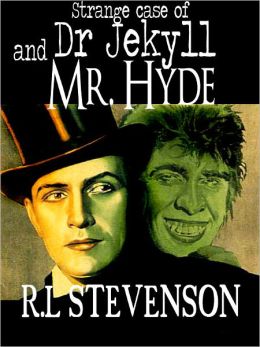
The novel's feverish atmosphere, all graphic social realism shot through with something almost surreal, is heightened by two powerful motifs. The 'Eye in the Door' is a throwback to the shell-shock incident that first unhinged Prior. But it also alludes to his new role as a spy in the service of an increasingly repressive state. And then there is the Jekyll and Hyde allusion, which not only attaches itself to Prior's bouts of memory loss but seems to say something about the whole culture of soldiers disassociating themselves from the violence of combat, as Rivers realises.

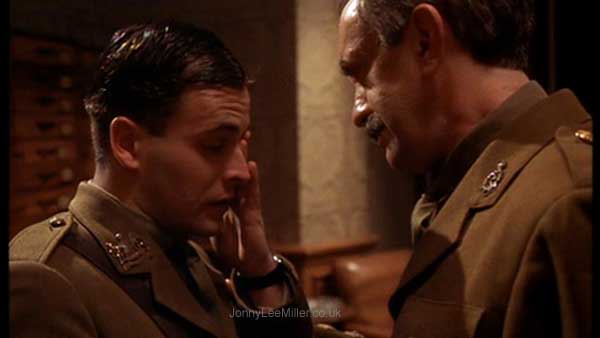
Johnny Lee Miller & Jonathon Pryce as Prior & Rivers in film

The barely contained rage and fear of Prior is a grenade we continually expect to go off in the novel. But he is possibly saner and a good deal more self-aware than the society that has recalled him from the trenches but which will soon re- assess his 'fitness for active service'. Although Barker's war-torn England is a deeply disturbing world, I was reluctant to leave it at the end of this second book and certainly want to see more of both Prior and Rivers in Part Three. Taken as a whole, this trilogy is a towering achievement of storytelling and a fittingly complex response to the catastrophe of the so-called 'Great War'.

Saturday, 14 June 2014

The Bullet-Catcher's Daughter


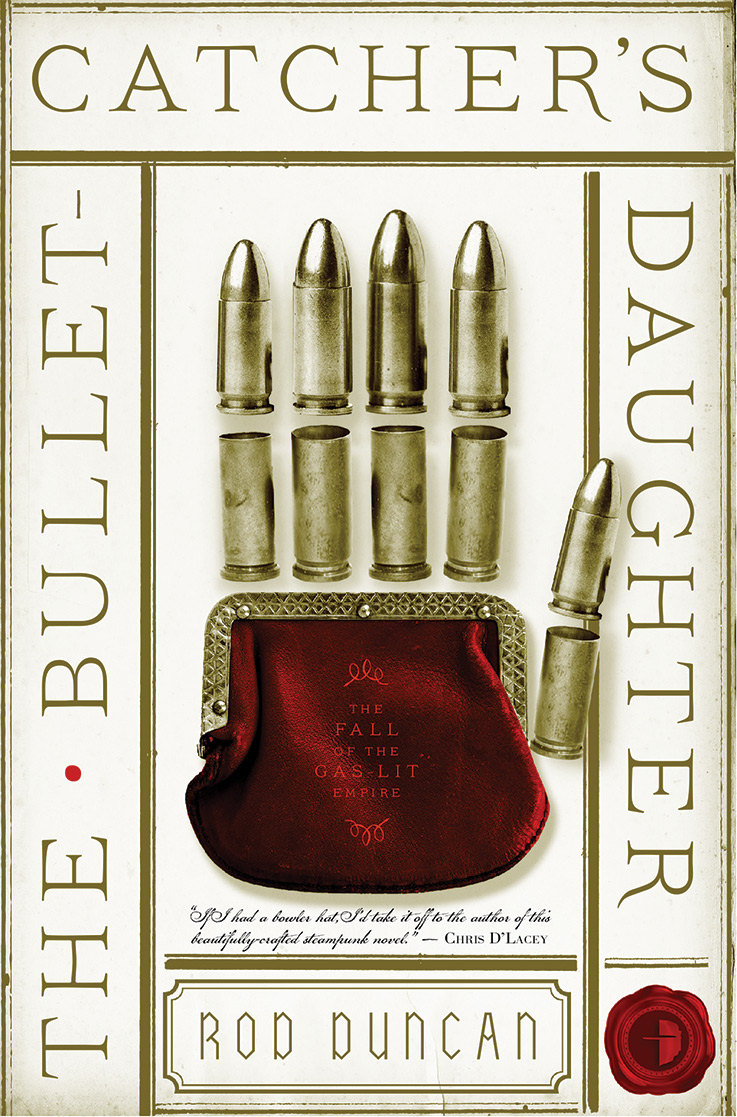
Don't ask me how I got my hands on a copy of a book that has yet to go on sale. That information is on a need-to-know basis and more than you can afford. But this much I will tell you freely. From the ingenious art work of Will Staehle – that blood-red Victorian purse/ metallic hand – to the fabulous title, The Bullet-Catcher's Daughter, Rod Duncan's first novel in the Gaslit Empire series promises a thrilling and duplicitous read. And it delivers. This treat from imprint Angry Robot (loving their Cylon logo too!) is coming to Steampunk fans this September, with a sequel hot on its heels next spring. It has as much peril, mystery and mashed-up Victorian-futuristic technology as you could wish but above all, what will be bringing this reader back for more is the central character; gutsy cross-dressing private-detective, Elizabeth Barnabus. She is alone in this world but for a fictional brother and a remembered father. 'I'm no more than a shadow,' she tells a would-be admirer, 'and can have only such friendships and feelings as a shadow might'. Only one job away from destitution, she yet turns out to be a cunning and always courageous match for the shadowy Agents of the all-powerful International Patent Office. Appealingly, she is an accomplished liar as well as a reader of others' deceptions.
 
'Illusion was my inheritance,' she confides early on. From a childhood spent in The Circus of Mysteries, she has learnt ' … the gift of being, when needed, my own twin brother.' Without this skill, Elizabeth cannot survive as a woman on the run exiled in a land where females cannot own property or run businesses. 'Equal but different' is the slogan of the Anglo-Scottish Republic, a rather Puritan world where the Rational Dress Society enforces strict codes about women's clothing: 'That is not a hat and you are not properly dressed.' Elizabeth, masquerading as a Victorian gentleman 'intelligence-gather', is a deviant living in the shadows of Leicester's waterfront on an old canal-boat, Bessie. Duncan convincingly explores the mechanics of her gender-manipulation: 'Men fancy they recognize a woman by her dress, figure and face but it is more through movement …' Elizabeth enjoys strolling through the city with the easy swagger of a man: 'rolling the shoulders … occupying the centre of the road.' However much she can handle a weapon and calculate an escape route, this action-heroine is young and at times, emotionally volatile. 'I don't know if it was fear or anger that made me act,' she reflects after shoving a loaded revolver in a thug's mouth. What's for sure is you're rooting for this outsider who is not only a wanted 'fugitive from a contract of indentured servitude' but also a Gypsy who arouses a casual bigotry in officials of the Republic.


Elizabeth has crossed all sorts of lines in a novel pre-occupied with boundaries of many kinds. A runaway from the Kingdom of England and Southern Wales, she occupies the middle-space of Leicester, a city bisected by the historic partition of England (an irony this Irish reviewer enjoyed.) As a citizen of the real Midlands centre, I thought the sense of place enriched the novel with its Turkey CafĂ©, Darkside Coffee House and Gallowtree Gate, complete with gallows. The twin border-checkpoints are a step away from Leicester's iconic Clock Tower. Another location I recognise as 'the Lanes', offering 'an alternative shopping experience' of boutiques and 'emporiums', has become Duncan's 'the Backs … that dark warren of narrow streets, blind alleys and iniquity.' I found myself wanting a map in the book (apparently this will be found in the accompanying web-site on publication) but then again, my Leicester is not the fictional city. Rather I am looking at a setting reflected back in the distorting lens of a fairground-mirror. Similarly, I kept thinking I had gotten a foothold on the history of the book, drawing on my own knowledge of the English Revolution, the Luddites and Empire etc. But like a tourist who's strayed into the smuggler's den of the Backs, I am easily way-laid. It makes no sense that the emerging bourgeoisie of Cromwell's Puritans would build a realm so hostile to technological innovation. And which century am I in when a reference to the 1970s is dropped in as a teaser never to be explained? History-as-we-know it, fragments of that narrative, have been shaken up in the kaleidoscope of Duncan's invention. It is this kind of total 'world-building' that draws in the reader and I hope to master this alternative history as it unfolds over several volumes.


I soon stopped trying to map my way through, too caught up in the rapid pace of Elizabeth Barnabus' adventures. The protagonist is continuously on the move, taking an airship to Lincolnshire, where she pursues Harry Timpson's Laboratory of Arcane Wonders, and later to London where she not only risks capture by her old enemy, the Duke of Northampton, but even enters the citadel of the terrifying International Patent Office. The Lincolnshire scenes will delight fans of the cult-TV series, Carnivale – I'll say no more – and the capital is at once Dickensian and deliciously fantastic with its International Air Terminus at St. Pancras. The tension of quest and discovery is constant. And Elizabeth Barnabus has more secrets and back-story packed into her trusty portmanteau than her friends can possibly know or the agents of the Patent Office suspect. 'Illusion is story,' she advises us, quoting her long-lost father, '… weave it with characters … and love and loss and the audience will follow you as children … followed the Pied Piper of Hamlin.' Here are Mysteries wrapped in Disguises moon-lighting as Plots. The closing pages promise that The Gaslit Empire will yield many more before its rumoured 'Fall'. This reader is booking her ticket for the show and marking off the months till the sequel 'Unseemly Science' rolls into town.

Friday, 25 April 2014

Sigrid's Saga

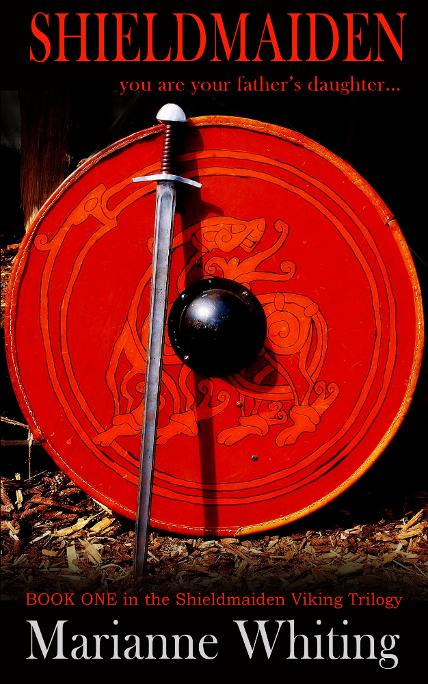
As a storyteller, I have always been fascinated by ancient legends - how different their shaping is, how their heroes don't 'learn lessons' or morality and yet how powerful these early narratives are. On a visit to Iceland some years ago, I stocked up on some wonderful Viking Sagas, packed with passionate characters rooted in real historical landscapes. My holiday reading currently shares a good deal of this territory.  The heroine of Marianne Whiting's 'Shieldmaiden' is a contemporary of poet-warrior Egil Skallagrimsson and also fights at the battle of Brunnanburgh, though on the opposing side. Like Egil's Saga, this tale is unflinching in its depiction of war's chaos and the cruelty of kings. But Whiting's novel has a modern story arc charting the psychological development of its young protagonist Sigrid from her childhood through a bloody and difficult adulthood. The pacing of the narrative is astonishing; in just a few chapters we rush headlong from Sigrid's first crush, through an unhappy marriage, the violent dispersal of her family into exile and her experience of battle and its bitter aftermath. Fans of a rattling good story not short on gory detail, sparky dialogue and strong characters, will be as delighted as I was.

On her website Whiting reveals her excitement at realising that Viking history was one of the few periods when women could arm themselves and play a full part in adventures. Her heroine Sigrid is a gifted warrior, one of the fabled 'shield-maidens' modelled on Thor's own Valkrye daughters. Yet she is much more than a swashbuckling, sword-wielding protagonist. Whiting conveys the full range of Sigrid's experience as a Viking woman living in the Danelaw of Cumbria in 936. She 'knows only too well that look of a man who has seen a woman he wants'. At any time her family or king may decide to use her as a 'peace-weaver' - to forge a politically advantageous marriage. Sigrid negotiates her options as a woman sometimes clumsily, sometimes with a hard-learned dexterity as the vulnerable daughter of a declared traitor. But Whiting also explores her joy in being a lover and mother as well as an increasingly assured leader of men, a 'ring-giver' in her own right. She grows into a legend to match Egil Skallagrimsson, even if she is sceptical about how the reputation of warriors is exaggerated by the bards.


Equally I was impressed by Whiting's subtle but compelling handling of historical detail and landscape. I never once felt the author was 'showing' me some carefully researched detail of Viking lives. Rather we breathe the story through Sigrid's viewpoint and learn to take for granted as she does the Viking system of thralls and karls or bloody sacrifices to the gods, whilst 'discovering' the peculiar practices of Christians now challenging the 'old religion' of the Danelaw. This is what historical fiction can offer beyond the veracity of museums and textbooks - we step into the hand-stitched boots and turbulent emotions of a tenth century Viking woman. I think Whiting's novel benefits too from its vividly-drawn Cumbrian landscapes and recognisable place-names. You feel you could step off a twenty-first century train and hike your way back into Sigrid's world. The novel's sense of place is no less precise or rich in emotional context than the farmsteads and courts of the Icelandic sagas which in part inspired this Swedish author. Her blog makes clear that a sequel is in the offing and also reveals the original impetus for the novel was a vivid dream about her heroine that demanded to be written down. I for one am looking forward to joining Sigrid Kveldulfsdaughter on another Viking quest across the rugged crags of Cumbria or Norway. Meanwhile there's always the VIKINGS TV series to dip into while I wait for Sigrid's return ...

Monday, 8 February 2010

The Hunger Down South

Novels, the longer the better, are perfect for this winter season. And the more I feed my hunger for stories, the more I crave. So here's what I've been reading this past month.

From the icy landscapes of December's reading, I stumbled straight into the steamy heat of Louisiana. I picked up the first of the Southern Vampire novels by Charlaine Harris after watching the TV series, True Blood but the books proved far more addictive. Within three weeks, I'd devoured all 9 novels Harris has published to date. What really sustained me through this vampire marathon was the wry, sassy voice of Harris' heroine, Sookie Stackhouse. A young waitress, she's somewhat naive at the outset but quickly wises up. Holding hands with her new date, Quinn, she thinks to herself:

'His own hand was warm and hard. He could crack my bones with it The average woman would not be pondering how fast her date could kill her, but I'll never be an average woman.'

This is because Sookie is a telepath with a thing for Supes - men with a supernatural twist - vampires, werewolves or in this case, a Were-tiger. I read somewhere recently that Sookie is one of a new brand of feisty, modern heroines - women like Bella Swann, Katniss Everdeen or Lyra Belacqua emerging out of the fantasy genre. Or Paranormal Romance as the bookshelves have it. But though Sookie is hard-working, independent and resourceful, she'll never meet the day without paying attention to her make-up, no matter how beaten-up she is. Her clothes too are always described in lingering detail - so appearance really matters to this girl.
Sookie gets plenty of action, in all senses of the word, but I do like that Harris portrays the bone-crunching awfulness of the violence she encounters and Sookie's distaste for it. She makes a New Year resolution in one book to stop getting hurt but loyalty and determination to help others in crisis draw her inevitably back to danger. Would you head for a Vampire conference when you know someone/something is trying to assassinate you? By this stage, Sookie is so embroiled in the labrynthine politics of the overlapping fiefdoms of Vampires, Witches and Weres that detachment is proably as deadly as engagement.

And this is a big plus of the 9-book series. Harris' fictive world is so vivid, so detailed, so interlocking - that I did feel as if I lived in it for weeks on end - a virtual reality. And I am still missing my Sookie fix. I read on Harris' website that she is a great fan of Jane Austen and it figures. She draws out a great deal of humour from portraying the etiquette of Vampire manners and Were rituals, the culture clashes and petty squabbles. It is as finely observed a social hierarchy as Austen's. The latest word on her website is that the next Sookie book is out in May. For now, it's still in the blood and I'm gulping down other stories to assuage The Hunger ...