Writing is a journey, both imaginary and physical. My first book took me to the Arctic to 'catch the colours' of the Northern Lights. Then I hunkered down to catch the wind-blown voices of polar explorers on Shackleton's 1914-17 Endurance expedition. More recently I'm obsessed by space: the race, the rockets, the final frontier.

Hear a BBC Radio Leicester interview about my space poetry at: http://www.bbc.co.uk/programmes/p03wfpyp
Explore my digital narrrative PHILAE'S BOOK OF HOURS, published by the European Space Agency, at:
https://rosetta-art-tribute.tumblr.com/post/144241709712/siobhan-logan-philaes-book-of-hours

My prose-poetry collections FIREBRIDGE TO SKYSHORE
and MAD, HOPELESS & POSSIBLE are both published by Original Plus Press at:
http://thesamsmith.webs.com/originalpluschapbooks.htm

Contact me for signed copies or bookings at:
https://twitter.com/siobsi

Visit the writers' development service I co-run at: https://www.facebook.com/TheWritersShed/


About Me

My photo
Leicester, East Midlands
As a storyteller, my work crosses boundaries of myth, science, history and spoken word. It has been presented in the British Science Museum, Ledbury Poetry Festival, National Space Centre and the European Space Agency website. In 2014 I ran a digital residency on WW1 for 14-18NOW and Writing East Midlands. I teach Creative Writing at De Montfort University and have experience of leading school events, workshop tuition and mentoring. In addition, I co-run The Writers' Shed, a service for writers, at: https://www.facebook.com/TheWritersShed/
Showing posts with label workshopping. Show all posts

Sunday, 17 August 2014

Postcards from a Digital Dug-out


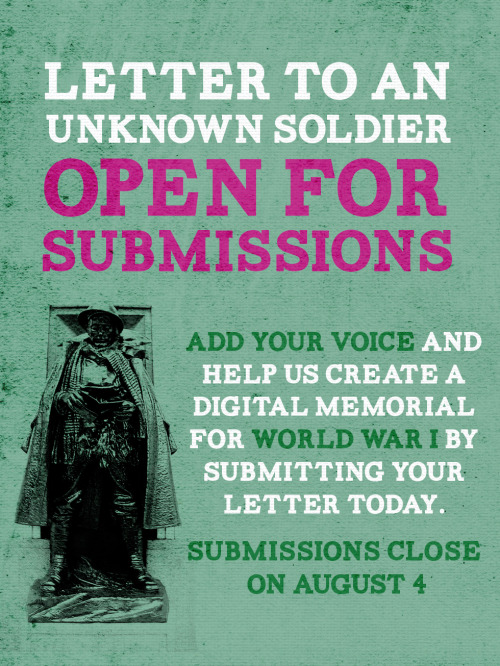
August is a strange month to be sitting in a locked room. Curtains closed to keep the blaze of sunshine from the obscuring the computer's glare. Half-starving, shivering in trenches (imaginatively) whist outside summer burgeons and allotments fatten. But I was excited to be leading my first digital writing residence and for seven days, it felt as if the flickering screen was my patch of sky. When I wasn't googling research sites, jotting exercises or tweeting about it, I was waiting for the cheep of e-borne post. The residency was commissioned by WritingEast Midlands in conjunction with a national body responsible for organising suitable cultural commemorations of WW1. Someone in 14-18-NOW had the idea of a unique 'memorial of words' from today's generation and nationwide, schoolchildren, pensioners, squaddies and civilians, writers and other artists, were drafted to pen a Letter tothe Unknown Soldier of Paddington Station.
 
He's an approachable soul. When you get above the height of the marble plinth, he looks like an ordinary young man from your street. In the bulky uniform of a WW1 Private, he wears a voluminous greatcoat and a non-regulation knitted scarf. He is reading a letter and the 14-18-NOW project invited us to write that Letter From Home. But we had seven days to play with so I devised exercises each day on themes around the Paddington statue - or 'our friend Tommy' as we came to call him. Moving through reflections on the STATION, BOOTS, LETTER, HELMET, SCARF, GREATCOAT and MEMORIAL, we edged further and further into his nightmarish world of troop trains, trenches, shell-holes. It was impossible not to be disturbed, horrified and deeply saddened at the industrial slaughter and daily privations these Tommies suffered.


For me, the experience was lightened by the beautiful writing and enthusiastic engagement of the week's work-shoppers. As it turned out, these included some experienced writers, already knowledgeable about WW1. Each day along with writing prompts and exercises, I posted videos, images and web-links garnered from a wide range of on-line sources. We explored the WW1 'field' postal depots and a French cottage industry producing silk  embroidered postcards on a huge scale for soldiers to send home. We wrote about trench foot and shell-shock, about Boy Soldiers (Britain's 250,000 underage recruits) and dawn executions. My 'posties' delivered witty, insightful and moving accounts of desert bombing raids, 'Munitionettes' and life on the Home Front too. After all, this 'Total War' not only spanned the globe but revolutionised social and gender relations as well as the technology of killing human beings in unforeseen numbers.

A century on, a digital writing course is probably a fitting venture for 2014. The unpredictability of who and when was a challenge for me but the flexibility was appealing to workshoppers. With open access 24/7, they could pick through which of the resources and exercises they wanted to tackle and post when they were ready. An attempt at 'live workshops' faltered – it proved better for people to work at their own pace. But they could share the 'texts' they produced – poems, stories, dialogue fragments – and converse with each other via forumthreads. I critiqued each piece posted but also found their feedback invaluable on my own attempts at exercises. So fruitful was this, that subsequently I have drafted a dozen 'Unknown Soldier' poems. An unexpected bonus.
 
When we emerged blinking from this digital dug-out, it was the 4th August. We were posting our final Letters just as the nation marked the 100thanniversary of the War declaration. A sobering moment. But also the culmination of a week's creativity, exploring our own responses to war, and imaginatively re-entering that charged landscape of the past. I am grateful to WEM for the opportunity and to my 'posties' for their openness to writing challenges, their willingness to venture into some dark places and their companionship. I hope we shall see more of their WW1 writing but you can read their Letters to 'our friend Tommy' along with 21,408 others on the 14-18-NOWUnknown Soldier website. They will be available to read there until 2018 when they will be stored permanently in the British Library's digital archive. At which point, our voices and letters will merge into that polyphonic postbag that is our own 'history'.

Monday, 3 May 2010

May Day at Middle Stanley


Sunday May 2nd 6pm

Well, here I am in my little room at Middle Stanley farm, gazing out to a rolling Cotswolds hill and listening to the birds' evensong. And if that isn't idyllic enough, I've just finished typing up a half-dozen new poems at this writers' retreat. I'm here with Leicester Writers' Club for our annual May Day weekend of workshops, feasting and discussion.
We're very fond of this secluded spot with its wonderful converted cottages and barns and grounds that are a delight to explore in this spring weather. But it's as much the chance to socialise and share ideas and resources within our writing coummunity that makes Middle Stanley so special. And lest partners and pets are feeling neglected, here's a run-down of the workshops we ran this year:


Creating Your Characters' Story
Writing about the past
Poetry workshop on the theme of 'Still'
Social Media for Writers
Books in the Digital Age
Voicing Your Work

A Blind Reading
Where is Your Writing Going?

We rely on willing volunteers from our own ranks to provide these workshops (no fee – not even bribed with cake!) and it works really well. My job is putting the programme together and keeping things on track. For myself, I particularly enjoyed the discussion on Digital Books where Chris de Lacey drew on comments from his publishers and agent to give us the inside story; the sharing of writers' stories and tips in Where is your Writing Going?; and the feat of a sonnet in 20 minutes in the poetry workshop. One of my own workshops was Voicing Your Work - great fun with an enthusiastic group. It's now known as 'the Humming Workshop'. I even had them doing Intercostal Diaphragmmatic Breathing (not as painful as it sounds!) and here's the photo evidence.


Unusually, I gave myself sometime out for just writing this year and finally got a chance to dive into some new writing based on my trip to Iceland at Easter. So there's 6 poems for an Icelandic sequence – with an eye on our first Polar Poets gig – and ideas for more. They're rough drafts but it's a joy to be in the flow of a fresh project. Exactly why you sometimes need a writing retreat to get going.
And now it's my turn on the rota to help with preparing our final feast. Liz and Gwyneth, our indefatigable Middle Stanley organisers, have whipped up some kind of Hazelnut Dream Dessert to follow. But I think you'll agree we've earned our treats with 8 workshops in 2 days and a torrent of creativity behind the scenes. Thanks again to all who attended and made it so enjoyable – and to Nick, my unflappable chauffeur!

PS Liz's Hazlenut Bread & Butter Pudding went into my top spot of fave desserts - so much so I snapped a picture of it! - now uploaded with more Middle Stanley pics. ...

Monday, 16 November 2009

Word Stitching in Suffolk

So a birthday blog! My present to myself this year was a weekend workshop in Suffolk. On Friday 13th, at Belstead House, 13 poets gathered. As a furore of winds and rain broke outside, we settled into the library for a warm welcome from the weekend's hosts, Michael Laskey and Joanna Cutts, editors of the Smiths Knoll magazine. We shared the well-equipped Conference Centre, a Tudor Hall in lovely gardens, with a group of quilters. As the weekend went on, it was clear the quilters were engaged in some huge and colourful undertaking, patches being laid out on the sitting-room carpet. We were similarly engrossed but never worked as late as those quilters.

Saturday opened with some free writing - two 7 mins. poems - to stretch our versifying muscles. Outside, a tree flamed orange against a wall of dark firs before a sheet of rain and hail drowned everything. Then it was the main business of the day, workshopping one poem by each poet. The group worked closely with each poem, sifted detail and asked useful questions. 13 is enough to hear a range of readings, some unexpected, of your poem. And experienced poets can not only sense a false note or a misplaced line but offer alternative ways in. You get as much out of doing the same for others, honing skills of snipping and sounding out and rejigging.

In the afternoon, Joanna and Michael gave individual 15mins. consultations. As a writer, you're always trying to develop your internal editor so it's a great opportunity to sit with two professionals who handle your work with care and insight. And these two enjoy poems and are good company. The rest of the time, we were free to walk, sleep, write, whatever. For Saturday evening's 'editorial meeting', Michael and Joanna brought a real sample of this week's submissions to select for publication. Joanna said they often end up placing a poem after 'a dialogue' with the poet i.e. they go through a process of drafts first. That's typical of the care taken with Smiths Knoll submissions - you get your work back quickly, sometimes even with a helpful comment.

The quilters were up at the crack of dawn on Sunday for the final push, stitching before breakfast. We continued with a successful format of free writing, workshopping and readarounds of favourite poems. When not busy with our 'poetry bee', it was great to share experiences and information with writers who really know the contemporary poetry scene. If you're looking for a good poetry workshop, I can really recommend the Smiths Knoll annual event. I liked very much the painstaking attention to craft, the encouragement to raise my game. And scores of poems by writers present and beyond, in every mood and form, stitched into the weekend's cloth. My thanks go especially to Michael and Joanna but also to my fellow poets who made it such a pleasurable 3 days. A good birthday treat.