Writing is a journey, both imaginary and physical. My first book took me to the Arctic to 'catch the colours' of the Northern Lights. Then I hunkered down to catch the wind-blown voices of polar explorers on Shackleton's 1914-17 Endurance expedition. More recently I'm obsessed by space: the race, the rockets, the final frontier.

Hear a BBC Radio Leicester interview about my space poetry at: http://www.bbc.co.uk/programmes/p03wfpyp
Explore my digital narrrative PHILAE'S BOOK OF HOURS, published by the European Space Agency, at:
https://rosetta-art-tribute.tumblr.com/post/144241709712/siobhan-logan-philaes-book-of-hours

My prose-poetry collections FIREBRIDGE TO SKYSHORE
and MAD, HOPELESS & POSSIBLE are both published by Original Plus Press at:
http://thesamsmith.webs.com/originalpluschapbooks.htm

Contact me for signed copies or bookings at:
https://twitter.com/siobsi

Visit the writers' development service I co-run at: https://www.facebook.com/TheWritersShed/


About Me

My photo
Leicester, East Midlands
As a storyteller, my work crosses boundaries of myth, science, history and spoken word. It has been presented in the British Science Museum, Ledbury Poetry Festival, National Space Centre and the European Space Agency website. In 2014 I ran a digital residency on WW1 for 14-18NOW and Writing East Midlands. I teach Creative Writing at De Montfort University and have experience of leading school events, workshop tuition and mentoring. In addition, I co-run The Writers' Shed, a service for writers, at: https://www.facebook.com/TheWritersShed/

Tuesday, 24 June 2014

Refugee Week: Singing in Colour

For this delicate Irish 'blow-in',  summer brings sneezing and slapping on the factor 50 and going incognito in sun-hat and dark glasses. But it also brings festivals and the special joy of people gathering to celebrate each other as well as the season. I was especially pleased to be invited to do a set on the 'Acoustic Stage' of Leicester's Red Cross Refugee Week bash in the Town Hall Square on Saturday. The images captured by Ambrose Musiyiwa, our resident community photographer, offer their own feast. Here were lawyers, trumpeters, passers-by, singers, refugee case-workers, volunteers, asylum seekers, doctors, drummers, children, pensioners and at least one poet 'shaking out their colours'. Weddings spilled out on the Town Hall Steps. Sun-worshippers laid themselves out on the crocheted blankets the Red Cross provided. Teenagers moved through a complex choreography of Tai-Chi and/or pop dance on the lawn. The Red Leicester Choir emblazoned the square with harmonised anthems from the heart. A series of musicians with guitars and homespun lyrics seduced us under the sari-dressed tent. As the pictures show, people danced, picnicked, laughed - shared jokes, shared their culture and their stories, and Leicester, at its best, strutted its stuff.


My own set was woven from the collection called 'Songs of a Blow-In' which threads together two stories. The first is perhaps the oldest story, narrated by the archaeologist Dr Alice Roberts in her wonderful TV series The Incredible Human Journey some years ago. That inspired for me a sequence of poems tracing the footsteps of Homo Sapiens as they trekked out of Africa and found their way around the continents of our planet. The other story is taken from my personal memories, fragmented like the shards archaeologists dig up, of my family's move from Fermanagh in the North of Ireland to Bolton in the North of England, swapping one childhood world for another. They are both stories then of Memory and Migration. It turns out that our people, the humans, have always been migrants. We are, in the words of my first poem, 'always on the move/ always at home' ; two states of being that define us as a species. We leave and migrate; we settle and create. We bring our skills and our songs, our prayers and our stories; we share food and jokes and we build communities out of all these shared gifts. This is our story - we are the human race.


It goes without saying that this year's Refugee Week celebration was especially joyful and much needed after a tide of racist vitriol against migrants in the recent election. Our corporate media - which also managed a complete 'news-block' on the peaceful 50,000 strong March Against Austerity this weekend - would have us believe there is an anti-immigration consensus in this country. But Leicester's Refugee Week told another story and the city will undoubtedly host a summer of such festivals, a polyphony of songs from its many communities and bands and performers. Between the hills of Bradgate and Highfields, the air will thrum with colour.
Saturday, 14 June 2014

The Bullet-Catcher's Daughter


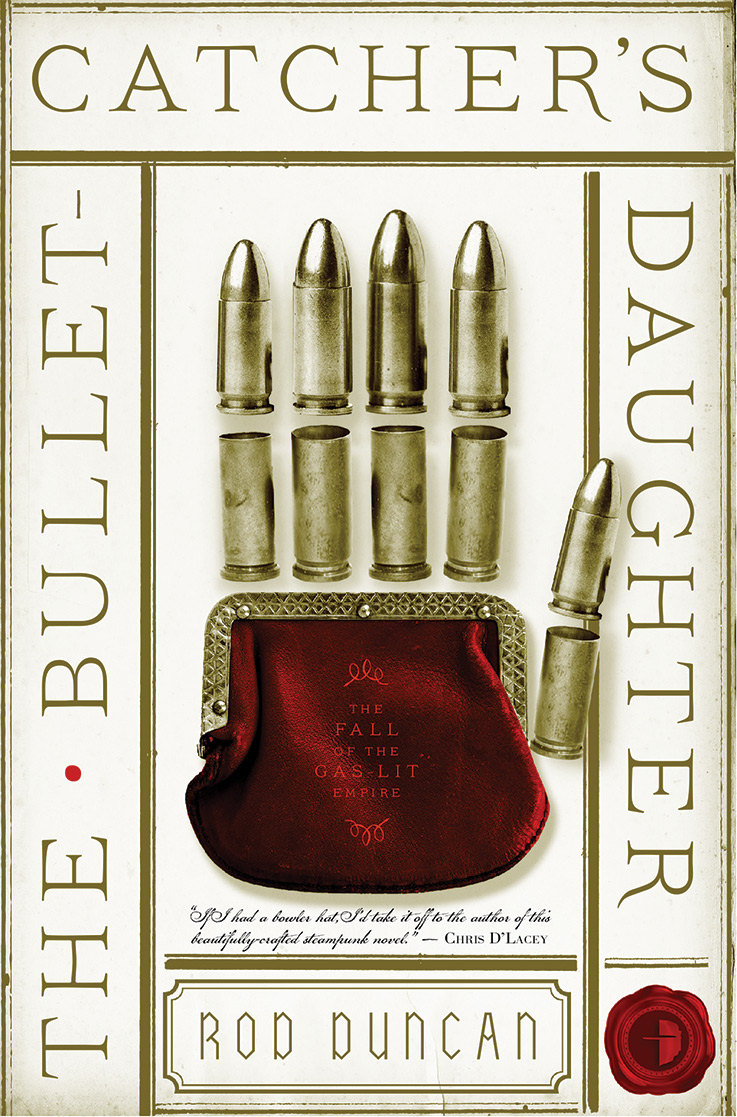
Don't ask me how I got my hands on a copy of a book that has yet to go on sale. That information is on a need-to-know basis and more than you can afford. But this much I will tell you freely. From the ingenious art work of Will Staehle – that blood-red Victorian purse/ metallic hand – to the fabulous title, The Bullet-Catcher's Daughter, Rod Duncan's first novel in the Gaslit Empire series promises a thrilling and duplicitous read. And it delivers. This treat from imprint Angry Robot (loving their Cylon logo too!) is coming to Steampunk fans this September, with a sequel hot on its heels next spring. It has as much peril, mystery and mashed-up Victorian-futuristic technology as you could wish but above all, what will be bringing this reader back for more is the central character; gutsy cross-dressing private-detective, Elizabeth Barnabus. She is alone in this world but for a fictional brother and a remembered father. 'I'm no more than a shadow,' she tells a would-be admirer, 'and can have only such friendships and feelings as a shadow might'. Only one job away from destitution, she yet turns out to be a cunning and always courageous match for the shadowy Agents of the all-powerful International Patent Office. Appealingly, she is an accomplished liar as well as a reader of others' deceptions.
 
'Illusion was my inheritance,' she confides early on. From a childhood spent in The Circus of Mysteries, she has learnt ' … the gift of being, when needed, my own twin brother.' Without this skill, Elizabeth cannot survive as a woman on the run exiled in a land where females cannot own property or run businesses. 'Equal but different' is the slogan of the Anglo-Scottish Republic, a rather Puritan world where the Rational Dress Society enforces strict codes about women's clothing: 'That is not a hat and you are not properly dressed.' Elizabeth, masquerading as a Victorian gentleman 'intelligence-gather', is a deviant living in the shadows of Leicester's waterfront on an old canal-boat, Bessie. Duncan convincingly explores the mechanics of her gender-manipulation: 'Men fancy they recognize a woman by her dress, figure and face but it is more through movement …' Elizabeth enjoys strolling through the city with the easy swagger of a man: 'rolling the shoulders … occupying the centre of the road.' However much she can handle a weapon and calculate an escape route, this action-heroine is young and at times, emotionally volatile. 'I don't know if it was fear or anger that made me act,' she reflects after shoving a loaded revolver in a thug's mouth. What's for sure is you're rooting for this outsider who is not only a wanted 'fugitive from a contract of indentured servitude' but also a Gypsy who arouses a casual bigotry in officials of the Republic.


Elizabeth has crossed all sorts of lines in a novel pre-occupied with boundaries of many kinds. A runaway from the Kingdom of England and Southern Wales, she occupies the middle-space of Leicester, a city bisected by the historic partition of England (an irony this Irish reviewer enjoyed.) As a citizen of the real Midlands centre, I thought the sense of place enriched the novel with its Turkey CafĂ©, Darkside Coffee House and Gallowtree Gate, complete with gallows. The twin border-checkpoints are a step away from Leicester's iconic Clock Tower. Another location I recognise as 'the Lanes', offering 'an alternative shopping experience' of boutiques and 'emporiums', has become Duncan's 'the Backs … that dark warren of narrow streets, blind alleys and iniquity.' I found myself wanting a map in the book (apparently this will be found in the accompanying web-site on publication) but then again, my Leicester is not the fictional city. Rather I am looking at a setting reflected back in the distorting lens of a fairground-mirror. Similarly, I kept thinking I had gotten a foothold on the history of the book, drawing on my own knowledge of the English Revolution, the Luddites and Empire etc. But like a tourist who's strayed into the smuggler's den of the Backs, I am easily way-laid. It makes no sense that the emerging bourgeoisie of Cromwell's Puritans would build a realm so hostile to technological innovation. And which century am I in when a reference to the 1970s is dropped in as a teaser never to be explained? History-as-we-know it, fragments of that narrative, have been shaken up in the kaleidoscope of Duncan's invention. It is this kind of total 'world-building' that draws in the reader and I hope to master this alternative history as it unfolds over several volumes.


I soon stopped trying to map my way through, too caught up in the rapid pace of Elizabeth Barnabus' adventures. The protagonist is continuously on the move, taking an airship to Lincolnshire, where she pursues Harry Timpson's Laboratory of Arcane Wonders, and later to London where she not only risks capture by her old enemy, the Duke of Northampton, but even enters the citadel of the terrifying International Patent Office. The Lincolnshire scenes will delight fans of the cult-TV series, Carnivale – I'll say no more – and the capital is at once Dickensian and deliciously fantastic with its International Air Terminus at St. Pancras. The tension of quest and discovery is constant. And Elizabeth Barnabus has more secrets and back-story packed into her trusty portmanteau than her friends can possibly know or the agents of the Patent Office suspect. 'Illusion is story,' she advises us, quoting her long-lost father, '… weave it with characters … and love and loss and the audience will follow you as children … followed the Pied Piper of Hamlin.' Here are Mysteries wrapped in Disguises moon-lighting as Plots. The closing pages promise that The Gaslit Empire will yield many more before its rumoured 'Fall'. This reader is booking her ticket for the show and marking off the months till the sequel 'Unseemly Science' rolls into town.

Sunday, 25 May 2014

Finding Richard

'Finding Richard' is a little film that's big on story and charm from the production company of Hive Films. I enjoyed today's screening in a gilt-decorated, wood-panelled room at Leicester's Guildhall - the perfect setting. The film features a boy's quest to connect with history - or more importantly with his grandfather - and this take on 'Gulliver's Travels' leads from garden shed to a muddy field to an unexpected tryst. Grandad - aka 'The Professor' - is played by none other than Colin Baker. Appropriately enough for an ex-Time-Lord, he has a shed packed with gadgets and a passion for amateur archaeology. Baker lights up the screen with a gentle energy that draws his young co-star into its warmth. Director Rhys Davies wisely makes this relationship the heart of the film.


 'The Professor' directs a dig to be undertaken by his grandson 'Gull', winningly played by young comedian David Knight (12 years old from Britain's Got Talent). His quest is inspired by the news that Leicester University archaeologists have unearthed the bones of Richard III in a Leicester car-park. Soon Gull is busy with a spade and metal detector, like a one-boy Time Team, in a stretch of rain-soaked football field near Leicester's Tudor Road. He finds a few items of questionable 'provenance' - I'll say no more - but the final scene has a pay-off that knits together his granddad's past and Gull's future in a sweetly understated moment.


I feel sure this film will repay more than one viewing. My own favourite moments and images are Gull's 'tent' in the opening scene with its montage of gothic gargoyles and toy knights; his always off-screen mother shouting up 'Switch that light off Gulliver!', the best cameo by a beseeching dog and the rose china tea-cup granddad sets beside a framed photograph at the end. The upbeat original music matched the warmth of the film's colour palette but gave hints of an undertow of a poignancy as subtle as Baker's performance. Unsurprisingly, this film garnered positive reviews at Cannes Film Festival where it has just been premiered. And with the news that those hotly-contested bones are to be interred in Leicester cathedral, it is destined to find a permanent home in a new dedicated museum.


Personally I find it difficult to be moved by the plight of a feudal monarch. The ill-fated Richard will be accorded a final 'dignity' but I doubt there was much for the lowly tenants and 'men-of arms' who slogged through the slaughter of Bosworth's battlefield. However if it helps people including children to connect to history as Gull did, that's a good thing. And even better this tale - which is 'about a boy' rather than a king - showcases the talents of today's generation. I was delighted to hear from the film's co-writer Douglas Cubin that Leicester's home-grown film industry is burgeoning with several feature films and 10 more 'shorts' underway in the city this year. 'Finding Richard' will surely fly the flag for Leicester's rich cultural output, alongside that raft of musicians who have put the city on TV's map recently. It will delight tourists and locals alike, and its themes about finding your own place in the world through imagination and persistence will resonate with all ages.


Friday, 16 May 2014

Weekending with Writers


A weekend in the Cotswolds with sixteen writers and an array of laptops, notebooks and manuscripts proved to be as stimulating and entertaining as we remembered. This was the 10th annual outing of LeicesterWriters' Club and the beautiful honey-stone farm-house of MiddleStanley by now feels like a home from home. Except we are entirely removed from loved ones and all domestic distractions. Creativity, fuelled by huge quantities of food and chat, is the order of the day. It's pleasing to see more of our writers with deadlines looming, making use of the weekend as a retreat to hit word targets and slog through the edits an agent is asking for. But workshops were equally popular and my job was to organise a weekend programme that addressed a range of genres, industry issues and wish-list items to engage all our writers. 
 
First up, as requested', was a session on Writing Time. The questions addressed were 'How do you find that precious time?' and 'How do you use it creatively?' So a chance to peek into the writing spaces and habits of other people – a literary version of poking round other people's houses. Some of our writers do this as the day-job and like to write in 'chunks' through the day. But many are juggling around shift patterns, school-runs and family commitments so resourcefulness and a determination to 'make a date with your writing every day' is key. As you might expect, setting targets such as word counts or completing a chapter draft proved helpful; likewise reviewing your last writing session or planning the next one. Having the opportunity to read a passage (up to 2000 words or 2 poems) at club can provide the push. One writer takes 25 minutes of his 2 hour morning slot to assemble all his research resources and writing apps and is constantly cross-referencing and updating his 'character files' etc. Research and how far it weaves in and out of the creative writing time was much discussed. Poets found this was even more key because that one telling detail could not only transform the poem but alter metre and sound patterns too. So Google is only ever a button away …


And thus practical considerations of time-management shaded into issues around the nature of creativity (the topic of several sessions last year too). It turns out that our 'best writing time' was not always mornings (close to dream-time and the back-brain). Some writers wrote most creatively from 10pm into the early hours – even when an alarm was primed for the 'day-job'. But editing time was different from writing time as was planning time. Writers who work in different genres found different rhythms required for poetry or prose and nobody could keep their head simultaneously in writing and alternate forms like painting. Music helped some whilst others needed silence. I find only silence works with poetry as I have to hear the words and beats so clearly. Some find their writing mojo profoundly affected by the seasons or monthly cycles and have learned to harness that rather than be limited by it. Many of our writers nest in a study or shed or 'man-cave' whilst others are impelled to go out, completely away from domestic routine, to write in cafĂ©s or on trains. And word-targets aside, not-writing has to be valued too. Time spent day-dreaming, googling, planning, 'faffing about', is not (as sceptical partners might suppose) wasted time – but an essential part of the alchemy that is crafting words onto a blank screen and puffing life into them.


And lest those partners and families suspect our Middle Stanley weekend was all about the eating, drinking and being merry (of which there was plenty) I can tell you we packed in another five workshops and writing homework across the two days. After that fascinating glimpse into the diverse writing habits of our cohort, we worked through a few nuts-and-bolts sessions on Creating Suspense in Fiction and How and Where to Submit Poetry. Our second day was themed around the business end of writing. My introduction to the day noted 'there is a world of difference between producing a piece of writing and being a writer.' Out of the solitude and safety of the study, there are many challenges facing a writer in bringing a book to market and building a career around it. That is why I put together sessions on 'My Big Book Plan', 'Routes into Publication' and 'Networking for Writers'. The first session featured 'homework', a detailed plan that identified the unique selling point (USP) of a book/project, its audience and genre, the 'author-story' to accompany it and ideas for marketing both on-line and face-2-face. Even at an early stage, considering the key concept of the book, can help in focusing a sprawling storyline and as the possibility of publication approaches, a writer can begin to explore the audience and pitch the book will need.

 
In 'Routes into Publication', three of our writers, MargaretPenfold, Marianne Whiting and GwynethWilliams generously shared their experiences. With the help of their presentations, we discussed the array of options facing today's authors: work with an agent to pitch to editors in publishing houses, seek out an independent publisher or go the self-publishing route with an appropriate press. It became clear that whichever path to publication you ended up on, thorough research and sampling was necessary and that the relationship is very much a two-way one. Authors spoke of 'interviewing' potential publishers/ agents as much as seeking their backing. Finding an industry figure who could deliver the editing, marketing or promotion your book needs is vital and that first lunch or telephone call might be something of a 'first-date' for both parties to sense whether they can work well together. All three authors had found literary conferences helpful in meeting potential publishers/agents – either genre-based organisations or a book-fair like States of Independence. And once you've agreed on that contract to deliver a book together, then 'the hard work really begins.'

The final session of Sunday afternoon proved to be the most lively, not least because we pitched our authors into a role-play. First LindsayWaller-Wilkinson and I discussed the relative benefits of social media that can be seen as eating up too much of writers' precious creative time. Authors are wary of giving up hours reading what somebody had for tea or being one of those Facebook faces who pop up and say 'Buy My book please!' Instead we explored how Facebook and Twitter can be tools to interact with a wider community of professionals within the industry. Very much as the writing community of the Leicester Writers' Club allows us to share information, inspire each other, mentor new writers, offer suggestions and even introductions to agents and editors, so social media can build these vital relationships at all stages of a writers' career. The key to this is seeing our interventions as symbiotic – we need to be genuinely engaged with the creative work of others and with supporting their success too. That has always underpinned the manuscript evenings of LWC and the same etiquette applies to blogging and tweeting in a professional context.
 
 
And then the roleplay. In pairs, one of us played an agent/editor at a literary event who asks the inevitable question: 'So what do you write?' You have 30 seconds to sum up your work in an interesting way – no cringing allowed – and present yourself naturally, confidently, as a practising writer. Not as easy as it sounds. I can remember crumbling and mumbling the first time a published author asked me that question at a book-launch. But this can be the moment we find that special person whose attention our book needs – or who knows somebody who would be interested in it. Hopefully a little bit of forethought can help, as Lindsey found when she bumped into an agent and discussed a planned novel. Being a writer is one of those activities that can seem invisible or like play-acting – until you take the industry and yourself seriously.


But not too seriously. This weekend contained much laughter - and a shared pleasure in our peculiar passion. And have I mentioned the food? As we filed round the long dining-table, we felt like honoured guests at a Masterchef final – extraordinary and exotic banquets unfolded from our chefs Lindsay and Andrew on successive nights. Our thanks also go to Gwyneth and Liz as our stalwart organisers who make the magic happen with so little fuss year on year. Roll on 2015!


Monday, 5 May 2014

Word Cubes in a Wild Place


I'm standing in a slightly darkened room, a crisp modern space with wonderful acoustics – the CubeGallery of Leicester'sPhoenix Digital Arts Centre. It could be a clean, almost antiseptic environment yet somehow this exhibition transforms it into a gritty, wind-grazed landscape. Or indeed a box of multiple places within spaces. As I walk around, I encounter a series of grey vertical blocks, knee high, supporting a button-pad and ear-pieces for the recordings I am to select. But they seem like cairns or stone way-markers pointing directions, signalling entry-points to soundscapes that are tagged with single elliptical words – 'ghost', 'cooling', snow', 'banjo' and so on. I am confronted with the multiple possibilities of a wide-open landscape, with the Road Not Taken as well as the unique track I make through its aural valleys and crevices.


And that's just the experience of this exhibition in its 3-D physicality. Before we play with sound and image, with silence and static and eyes-closed pauses, with a full-on sensory rush of sound/ music/ talk that is so vivid it is almost tactile. Before we press the button and choose.

The exhibition is 'poems,places & soundscapes' and offers you exactly that. Curated by poet MarkGoodwin and poet-publisher BrianLewis of LongbarrowPress, it is 'an international exhibition of digitally produced sound-&-poetry focusing on place & sound-scape ... featuring various poet, musician and sound-designer collaborations' as well as a selection of ‘place-entranced films'. There must have been thirty or forty audio and film 'pieces', each offering a different blend or collision of poetry/ sound/ music/ image and each transporting you to an entirely different place. And then other possibilities opened if you listened intently to the ear-piece, whilst also letting your gaze be reeled in to a film-stream in another corner of the room. Not unlike standing in a wide, wild landscape, where your senses and mind might tune into cloud-shadows on a hill-side, navigational landmarks, bird-song, the random noise of far-off contrails, insects in the undergrowth, a stream of consciousness, wind booming and scratching against a dozen surfaces, chatter and sudden silences. Choose what you will because there is no one way, no one definitive experience and subjectivity is all. Be present and listen.


Some choices I made that day:
 

fice (audio-work at second post)

a dissonance of tinkles, echoes, rhythmic words, monk-like chanting, ribbons of singing, clattering wood – gradually a mysterious music emerging of the whole blend.


ghosts (audio-work at second post)

a harmony of synthesised music, murmured phrases of poetry that open into an intimate conjuring of memory and nostalgia that is quite haunting. The landscape is urban, modern, but meshed in with the natural at Westport Lake: 'and on Sunday we'll walk round Westport Lake / remembering the beach … and the ghosts of who we were .. and home to terraced houses/ if you've seen one row of terraces, you've seen them all …' Mesmerising.


cooling (audio-work at first post)

another urban place-poem unravelling into a series of startling and joyous metaphors for the twin Cooling Towers of Sheffield: ' two big birds' nests/ in the poetics of space … under the skirt of motorway/ two stout ankles … two grim bouncers/ to the nightclubs of Sheffield … two huge brackets around/ a 1950s skirt of sky … two jugs of stillness …' A transcendent sense of the human in the city, in the industrial. Music pulsing with the beat of the poet's rhythm and rhyme. Decades of social history threaded through landscape.

banjo (audio-work at fourth post)

twanging banjo music underpinned by polar wind-whorling and a gravelly American voice-over, reflecting on the narrative of 22 castaways huddled under a boat-hut on the exposed glacier-strewn shore of Elephant Island in 1916 ...

burbage valley (film-work at second reel)
extraordinary charcoal drawings seem to conjure wind and rock, accompanied by a delicate soundtrack of the same. Then the poem-text on the screen layers in a third dimension of textures and symbols: '… nevertheless the chalk hands/ stretch out to form their synapses/ where the grit-stone neurones happen ...'


Sometimes I let the word-sign draw me in: what on earth is fice? Sometimes I looked for a familiar foot-hold – the film-scape of Burbage Valley alludes to a Peaks landscape I've walked many times. And I could hardly pass over Shackleton'sBanjo, when my own second poetry collection was inspired by that polar expedition. But mostly these were random choices that held me entranced for a timeless afternoon.


And now I can dip in again to other pieces on the comprehensive website that accompanied the exhibition. You really must go there and trace a sound-journey of your own through that digital space. It is helpfully way-marked with photographs, interviews, blog links and all of the exhibitions works accessible, as well as the posted comments of visitors. A rich experience that alerts us to the possibilities for collaborative poetry adventures, knitting together many crafts with current technology. The overall synthesis is a mysterious and alive and utterly human interaction with place.


Friday, 25 April 2014

Sigrid's Saga

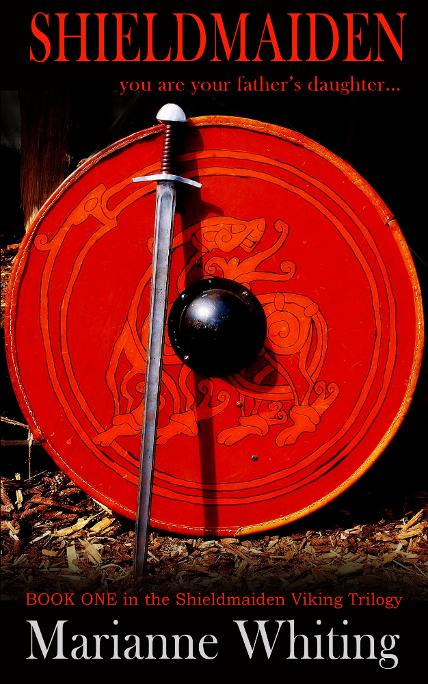
As a storyteller, I have always been fascinated by ancient legends - how different their shaping is, how their heroes don't 'learn lessons' or morality and yet how powerful these early narratives are. On a visit to Iceland some years ago, I stocked up on some wonderful Viking Sagas, packed with passionate characters rooted in real historical landscapes. My holiday reading currently shares a good deal of this territory.  The heroine of Marianne Whiting's 'Shieldmaiden' is a contemporary of poet-warrior Egil Skallagrimsson and also fights at the battle of Brunnanburgh, though on the opposing side. Like Egil's Saga, this tale is unflinching in its depiction of war's chaos and the cruelty of kings. But Whiting's novel has a modern story arc charting the psychological development of its young protagonist Sigrid from her childhood through a bloody and difficult adulthood. The pacing of the narrative is astonishing; in just a few chapters we rush headlong from Sigrid's first crush, through an unhappy marriage, the violent dispersal of her family into exile and her experience of battle and its bitter aftermath. Fans of a rattling good story not short on gory detail, sparky dialogue and strong characters, will be as delighted as I was.

On her website Whiting reveals her excitement at realising that Viking history was one of the few periods when women could arm themselves and play a full part in adventures. Her heroine Sigrid is a gifted warrior, one of the fabled 'shield-maidens' modelled on Thor's own Valkrye daughters. Yet she is much more than a swashbuckling, sword-wielding protagonist. Whiting conveys the full range of Sigrid's experience as a Viking woman living in the Danelaw of Cumbria in 936. She 'knows only too well that look of a man who has seen a woman he wants'. At any time her family or king may decide to use her as a 'peace-weaver' - to forge a politically advantageous marriage. Sigrid negotiates her options as a woman sometimes clumsily, sometimes with a hard-learned dexterity as the vulnerable daughter of a declared traitor. But Whiting also explores her joy in being a lover and mother as well as an increasingly assured leader of men, a 'ring-giver' in her own right. She grows into a legend to match Egil Skallagrimsson, even if she is sceptical about how the reputation of warriors is exaggerated by the bards.


Equally I was impressed by Whiting's subtle but compelling handling of historical detail and landscape. I never once felt the author was 'showing' me some carefully researched detail of Viking lives. Rather we breathe the story through Sigrid's viewpoint and learn to take for granted as she does the Viking system of thralls and karls or bloody sacrifices to the gods, whilst 'discovering' the peculiar practices of Christians now challenging the 'old religion' of the Danelaw. This is what historical fiction can offer beyond the veracity of museums and textbooks - we step into the hand-stitched boots and turbulent emotions of a tenth century Viking woman. I think Whiting's novel benefits too from its vividly-drawn Cumbrian landscapes and recognisable place-names. You feel you could step off a twenty-first century train and hike your way back into Sigrid's world. The novel's sense of place is no less precise or rich in emotional context than the farmsteads and courts of the Icelandic sagas which in part inspired this Swedish author. Her blog makes clear that a sequel is in the offing and also reveals the original impetus for the novel was a vivid dream about her heroine that demanded to be written down. I for one am looking forward to joining Sigrid Kveldulfsdaughter on another Viking quest across the rugged crags of Cumbria or Norway. Meanwhile there's always the VIKINGS TV series to dip into while I wait for Sigrid's return ...

Tuesday, 15 April 2014

Lyric Lounge Laureates & Street Anthems

When people ask me 'What is poetry?' I often say: 'Poetry is singing with words.' Never has that been more true than with the trio of laureates who make up 'Three the Hard Way.' The influence of Jean Binta Breeze, an original dub-poet, is strong on the show's performance style. Jean is a legendary Caribbean poet and recent MBE, who has long had a second home in Leicester - lucky us. The voices of Alison Dunne, formerly the libraries Book Doctor, and Lydia Towsey, a sometime poet-ghoul, are equally distinctive though and they make a fabulous, gorgeous threesome. But before they gift us their poems together and separately, here comes the anthem of community arts that is the Lyric Lounge.


Today the Lounge is a 'jam-packed day of live-lit, music, film, masterclasses, open-mic spots and family-friendly activities' at Leicester's spanking Curve theatre. This carnival of arts is FREE to all - yes, you heard it right. In these days of Gradgrind and Gove, of banker Culture Ministers and libraries staffed by volunteers, somehow we sneaked in a publicly-funded festival of lyrics, laughter and improvised rhymes. I only caught the tail-end of it but the songs and sets from workshoppees and community groups showed a good time had been had by all amidst the borrowed sofas and curtain swags of the Curve's Lyric Lounge corner. As they warbled their way through laments for Belgrave's fly-over and celebrations of Leicester City's promotion, through poems about broken boilers, red budget boxes and crack cocaine, George Osborne made a few appearances. Delivered off the cuff and scribbled crib-sheets, occasionally a rhyme clunked or a rhythm stumbled - but the energy and exuberance of creativity let loose for a rare day out lifted all. It was witty, husky with passion, ukelele-accompanied and often, as one of Jean's lyrics reminded us, there were moments 'that made you gasp'. I was reminded all over again of the glory days of the original Lyric Lounge five years ago, fronted by the same excellent community poets, musicians and artists.


And finally we were treated to three sassy word-artists in their 'full-flow' - pitch-perfect, swerving seamlessly from an autobiographical mother-daughter poem to a lyric on slavery or Rwanda and on to a rousing chorus of  'I know, me duck, I know/ how this country leaves you broken-hearted;/ the summer's over before it's started ...' And all too soon, it was indeed over. But well worth catching if you spot them on tour at a venue near you.