Writing is a journey, both imaginary and physical. My first book took me to the Arctic to 'catch the colours' of the Northern Lights. Then I hunkered down to catch the wind-blown voices of polar explorers on Shackleton's 1914-17 Endurance expedition. More recently I'm obsessed by space: the race, the rockets, the final frontier.

Hear a BBC Radio Leicester interview about my space poetry at: http://www.bbc.co.uk/programmes/p03wfpyp
Explore my digital narrrative PHILAE'S BOOK OF HOURS, published by the European Space Agency, at:
https://rosetta-art-tribute.tumblr.com/post/144241709712/siobhan-logan-philaes-book-of-hours

My prose-poetry collections FIREBRIDGE TO SKYSHORE
and MAD, HOPELESS & POSSIBLE are both published by Original Plus Press at:
http://thesamsmith.webs.com/originalpluschapbooks.htm

Contact me for signed copies or bookings at:
https://twitter.com/siobsi

Visit the writers' development service I co-run at: https://www.facebook.com/TheWritersShed/


About Me

My photo
Leicester, East Midlands
As a storyteller, my work crosses boundaries of myth, science, history and spoken word. It has been presented in the British Science Museum, Ledbury Poetry Festival, National Space Centre and the European Space Agency website. In 2014 I ran a digital residency on WW1 for 14-18NOW and Writing East Midlands. I teach Creative Writing at De Montfort University and have experience of leading school events, workshop tuition and mentoring. In addition, I co-run The Writers' Shed, a service for writers, at: https://www.facebook.com/TheWritersShed/
Showing posts with label writing. Show all posts

Monday, 24 February 2014

My Writing Process - the Blog Tour

I was delighted to be invited to join in the 'My Writing Process Blog Tour', having always been fascinated to hear how other writers go about their business. My lovely Leicester poet friend Jayne Stanton asked me to follow her in the chain.  You should check out Jayne's posting but here is my own take on the 4 basic questions asked of writers about their 'process':


1) What am I working on?

A collection of poems about the Space Race and the rocketeers who made it happen. Tentative title: Desert Flowers by Moon-fire - The Men Who Raced to Space. Of course, that's really two titles - because I want this book to straddle the poetry and non-fiction divide, as my two previous books did. Having completed a sequence of 32 poems, I'm now working on some prose essays to sit alongside the poetry. My notion is that this is the first of 3 books because I'm itching to get out into space with the astronauts next - and then the Voyager space probe now travelling beyond our solar system. Journeys feature heavily in my work so far from indigenous peoples of the Arctic to Edwardian polar explorers, all navigating extreme landscapes. So it seemed natural to move out into that ultimate wilderness of space ...
 

2) How does my work differ from others of its genre?

Well, if my main genre is poetry, mixing it with non-fiction seems unusual. Fortunately, my editor at OriginalPlus, SamSmith, is a man of many genres himself. In my first book Firebridgeto Skyshore: A Northern Lights Journey, he enabled me to combine lyric poems with travelogues, essays about mythology and science and woodcut illustrations by my sister. My Northern Lights book appealed to aurora enthusiasts as much as poetry lovers and feedback showed the mix of material was appreciated. I'd like my current book to be picked up by space geeks as well as those who want their poetry to transport them in time and place ...
 
 
3) Why do I write what I do?
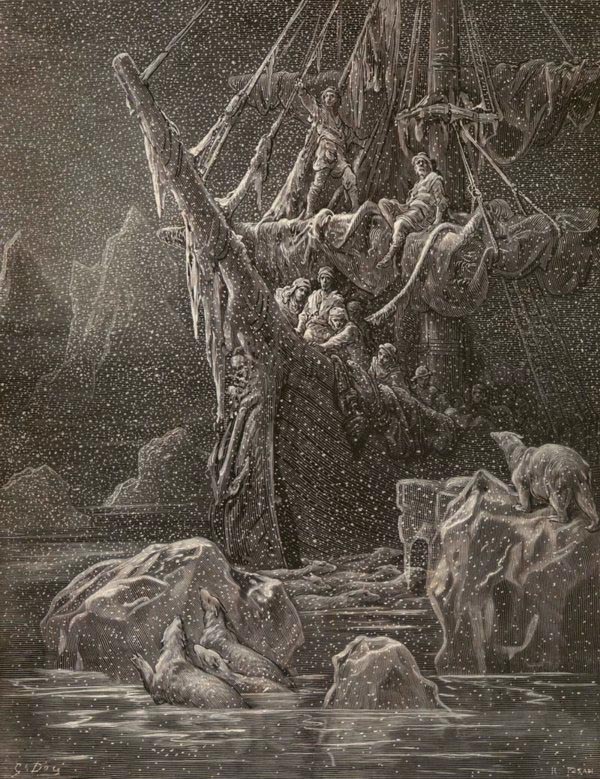
Some novelist friends asked me recently if I might return to writing fiction which is where I started. But I seem to be addicted to themed poetry collections, each relating an epic tale rooted in history, in 'fact' and biography, in geography and science. In the world of modern poetry, narrativeverse seems rather old-fashioned. But I like to write in sequences which offer a story arc as well as the 'intense moments' and 'micro-universes' of a lyricpoem. It's a challenge to let each poem breathe and not be overwhelmed by the narrative function. But poetry was once THE vehicle of choice for storytelling. Think of those fantastic story-poems by the Romantic poets - TheRime of the Ancient Mariner or Keats' Eve of St Agnes - or go right back to Beowulf or Dante's Inferno. It's the immediacy of voice, the rhythms of the bard 'singing' the story, as well as the intricate patterning of metaphors across a large canvas that I enjoy.


4) How does your writing process work?

With poetry I found myself released from the 'work' of fictionalising into the accessibility of the 'real'. I love the excavation of the historical, the scientific, the biographical - the total immersion in a specific time and place. On reading Hilary Mantel's WolfHall, I realised I too am trying for that richly textured world, the smells and sounds of a culture going about its business. In that 'other country' of the past, I find my imagination breathes differently. So an initial wave of research comes first - books, films, SpaceCentre visits or You-Tube clips. It's amazing what you stumble across on Google Images. I'm writing a poem about the Russian engineer Korolev's childhood - and I find photographs of a museum in his home-town where they've reconstructed his mother's house. These borrowed details become the movie set of my poem, now 'dressed' for action. A poem needs that 'right-there' quality.
After research, there follows a quite intense, rapid period of writing first drafts. I've picked out 'moments' in the story arc that I want to zoom in on, stretching from 1902 to 1977. It takes a few months to get 20 or so poems mapped out. I read them aloud at LeicesterWriters' Club; I need to 'hear' them with an audience of listeners. Then lots of editing. I find poems benefit from being 'left in the dark' like a tray of seedlings for many months. When I return I re-enter the world of the poem afresh and see that it's about something else or has to arrive at a different place. Here dissatisfaction is my best friend. I need to listen to it and stop settling for quick fixes; I need to worry at some of these poems like a dog. Others I need to woo, circle with sidelong glances. Editing is creative too. It takes me in at a deeper level of the excavation. Sometimes all I can see is the rim of the trench, the glint of a coin ...

More research follows - the beauty of the specific often illuminates a poem. I assemble a new palette of words, a semantic field bringing its distinctive music. Yesterday, researching sedan cars from the 30s, I found vintage car dealers onYou-Tube lovingly detailing the selling points of restored models: white-wall tyres, split wind-shields, headlamp buckets and 'suicide doors' now enter my language. Sometimes ready-made metaphors leap out at me. I came across an account of the Cuban Missile Crisis where Korolev's wife served up watermelon to his anxious men. That detail became my 'Martian Watermelon' poem. And that is how poetry can offer a path into history that is wholly different from non-fiction.


http://static.ddmcdn.com/gif/nasa-space-race-2.jpg


I also consider how one poem interacts with another elsewhere in the sequence. Recurring themes and imagery offer a wider textual cohesion that needs tweaking across the collection. Reviewing the story arc - I write new poems to fill in gaps. But by now, the poetry is nearly done and I am turning to prose and even ideas for illustrations. And I am beginning to enjoy the wholly different rhythms of writing non-fiction, the elasticity of this after the compressed music of poetry. Eighteen months on, I am still in the throes of an obsession and I am writing for people who are likewise passionately curious and who love how words sing even in the darkest of stories.
 
Watch this space for news of the 3 writers I've chosen to pick up the baton on this Blog Tour ... First up is  New Romantics 4 novelist Margaret Cullingford:


Margaret Cullingford, Mags to her friends, escaping the rumpus of a university department, decided to generate uproar she could control. She realized a long-term ambition to write fiction, and published her debut novel LastBite of the Cherry [eBook and paperback] in October 2012. Publication of her second novel, Twins of a Gazelle is imminent. Mags lives in Leicestershire with her long-suffering partner and their cat.


Sunday, 19 December 2010

Wintering out, Writing in

Winter seems to have arrived with incredible suddeness this year. So I'm feeling if I don't slow down and really taste it, the season will be gone again in the blink of an eye. And this icy Christmas week seems a frost-wrapped gift, a time that's quite-dream-like to me.


So this morning we rose early, fuelled up with porridge and scooted up to Bradgate Park, one of the loveliest places in Leicester, to catch the dawn.

And a slow burn it was, stretched out over two hours, washing colours from Arctic blue to rose to liquid gold on the water. Here's some glimpses:


It's been bone-achingly cold in air blown straight in from the Arctic. And that's kind of thrilling too for someone who's been undertaking various expeditions to Arctic landscapes in the last few years. An opportunity to layer up in all those thermals and fleeces.

Over by the water, a flotilla of small white birds in amongst the ducks - maybe Arctic refugees themselves.


Of course, it's nowhere near as freezing as Iceland was because the Arctic also has fierce winds that give their winters a real sting. When you see frozen waterfalls everywhere, then you know it's cold! But this will do very well for an old-fashioned English winter.


And I still get giddy faced with a frozen puddle or ice flowers on the grass. In the park, the river was largely frozen over, with great swirls of white on its glassy surface.


I wish I could also conjure up the crunching of frost too, the splintering of ice - or the strange mewling of the deer as they crossed the track in front of us. The shrieking of crows stark in the frozen air.


That sun with its long reach and misted light is already dipping as the solstice day approaches. So tantalisingly short.

I'm hoping to get some hibernating time this week to catch up on writing too. Especially a sequence I'm writing about Shackleton's voyage to Antarctica.

Certainly - I couldn't ask for more inspiring conditions for a Polar Poet! Time to pull on another cardigan and get out the notebooks.

Monday, 22 November 2010

Sea-dog Shanties

Send a writer to the sea-side and they come home with shells and a bundle of scribbled notes. My birthday treat this year was a weekend in Norfolk. Here's some of my ramblings:


Friday eve, Hunstanton


The sea is dragging its chains tonight
out-of-tune hounds baying in the fog
lunging at broken walls


detonating a salvo of sound-bombs
a trip-wired mine-field barbed with salt
ghostly no-man's land


shaking ruffled skirts along the shore
a ragged chorus-line staggering
into a memory of the can-can


Saturday Morning


The sea is a doubtful rumour this morning. The world beyond the cliffs vanished into fog. The muffled quiet of the strand is unbroken by wandering beach-combers and dogs. Even the rotting of its cast-offs is muted – more scent than stench today. It is a dream-scape in which time drops away: soft footfalls thudding into sand, a flock of birds cheeping tiny as insects. A long-ago tide heaped this border of razor-shells – pink claws of crab, limp star-fish, bloated wrack – dark clods of sea-peat from another epoch. I scavenge a few scooped shells the colour of amethyst, coral, porcelain blue – and a tiger-striped feather. As the winter sun cuts a disc in the gloom, we trudge back to the pier before we too are emptied.


We stayed at a wonderful B&B barely 2 minutes from the sea - Cori House. And Hunstanton's multi-coloured cliffs and endless beaches were no less enchanting in November's fog. Terrific swoops of starlings at tea-time too.

Wednesday, 17 November 2010

Changing the Clocks

As I dip my toe back into the blogosphere after so many months, I have to ask some questions. How do you juggle the job that pays the bills with the creative work? How do you get any kind of balance? Where does the time go?

Maybe you're lucky and they're one and the same. But lately I've been teetering all one way. For me, the teaching work is technically 4-5 days a week. And I'm supposed to keep Fridays clear for the writing and performing work. I've gotten used to the rhythm of the year and accept that at certain times - start of term, mock exam weeks etc. - teaching just sweeps all before it like a bore-tide. Except this year, the September rollers have just crashed on into November. How did that happen?


Teaching doesn't just pay the bills of course - it keeps me grounded and stimulates my thinking and learning. I love studying new books on the syllabus with the students - this year it's 'A Streetcar Named Desire'. I like those conversations and the shared purpose of it.

And despite the onslaught, I was lucky enough to have a few literary events this autumn that kept me engaged as a writer. Seeing my poems turned into beautiful art objects in Terri Bradshaw's wonderful exhibition in October. Hosting a National Poetry Day event with Leicester Writers' Club as part of the Everybody's Reading Festival in Leicester the same week. And best of all, an exciting Polar Poets gig as part of the Manchester Science Festival at half-term. You can read about that on my sister-blog.

However - it's high time I caught up with making some plans for the rest of the year. So if you're one of those people who's been wondering if I'd dropped off the face of the earth, the good news is I've been hacking my way through that avalanche of overdue emails. Radio silence is about to be broken!

But above all, November is probably my most fertile time for writing and immersing myself in new projects. So I need to get that balance back. As darkness falls and mist and frost push up against the windows, that outer hibernation gets some inner processes firing up. I'm restless to be in that place again. The hush of early mornings in the study before the bell beckons ...

Saturday, 20 February 2010

Belling the Quarter-hour

No writing this half-term, or even reading. (Unless you count these blogs, which I do. ) We're just home from a blissful few days in the Derbyshire Peaks, wrapped in mist, frost and snow. Out in the landscape, I've been soaking up the seasonal inspiration. Maybe I could even get a job writing tourist blurbs for the Peaks website. What do you think?

Here's one of my journal entries:

Wednesday 4.30pm

We're lured out again by fat snowflakes whirling past our window. And find ourselves at length in Hathersage churchyard among the slate tombstones. In the stillness of that corner, we're treated to an extraordinary recital. Birds I've never heard before, maybe migrants brought in by these Arctic winds? Two high in a tree send out a rich chi-chi-chirruping song and across the way, another answers. Her call is a muted echo of theirs. At the end of a timeless triplet, she lifts up and away across the valley. Hidden over there is North Lees Hall whose Gothic ramparts and rookery so inspired Charlotte Bronte.

Turning back between the stones, Rik's boots shed patterned cakes of snow. St Michael's interrupts the steady crunching of our feet, its brassy tones belling the quarter-hour. Tea-time. Down in the village, light is fast leaching away. The whole hillside is a study in greys, studded with orange dots - the streetlights suddenly on. A brown smell of woodsmoke escapes.

We're up on the high road now, back to the Booth. The flakes are finer than ever, sparks of wetness hitting the face. A goods train shakes the valley with its tooting and rattling. Around the corner, the Millstone Inn awaits us, fires and dinner. Some days are one variety of contentment after another.

all pictures (c) Siobhan Logan or Richard Thomas

Friday, 2 October 2009

Underfoot Poems

Well, here we are edging into October and the faded glories of a Whitby summer are long past. I've been thinking about the rhythm of the year and the way that my teaching work and writing get twined into the seasons. Come the end of August, everything goes crazy as students stream into college for enrolment. My garden wilts and the blog falters. What I call the 'day-job' takes over for a while. In this last month, it's been hard to get my Writers' hat on at all - except in the early mornings. Before sun-up, I'm jotting in the purple notebook. And I'm pleased to say a string of new prose-poems - snippets shall we say? - are beading together in the margins of my days.

But suddenly leaves are crackling underfoot and half-term is only a spit away. October could well be my favourite time of year. Because as the new classes bed down - as the nights get darker and clocks change over - I come into my best writing season. Outside the reddening trees and early sunsets make me giddy with anticipation. On the front street, they're hanging the Divali lights and Halloween and Bonfire Night will tumble after. Inside, it's dark and cocoon-like and the hibernation seems to stir something in that place the writing comes from. So bring on the conkers and firecrackers and frost, I say.

But before the summer gets forgotten altogether, I'm hoping to do some catch-up blogs after my long silence and tell you about some of the wonderful books I read on those long, lazy days by the sea.

Tuesday, 4 August 2009

The Seduction of Elsewhere

Ah, the literary life ... posting e-mails, chasing bookings, filing receipts, paying the printers, looking aghast at tax forms. This stuff can and does take up whole weeks. What I need now is a few quiet hours to find my way back to some new writing. A blank page and a world of possibilities. Hopefully, some long hours in terminals and on trains will do the job. John Hegley said he does a lot of his writing on trains and I can see why. The steady hum of the engine, an endless moving screen of landscape and people - and most of all, the lure of elsewhere. Someone asked me recently why so much of my writing seemed to be about other places like the Arctic. My answer was 'I like writing that take me into other people's stories and lives. That has been very liberating ... not to be confined to the 'me story'.'

For inspiration, I shall also take a pile of reading. Today is packing day and I'll be sifting through the pile by my bed. Will it be Susan Richardson's delicious arctic collection 'Creatures of the Intertidal Zone', Mark Goodwin's 'Else' or Brian Daldorph's 'Jail Time' - a collection that certainly reaches into other people's stories? For novels, I have Andrew Sharpe's exquisite African tale, 'The Ghost of Eden'. You can see the titles all speak of 'elsewhere'. I also have a choice of notebooks - my arctic one with the hide cover, a shiny hardback one with the 'Blue Cats & Butterflies' design or the plain but sturdy Sainsbury's hardback with a smoky lilac cover. Sometimes colour can seduce the mind into the 'write mood' ...

And for setting, we have the seaside which is a special treat for a landlocked Midlander. First, Zandvoort in the Netherlands where we get to housesit for friends - Trev (aka Smashy de Clown) and his lovely family. Another chance to inhabit someone else's life - and language even. Then it's Whitby on the North Yorkshire coast - a place which I have a special fondness for. The town that inspired that literary masterpiece, Dracula. We first stayed there in 1995 so it's part of our history too. I have the jet and amber earrings to prove it, the jars full of fossils and a 6,000 word short story.

So back to a morning of e-mails before the excitement begins. I'll be away for most of August and then I'll let you know what the tides washed in.

Monday, 30 March 2009

The push of blooms

I've spent all weekend hopping between the garden/ allotment and this computer screen. In the garden I was planting 'last chances' with self-seeded foxgloves, poppies scattered into a packed summer bed and a honeysuckle that's been a pot for three years. You never know what will come up and what will succumb to the garden's longlist of disappearances. In my study, it was the design for my 'Northern Lights' book.

The hayfever's worse than ever but I'm giddy with joy and anticipation at seeing the final stage of my book come together. My sister has sent a stunning monoprint image to use for it. The skyscape is crackling with energy and in its shifting forms I see the pools of green light, the shafts and scrawls of auroral colour that I witnessed in Norway. So I've been playing with fonts and tints and different layouts to my heart's content.

I imagine someone putting this book into my hands three years ago when I started writing about the Northern Lights. How amazed and delighted I would have been to see it coming to this fruition! For so many months now, its been a project, a collection of files and recycled paper and e-mail discussions and endless drafts. A list of things to do. But suddenly, this shimmer of digital data makes the book real to me. I can almost sense the weight of it, its paper and card substantiality, in my hand. I am bewitched by its possibility.

I remember the way poppies opened in the early summer mornings. If you were still enough, you could just catch the push of bloom against a papery skin, its fistful of energy wanting the sun - a breaking through you could almost hear - and then the unfurling.