Since I've not managed to update my 'events' page yet on the website, here's some of the news that is soon to appear. Now that I've got my Writer's Hat firmly back on - after the mayhem of a new teaching term in September - I'm pursuing new projects and bookings. I was delighted the other day to get an invitation in my Inbox to put on my Northern Lights show at the Ledbury Poetry Festival in July 2010. We hope this may include me appearing with an auroral scientist again, as at the gig we did at London's Science Museum. According to The Guardian, “This celebration of verse is the largest of its kind in the UK and also the most energised, giving a real sense of poetry as an important living, contemporary literary form.” Having caught the festival bug this summer, I'm really looking forward to that.
Closer to home, I'm doing a talk for Lutterworth Writers on the evening of Tuesday 27th October. It's always interesting to visit other writers' groups and see how they collaborate on their writing. My own group, Leicester Writers' Club, has been invaluable to me. I'm also keen to take the 'Firebridge' book and show out across the region now. Recently, I visited the new Writing East Midlands office in Nottingham to discuss how to do that. And the possibility of a gig in the Peaks has opened up - which is one of my favourite places. We'll be heading over there for a week walking the hills at half-term.
And now before a day of teaching kickstarts at nine, I want to get back to some research I'm doing for a new project around migration. I'm reading a book by Dr. Alice Roberts based on her excellent TV series, 'The Incredible Human Journey'. It tells the story of human evolution and the gradual colonisation of all five continents by the modern human species. I'm just up to a chapter on the spread from arctic Europe into the Americas - which ties in the research I did into indigenous arctic groups for my 'Firebridge to Skyshore' book. Roberts is a wonderful storyteller and she brings to life her own journey to these far-flung outposts of archaeology,learning from surviving indigenous groups along the way.
About Me

- siobsi
- Leicester, East Midlands
- As a storyteller, my work crosses boundaries of myth, science, history and spoken word. It has been presented in the British Science Museum, Ledbury Poetry Festival, National Space Centre and the European Space Agency website. In 2014 I ran a digital residency on WW1 for 14-18NOW and Writing East Midlands. I teach Creative Writing at De Montfort University and have experience of leading school events, workshop tuition and mentoring. In addition, I co-run The Writers' Shed, a service for writers, at: https://www.facebook.com/TheWritersShed/
Monday, 5 October 2009

Sunday, 4 October 2009
Arctic Hunger
 It's a perfect sun-fired day. Every leaf and brick gleams and out on the street, the whole neighbourhood is gearing up for the Divali lights switch-on. And on this crisp, autumn day I am thinking of ice. I'm re-reading Susan Richardson's beautiful collection of poetry, Creatures of the Intertidal Zone (published Cinnamon Press). I was lucky enough to hear Susan read at the summer's Polyverse Poetry Festival and was envious of her account of visiting Iceland, Greenland and Newfoundland – all places on my travel wish-list. Because like the penguin that recurs in this collection, I feel :
'… a force that's attracted to the north in her,
the thunder of summer light,
the blood of explorers in the tundra,
the tilting cap of ice.'
Susan undertook this trek to trace the footsteps of a Viking woman and the first sequence of poems, Gudrun the Rare, follows her on a life of sea-voyages. From the first line, it is utterly spellbinding: 'I know the gasp this grass gives/ when it's first touched by snow.' I was also very moved by the following poem, which relates the 'Resettlement' of an old woman from a remote, fishing island. As the men are lifting her wooden home into the water, she reflects on:
'… the lives of its five generations,
the twenty-eight births,
the labour pains ingrained in the wood of its walls,
and all those oil-skinned hours of waiting
while the men were at sea in a storm.'
No less engaging is her account of the evolutionary journey of a penguin, from migratory bird to ice-locked creature of the pole: 'Her need now beats its wings… propels her against/ the speckled shell of the sky …' The language is all lucid and unfussy like this, images arising naturally from the environment of her stories. The rhythms are also seductive, pausing sometimes to let you take that ice-tanged breath:
'So now, with tender eyes,
I must hunt for a hole in the white
and wait
patient
at the rim
for the whiskered nose of inspiration …'
 This poem is about the act of writing and it is indeed 'tender eyes' Richardson turns on the Arctic world and its creatures, both animal and human. In a clever structure, the collection begins with sequences about 2 Viking women and ends with a section about the male Arctic explorers of the early twentieth-century. Here is the voice of Edgar Evans, the first of Scott's men to die:
'My hand is quite okay, sir.
Yes, I'm quite okay.
I just feel such crimson hunger.
My ribs are what's left of that rotting ship,
wrecked in Rhossili Bay, stuck
in the sand for dogs to piss on.'
I hope to get the chance to meet up with Susan again and share our mutual arctic fascination. Meanwhile, if you're another ice lover, I can't recommend this book highly enough. And even if you're not, there's much to relish in these stories of human wanderings and foibles.
Friday, 2 October 2009
The Ghosts of Eden
 So let's break the silence that was September on my blog with a throwback to one of my best summer reads. The Ghosts of Eden by Andrew JH Sharp was the kind of good thick book I like to nestle into during the holidays. This is a wonderfully lyrical novel set in Africa. The early sections depict two worlds that overlap in the lush landscape of colonial Uganda; the childhood of Stanley, an 8 year-old cattle-herder, and the childhood of Michael Lacey, son of missionaries.
 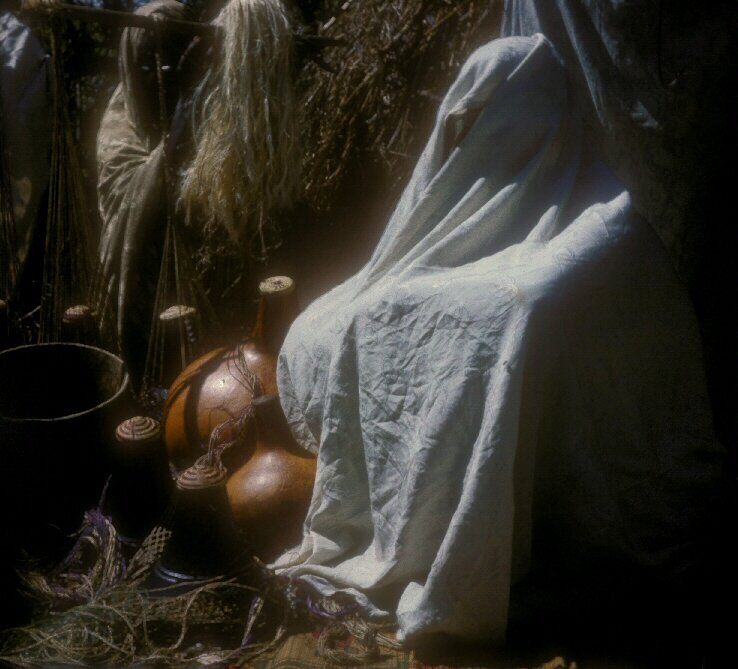 There is a sense of each being a closed world vividly experienced - yet each is doomed by modernity pressing on its edges. The boys are both engaging heroes, similarly shy, loyal, deeply sensitive. For me the depiction of Bahima nomadic culture as the herd boys follow out the rituals of their daily lives was utterly enchanting and convincing. We see through their eyes the strangeness of Bazungu (European) behaviour as they encounter white people for the first time. We feel the jolt of that meeting and fear for them as they face exile from their own people with the prospect of boarding school.
The author, like his characters, then takes a rather brave step. We jump forward some 30 years to find Michael as an adult on a plane to Uganda for a 3 day conference. Another jolt. The adult is entirely disassociated from his past, the child's vulnerability buried in the clinical efficiency of a gifted surgeon (here Sharpe draws on his own experience as a medical practitioner.) Uganda is still raw from the trauma of Idi Amin's rule and its legacy. But the past griefs that threaten to engulf Michael take more time to surface. Inevitably, the paths of the Bahima and the Bazungu now cross.

But it is very much Michael's story and I missed the chance to explore Stanley's point of view in this second half. I was too emotionally invested in the Bahima characters by then to see them only from the outside. So it is Michael who negotiates the minefields of cultural difference and personal loss and alienation. There are big themes here but always firmly grounded in this individual story. I'm glad the author resisted too neat a resolution but the rhythm of the novel is towards a much-needed redemption for Michael and his Bahima counterpart. Overall, this was a very satisfying read and an impressive debut for Sharp in his first novel.
Underfoot Poems
Well, here we are edging into October and the faded glories of a Whitby summer are long past. I've been thinking about the rhythm of the year and the way that my teaching work and writing get twined into the seasons. Come the end of August, everything goes crazy as students stream into college for enrolment. My garden wilts and the blog falters. What I call the 'day-job' takes over for a while. In this last month, it's been hard to get my Writers' hat on at all - except in the early mornings. Before sun-up, I'm jotting in the purple notebook. And I'm pleased to say a string of new prose-poems - snippets shall we say? - are beading together in the margins of my days.
But suddenly leaves are crackling underfoot and half-term is only a spit away. October could well be my favourite time of year. Because as the new classes bed down - as the nights get darker and clocks change over - I come into my best writing season. Outside the reddening trees and early sunsets make me giddy with anticipation. On the front street, they're hanging the Divali lights and Halloween and Bonfire Night will tumble after. Inside, it's dark and cocoon-like and the hibernation seems to stir something in that place the writing comes from. So bring on the conkers and firecrackers and frost, I say.
But before the summer gets forgotten altogether, I'm hoping to do some catch-up blogs after my long silence and tell you about some of the wonderful books I read on those long, lazy days by the sea.
But suddenly leaves are crackling underfoot and half-term is only a spit away. October could well be my favourite time of year. Because as the new classes bed down - as the nights get darker and clocks change over - I come into my best writing season. Outside the reddening trees and early sunsets make me giddy with anticipation. On the front street, they're hanging the Divali lights and Halloween and Bonfire Night will tumble after. Inside, it's dark and cocoon-like and the hibernation seems to stir something in that place the writing comes from. So bring on the conkers and firecrackers and frost, I say.
But before the summer gets forgotten altogether, I'm hoping to do some catch-up blogs after my long silence and tell you about some of the wonderful books I read on those long, lazy days by the sea.
Tuesday, 11 August 2009
Sand-marked Paperbacks
Zandvoort aan Zee takes beach-lounging to an industrial level with rows upon row of plastic sun-loungers and tractors that go out to 'clean the sand' in the morning. But if you get down there early, before the sun-worshippers have stirred, the silver-blue sea and honeyed sand are stunning; the shale underfoot of broken shells pleasingly crunchy. You can sit under the dunes and listen to a storm of tidal detonations that are pestle to the mortar of this shore. And after a mesmerising morning walk, treat yourself to a croissant breakfast at Cafe Neuf.
 In between house-sitting a menagerie of pets this week, I enjoyed the cool of the garden and finished off a delicious collection of poems by Mark Goodwin, called Else. Goodwin's poems transport you into places you will never find on a map. They leave the reader land-wrecked in wordscapes, tangled in an undergrowth of sounds, senses, images. On the first page, I am already arrested:
'Silas Tarn's willow-agile feet pick
out a code of stones to step on; he moves
with the slime-ribbony
mood of a river ...'
Goodwin is in love with language and its many registers. The river's stones are 'synovially smooth as a newborn's joints' and Silas 'sweats hints of sea zawns'.
I find this word 'zawn' in a glossary of Climbers' terms, meaning: 'Small steep-sided channel of sea ...' It's a West Cornwall dialect word and so its usage reflects not only one of Goodwin's favourite locations but also his own passion for climbing. And the poet is very present here, his hurt knuckles, his 'puzzler boots', his father with the dead dog, his chef brother who loves fireworks, his own children from the womb onwards. I particularly liked 'Three Men, a Boy, & a Four Pound Trout' which takes us through the rhythm of a day's fishing;
'The bloodknot is neat and tightly tied
to a little grappling hook with barbs like
prongs from a shattered star.
And the spinner is the way a boy smiles
years as sunlight swirls through ...'
It's hard to pick out a clutch of lines that do this 8-part poem justice, as it is hard to single out poems in this rich hoard. But I am still entranced by certain images in the early poem, 'Summer Conundrums of Happiness', which tells us that 'happiness hides in ditches'. It evokes the sinister smells and 'spear-beaks' of the 'slow-hot uncoil of blurred summers' before delivering a killer line:
'how our wounds
are frilled with
fibres of being
glad.'
The gorgeous blue-moon cover with the gold birch leaf gives just the right hint of treasure excavated from the border of human and natural worlds.
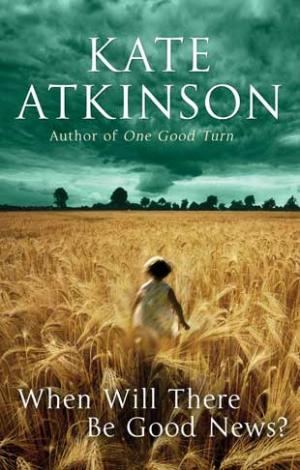 And then, on an overnight visit to the beautiful city of Haarlem - but let me digress. I have to mention the Indonesian rijsstaffel we had at Wisma Hilda. We go there every year and without fail, this is died-and-gone-to-heaven food. In the morning we revisited other favourite haunts; the market in the medieval square, the spell-binding shafts of light and stained-glass colours in St Bavo's, the cobbled trails of side-streets. And in the bookshop, I snapped up a copy of Kate Atkinson's 'When Will there Be Good News?'. Atkinson made her name with literary fiction such as 'Behind the Scenes at the Museum' and her fiction became ever more playful with novels like 'Human Croquet'. But where I felt her characters got a little lost in the experimentation with form, in her latest series of detective novels, they are the beating heart of the story. And strong, page-turning stories these are. I devoured this one almost overnight, the perfect summer read for a long train journey or hotel room.
Most pleasing of all, on a five-day jaunt to the Low Lands, were the notes I jotted in the new lilac notebook. I got three short pieces written - they might be prose poems, or the raw material for poems. I'm just calling them 'snippets'. All being well, I'll have something to read at my next Leicester Writers' Club meeting. But first, there's a trip to York and then on to that magical seaside town, Whitby, on the North Yorkshire coast. There will be day-trippers and Cod + Chips; there will be Guided Ghost Walks and Dracula trails; there might be plastic rain hoods but there'll be no sun loungers, I'm sure of that.
In between house-sitting a menagerie of pets this week, I enjoyed the cool of the garden and finished off a delicious collection of poems by Mark Goodwin, called Else. Goodwin's poems transport you into places you will never find on a map. They leave the reader land-wrecked in wordscapes, tangled in an undergrowth of sounds, senses, images. On the first page, I am already arrested:'Silas Tarn's willow-agile feet pick
out a code of stones to step on; he moves
with the slime-ribbony
mood of a river ...'
Goodwin is in love with language and its many registers. The river's stones are 'synovially smooth as a newborn's joints' and Silas 'sweats hints of sea zawns'.
I find this word 'zawn' in a glossary of Climbers' terms, meaning: 'Small steep-sided channel of sea ...' It's a West Cornwall dialect word and so its usage reflects not only one of Goodwin's favourite locations but also his own passion for climbing. And the poet is very present here, his hurt knuckles, his 'puzzler boots', his father with the dead dog, his chef brother who loves fireworks, his own children from the womb onwards. I particularly liked 'Three Men, a Boy, & a Four Pound Trout' which takes us through the rhythm of a day's fishing;
'The bloodknot is neat and tightly tied
to a little grappling hook with barbs like
prongs from a shattered star.
And the spinner is the way a boy smiles
years as sunlight swirls through ...'
It's hard to pick out a clutch of lines that do this 8-part poem justice, as it is hard to single out poems in this rich hoard. But I am still entranced by certain images in the early poem, 'Summer Conundrums of Happiness', which tells us that 'happiness hides in ditches'. It evokes the sinister smells and 'spear-beaks' of the 'slow-hot uncoil of blurred summers' before delivering a killer line:
'how our wounds
are frilled with
fibres of being
glad.'
The gorgeous blue-moon cover with the gold birch leaf gives just the right hint of treasure excavated from the border of human and natural worlds.
And then, on an overnight visit to the beautiful city of Haarlem - but let me digress. I have to mention the Indonesian rijsstaffel we had at Wisma Hilda. We go there every year and without fail, this is died-and-gone-to-heaven food. In the morning we revisited other favourite haunts; the market in the medieval square, the spell-binding shafts of light and stained-glass colours in St Bavo's, the cobbled trails of side-streets. And in the bookshop, I snapped up a copy of Kate Atkinson's 'When Will there Be Good News?'. Atkinson made her name with literary fiction such as 'Behind the Scenes at the Museum' and her fiction became ever more playful with novels like 'Human Croquet'. But where I felt her characters got a little lost in the experimentation with form, in her latest series of detective novels, they are the beating heart of the story. And strong, page-turning stories these are. I devoured this one almost overnight, the perfect summer read for a long train journey or hotel room.Most pleasing of all, on a five-day jaunt to the Low Lands, were the notes I jotted in the new lilac notebook. I got three short pieces written - they might be prose poems, or the raw material for poems. I'm just calling them 'snippets'. All being well, I'll have something to read at my next Leicester Writers' Club meeting. But first, there's a trip to York and then on to that magical seaside town, Whitby, on the North Yorkshire coast. There will be day-trippers and Cod + Chips; there will be Guided Ghost Walks and Dracula trails; there might be plastic rain hoods but there'll be no sun loungers, I'm sure of that.
Tuesday, 4 August 2009
The Seduction of Elsewhere
Ah, the literary life ... posting e-mails, chasing bookings, filing receipts, paying the printers, looking aghast at tax forms. This stuff can and does take up whole weeks. What I need now is a few quiet hours to find my way back to some new writing. A blank page and a world of possibilities. Hopefully, some long hours in terminals and on trains will do the job. John Hegley said he does a lot of his writing on trains and I can see why. The steady hum of the engine, an endless moving screen of landscape and people - and most of all, the lure of elsewhere. Someone asked me recently why so much of my writing seemed to be about other places like the Arctic. My answer was 'I like writing that take me into other people's stories and lives. That has been very liberating ... not to be confined to the 'me story'.'
For inspiration, I shall also take a pile of reading. Today is packing day and I'll be sifting through the pile by my bed. Will it be Susan Richardson's delicious arctic collection 'Creatures of the Intertidal Zone', Mark Goodwin's 'Else' or Brian Daldorph's 'Jail Time' - a collection that certainly reaches into other people's stories? For novels, I have Andrew Sharpe's exquisite African tale, 'The Ghost of Eden'. You can see the titles all speak of 'elsewhere'. I also have a choice of notebooks - my arctic one with the hide cover, a shiny hardback one with the 'Blue Cats & Butterflies' design or the plain but sturdy Sainsbury's hardback with a smoky lilac cover. Sometimes colour can seduce the mind into the 'write mood' ...
And for setting, we have the seaside which is a special treat for a landlocked Midlander. First, Zandvoort in the Netherlands where we get to housesit for friends - Trev (aka Smashy de Clown) and his lovely family. Another chance to inhabit someone else's life - and language even. Then it's Whitby on the North Yorkshire coast - a place which I have a special fondness for. The town that inspired that literary masterpiece, Dracula. We first stayed there in 1995 so it's part of our history too. I have the jet and amber earrings to prove it, the jars full of fossils and a 6,000 word short story.
So back to a morning of e-mails before the excitement begins. I'll be away for most of August and then I'll let you know what the tides washed in.
For inspiration, I shall also take a pile of reading. Today is packing day and I'll be sifting through the pile by my bed. Will it be Susan Richardson's delicious arctic collection 'Creatures of the Intertidal Zone', Mark Goodwin's 'Else' or Brian Daldorph's 'Jail Time' - a collection that certainly reaches into other people's stories? For novels, I have Andrew Sharpe's exquisite African tale, 'The Ghost of Eden'. You can see the titles all speak of 'elsewhere'. I also have a choice of notebooks - my arctic one with the hide cover, a shiny hardback one with the 'Blue Cats & Butterflies' design or the plain but sturdy Sainsbury's hardback with a smoky lilac cover. Sometimes colour can seduce the mind into the 'write mood' ...And for setting, we have the seaside which is a special treat for a landlocked Midlander. First, Zandvoort in the Netherlands where we get to housesit for friends - Trev (aka Smashy de Clown) and his lovely family. Another chance to inhabit someone else's life - and language even. Then it's Whitby on the North Yorkshire coast - a place which I have a special fondness for. The town that inspired that literary masterpiece, Dracula. We first stayed there in 1995 so it's part of our history too. I have the jet and amber earrings to prove it, the jars full of fossils and a 6,000 word short story.
So back to a morning of e-mails before the excitement begins. I'll be away for most of August and then I'll let you know what the tides washed in.
Saturday, 1 August 2009
Filling a Lounge-shaped Silence
 The Yellow evening at the stupendous Lyric Lounge did not disappoint as a finale. Lydia was a black and gold star in lace and tulle. John Hegley was a revelation. Just about all his poems were SUNG or spoken to a very groovy soundtrack of live music from 'the Megend Keith Moore' on bass cello - or was it Ken? That's the problem with a 'megend'. There was also his nephew on acoustic guitar. John sang in a wild spoof-bluesy sort of way and the poems were a joy - witty, whimsical but often with an emotional punch too. I think my favourite was about his father - formerly Renee Robert who became 'Bob' to fit in at his English office and never spoke French except when 'Grandmere' suddenly visited after 20 years. Do take a look at some of them on his website.
In addition to the fabulous John Hegley, there was a live band, 4 'talented older men' from Lyric Lounge who dished their own brand of comic poetry and a rousing chorus of Hegley's poem/song dedicated to his native 'Luton bungalow'. The audience was required to sing along, translate French and tap our spectacles in rhythm like an answering morse code. It's impossible to convey how much we laughed and why. Like the whole week, it was generous, fun and in love with versifying. When the circus packed up, what was left was a Lounge-shaped silence.
Subscribe to:
Posts (Atom)