Writing is a journey, both imaginary and physical. My first book took me to the Arctic to 'catch the colours' of the Northern Lights. Then I hunkered down to catch the wind-blown voices of polar explorers on Shackleton's 1914-17 Endurance expedition. More recently I'm obsessed by space: the race, the rockets, the final frontier.

Hear a BBC Radio Leicester interview about my space poetry at: http://www.bbc.co.uk/programmes/p03wfpyp
Explore my digital narrrative PHILAE'S BOOK OF HOURS, published by the European Space Agency, at:
https://rosetta-art-tribute.tumblr.com/post/144241709712/siobhan-logan-philaes-book-of-hours

My prose-poetry collections FIREBRIDGE TO SKYSHORE
and MAD, HOPELESS & POSSIBLE are both published by Original Plus Press at:
http://thesamsmith.webs.com/originalpluschapbooks.htm

Contact me for signed copies or bookings at:
https://twitter.com/siobsi

Visit the writers' development service I co-run at: https://www.facebook.com/TheWritersShed/


About Me

My photo
Leicester, East Midlands
As a storyteller, my work crosses boundaries of myth, science, history and spoken word. It has been presented in the British Science Museum, Ledbury Poetry Festival, National Space Centre and the European Space Agency website. In 2014 I ran a digital residency on WW1 for 14-18NOW and Writing East Midlands. I teach Creative Writing at De Montfort University and have experience of leading school events, workshop tuition and mentoring. In addition, I co-run The Writers' Shed, a service for writers, at: https://www.facebook.com/TheWritersShed/

Sunday, 24 April 2011

The Lure of Scott's Hut

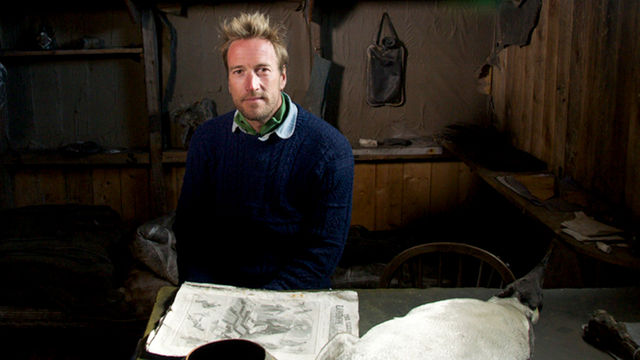
With the 100th anniversary of Scott's dash for the South Pole running into this year and Shackleton's own Endurance anniversary looming, there's been a spate of documentaries on recently about Polar Explorers on the last continent. V. useful indeed for a Polar Poet, especially when they send out a celebrity/ explorer like Ben Fogle to present to camera. Suddenly I can see the texture of the ice, like ropes of sheer glass, running down the Beardmore Glacier. I can learn what pemmican looks like or what the body does when there is no more fat to burn. And I can take a virtual tour with the amiable Fogle into the darkness of a wintering Scott Hut - almost touch those ancient packs of Colman's Mustard and rusty tins of Real Turtle Soup ...


Last week's programme, The Secrets of Scotts Hut, was absolutely fascinating and raised many pertinent questions about both polar exploration and polar archaeology. Can we (or rather the New Zealanders) justify spending millions on painstakingly removing and preserving the 100s of artefacts from Scott's Hut, only to place them back in that same environment in which they are rotting - especially when only a handful of people will ever see them there? Though he might have made more of the burgeoning tourist industry which makes an ever greater imprint on Antarctica's 'pristine wilderness' - an appetite which Fogle's programme can only further whet.


Sir David Attenborough made the case that Scott's Hut is an essential historical marker of 'the human spirit' and its quest to journey into the unknown. I can see what he means if we read polar exploration in the light of millennia of human migration and colonisation of the globe. They were conscious, this Brotherhood of the South, of stepping onto the last uninhabited continent - as it then still was. 'The white edge of every map' as one of my poems has it. But pick up the diaries or the mission statements and it's clear their endeavours need also to be read in the more immediate context of turn-of-the-century European Imperialism - the same Scramble for Colonies that ushered in the First World War. Fogle was very struck by the wall of packing crates Scott erected between officers and men - a powerful metaphor for the class politics they unloaded along with the corporate sponsored foodstuffs onto the ice.


So Fogle was raking over the conflicting myths of Scott - a heroic leader who inspired undying loyalty - or a failed explorer whose obsession with beating first Shackleton then Amundsen led him to sacrifice his men's lives. Reading Scott's private diaries revealed a man of great tenderness and passion and his own photographs showed men pulling together to drag sledges across the vast Ross Ice Shelf. But any comparison with Amundsen makes Scott's party look ill-equipped and wantonly amateurish. On the other hand, Fogle's documentary shows how Scott's hut was packed to the rafters with scientific research materials and examples of the latest technology. Unlike Amundsen - or Shackleton - Scott took the science very seriously and his team amassed considerable data that contributed to the study of climate change for instance.


All key questions and debates. At the end of the day, I'm always drawn back to asking what were they really doing there? Why did they go? And why jeopardise all that was going on at Hut Point for a desperate dash to plant a flag in a wilderness? Theirs is such a very different endeavour from indigenous arctic peoples who never felt the need to stake such claims and who learned to be completely at home in their polar wilderness. From the opposite end of the century, we are still reassessing the myths. But the fascination of that frozen hut, heaped with the debris of Edwardian gentlemen explorers, remains irresistible and unarguably poignant.

Sunday, 13 February 2011

Sometimes We Bless Each Other

Wow! what a day!

see: http://www.facebook.com/album.php?id=799524860&aid=290025


And here was the wedding poem - which can hardly do justice to 20 years of companionship and so much more. But sometimes you have to try to say it anyway:


Cartography for the Heart


I

With you I am a traveller
a maker of maps:

charting the body's terrain
from stone rise of hip
to waist's sloping glen;
by navel's crinkled landmark
I divine the leylines
of your scent.


II


With you I reclaim lands
waterlogged, history bogged:

on Bohey’s raw hills
we navigate gradients,
search out the ruined tombs
of Tullyskeherny,
doorways of limestone
white as bone.


III


With you I am circling futures
the mind's latitudes

between trays of smoky tea
we cross Baltic blue seas,
skim ice water in Kvaloya,
drift with bergs in Jokulsarlon
where a midnight sun
is melting colours.


And the afternoons we make
are meadow sweet
puddled with sunlight

talking of places
and things to come ...


(c) Siobhan Logan 2011

Stitching the Cliches

Spring is busy trashing my garden with wind and rain and I see poetry slams and events shooting up all over the place. Something is definitely in the air. But for me, all normal writerly service is suspended for the next week as THE WEDDING approaches. It even demands to be capitalised with barely 6 days to go. Life is now a whirl of menu-choice spreadsheets, table plans and sparkly accessories. For a wedding wraps a writer tight in the very thing s/he most abhors - yards and sequinned yards of cliche ...

However, this nuptial circus training has also entailed the writing of the Wedding Poem - the subject of this week's blog. A very tricky assignment. And not only writing and editing it but then getting it past the censorious scrutiny of the Registrar's Office. On Friday, I submitted my offering in person at Leicester Town Hall. A very helpful young woman cast her eye over the poem and looked uncertain. She passed it to her superior who scanned it with even more gravity and took it away for further checks. I don't know how many officials subsequently passed judgement on it or whether they used surgical gloves. What were the critieria for this entry? Were they hesitant about line breaks, thematic cohesion or the secular connotations of the verb 'to divine'? I'll never know. When it finally secured approval, no critique was given. Whew!

Because I certainly couldn't have produced another one. I'm quite lost when it comes to writing poems for occasions and it's very rare these days I write about personal experiences at all. I'm no Carol Ann Duffy, not a poet of the heart or human relationships. And how do you engineer a love poem that's not riddled with cliche - or a lyric that is authentic and intimate and yet immediately accessible to fifty or so guests? I had to rummage through notebooks as far back as 1994 to find the raw material for this one. Now give me an iceberg ... which did manage to make an appearance in this one:

we cross Baltic blue seas,
skim ice water in Kvaloya,
drift with bergs in Jokulsarlon


And that's all you're getting because even more than the dress, this adornment of words is under wraps. The only people who've seen it are my trusted critics, Leicester Writers' Club, who helped me edit it this week. Much snipping, pinching in and stitches in time. Certainly the groom has not had a peek. Because when you strip away all the language, all the civil ceremony and wedding cliches, he is what the day is all about.

Sunday, 6 February 2011

Mad, Hopeless & Possible

sledges packed; huskies fed; maps checked ...


By 2 o'clock in the afternoon, the expedition was underway. In the beautiful space of the Friends Meeting House, with 20 or so hardy companions, I steered into the ice pack of the Weddell Sea. For two hours, we hunkered down to haul the load of this epic story. White Warfare: Shackleton's Endurance Expedition, was my latest show and for the first time, I had travelled South to Antarctica for my inspiration.


It was seats of the pants stuff. A week ago, I was still writing new poems. We only tried out the new projector screen that morning. But thanks to my able techie, Rik, the slideshow ran without a glitch. And I was able to explore how much Frank Hurley's stunning images of ice hummocks and the beset ship added to the poems. (What would he have made of our pocket-sized projector after his enormous Kodak box-camera with its glass plates?) You can still catch an exhibition of his Endurance photographs at the Merseyside Maritime Museum till February 28th. Not to be missed by polar fans.

The event was designed to air the new material, test its mettle. I wanted to see how the whole narrative hung together and it was very useful for me. Lovely to get laughter at certain moments or hear the audience responding to the men's voices - fragments of their own expedition diaries that I was working into the poems. And the balance of illustrated talk with poetry performance seemed to work well.

At half-time, we stopped for cake. Unlike the store-keeper Orde-Lees, nick-named Belly-Burglar by his ship-mates, our cook, Gloria, has never been known to send anyone to bed hungry. We had our fill of her legendary plum-bread and chocolate cake too. Bally fine hoosh!


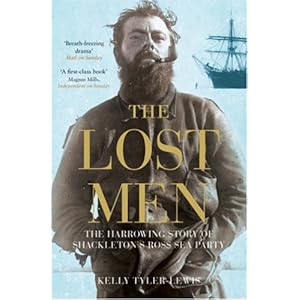
By that time, in the summer of 1916, Shackleton's Endurance crew had been rescued from Elephant Island. But now we plunged into the much darker story of the Ross Sea Party who had been sent by Shackleton to the other side of Antarctica to lay food depots for his Trans-Continental crossing. The suffering of the the men marooned there for two years belied any of the Boys' Own heroics of the Endurance story. And here were three men Shackleton never bought home. In a darkening hall that was beginning to feel like Polar Night, we hung on for the rescue of the last seven survivors.

My companions stuck with me to the very end. And here were some lovely comments posted afterwards:


It was a really vivid and enthralling description of an extraordinary experience.

Been in the white wilderness so long I now need to go turn on the central heating. No blubber smoke to worry about either.

The poems you read were beautiful and your historical information was
pitched just right...

We were utterly transported ...

... a most joyful afternoon. Marvellous performance!

Wednesday, 26 January 2011

Ice Floe Drifting

Wedding maps and menus are being posted as we speak, OFSTED paperwork is piling up for this week's inspection and my poetry event on Shackleton's Endurance story is not much more than a week away. Yikes! January is indeed a full-on month.

But I was given a huge boost recently when the editor of my Northern Lights book, Firebridge to Skyshore, offered to publish this new collection of poems as a chapbook. Sam Smith did a great job on my first book and I'm thrilled that this new sequence will find a home and a pathway into print with Original Plus Press. Look out for news of that later in the year.

That gives even more impetus to my frantic editing. Although I'm also finding myself writing new poems to round the sequence off - five in the past fortnight. I've been workshopping as many as possible at Leicester Writers' Club and this week at the new Poetry Stanza group in Leicester. This group of poetry enthusiasts offer detailed critiquing off the page so was very useful.

So I have to reflect on my great good fortune - not only to have an editor who is so supportive of my work but to live in a city where literature/writing groups abound. This week, I'm hoping to make it along to the women's poetry group Soundswrite, who are also bringing out a new anthology this year that will feature 3 of my poems.

Meanwhile, as Caroline of Stanza said, I am still on my ice floe. Here's a poem in progress:


WHITE WARFARE

they set off
to hoist a blue flag
in an empty country
a jagged ice-barbed
no-man's land

nineteen hundred
and seventeen
was a speck in the long
geological calendar
of the continent

which resumed
its freezing, melting, fastening
throes; its volcanoes
smudging black funnels
of smoke on livid skies ...

(to be continued )

Monday, 17 January 2011

Glass Plate Visions

These days many of my weekend breaks are research trips: Cardiff, Iceland - and now Liverpool. It was my first time in the city and I was here for an exhibition of photographs from the 1914 Shackleton Endurance expedition. The Albert Docks were beautiful on this bright January day and I wished we'd had more time to explore. The Maritime Museum was also very impressive with exhibitions on the Titanic, on Slavery, Art and the Sea as well as Shackleton. All good reasons in themselves to come here again but the Shackleton exhibition was so spectacular, it kept me busy for two and a half hours.


There seemed to be hundreds of photographs, all printed from Frank Hurley's original plate negatives. I learned so much about the expedition from trawling through them. And useful snippets from the men's diaries alongside. Even maps of the period were fascinating. In previous centuries, Antarctica was either completely missing from the map or 'the white edge' with no detail - the guessed-at continent. Explorers such as Shackleton had only been probing its shores for a few decades and were filling in the maps as they went.


The photographs painted a vivid picture of the hardships of the men, of their camaraderie and their increasingly desperate plight. But what shone through was the vision - literally - and the passion of one man, the remarkable Frank Hurley, a gifted photographer working at the cutting edge of his art in that era. So enthralled was he by what he saw, he even dived into the freezing waters of the sinking ship's hold to retrieve these plates. Inevitably, I started jotting a poem on the spot:


He loved the ice, this man,
laid his eyes upon it
with an illuminating caress;
sugar surface, snow pebbles, ice caves, stalactites ...
even when it defeated
them, wrenched them, imperilled
and appalled them,
he kept faith
stealing back with his tripod and plates
to spread his gaze
over its infinite broken form
its sea-changing, melting magnificence ...


I love a good museum and was astonished that this wonderful exhibition was entirely for FREE. Long may places like the Merseyside Maritime Museum escape the grasping fingers of government cuts and offer such treasures to all. I shall certainly hope to return to Liverpool.

Monday, 10 January 2011

Saturday Ice


When Shackleton was recruiting for his 1914 Imperial Transarctic Expedition, he filed thousands of applications in piles marked 'Mad, Hopeless & Possible'. It's a good slogan for the whole ill-fated voyage and a wonderful title for a poem - which I've recently written. Perhaps I'm touched with something of the same spirit in deciding to put on an event on a Saturday right between an OFSTED inspection and my own wedding. But I couldn't resist the impulse to seize the moment, while winter's grip hangs on, to tell this astonishing story in poems and pictures.


So here it is. You are invited to a Saturday afternoon of cake, story and pictures. (Yes, Gloria's best plum cake!) Take a voyage into the white beyond and shiver at the men's accounts of icy peril. All of this in the lovely, warm space of Leicester's Quaker Meeting Hall.

WHITE WARFARE: Shackleton's Endurance Expedition

In 1914, as war broke in Europe, Shackleton's ship Endurance sailed for the frozen fields of Antarctica. Intended as one final push acorss the white continent, it turned into an epic and harrowing tale of surival and loss. Now Leicester's 'Polar Poet' tells the story, drawing on the men's own words and images.

Sat. 5th February 2011
2 - 4pm at Quaker Meeting House
16 Queen's Road, Leicester, LE2 1WP
Entry: £3 (includes coffee & cake)


Last night I was watching Bruce Parry on TV venturing out between pack ice in small boats with Inuit hunters. Ice closing in and bergs looming all around. Stunning scenes that recalled the Endurance crew trying to steer their little whaling boats to safety. But Parry explores the impact of climate change and fresh industrialisation on indigenous Arctic peoples as the ice melts quicker than anybody expected. Well worth a look.


And this week, I'm hoping to travel up to Liverpool to see an exhibition of Frank Hurley's wonderful photographs from the expedition. Courtesy of the National Maritime Museum there. More inspiration.

Can you feel that nip of frostbite pinching?