Writing is a journey, both imaginary and physical. My first book took me to the Arctic to 'catch the colours' of the Northern Lights. Then I hunkered down to catch the wind-blown voices of polar explorers on Shackleton's 1914-17 Endurance expedition. More recently I'm obsessed by space: the race, the rockets, the final frontier.

Hear a BBC Radio Leicester interview about my space poetry at: http://www.bbc.co.uk/programmes/p03wfpyp
Explore my digital narrrative PHILAE'S BOOK OF HOURS, published by the European Space Agency, at:
https://rosetta-art-tribute.tumblr.com/post/144241709712/siobhan-logan-philaes-book-of-hours

My prose-poetry collections FIREBRIDGE TO SKYSHORE
and MAD, HOPELESS & POSSIBLE are both published by Original Plus Press at:
http://thesamsmith.webs.com/originalpluschapbooks.htm

Contact me for signed copies or bookings at:
https://twitter.com/siobsi

Visit the writers' development service I co-run at: https://www.facebook.com/TheWritersShed/


About Me

My photo
Leicester, East Midlands
As a storyteller, my work crosses boundaries of myth, science, history and spoken word. It has been presented in the British Science Museum, Ledbury Poetry Festival, National Space Centre and the European Space Agency website. In 2014 I ran a digital residency on WW1 for 14-18NOW and Writing East Midlands. I teach Creative Writing at De Montfort University and have experience of leading school events, workshop tuition and mentoring. In addition, I co-run The Writers' Shed, a service for writers, at: https://www.facebook.com/TheWritersShed/
Showing posts with label Writers. Show all posts

Sunday, 6 December 2009

Kabatic Winds on the High Street

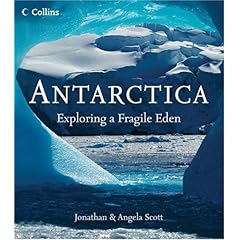
Deluged by a blizzard of reports and coursework drafts at the day-job, I've been taking solace in a sumptuous book I found in the library last week. Antarctica: Exploring a Fragile Eden by Jonathon & Angela Scott made me long all over again to head off for the poles. It has breath-taking photographs of glacier caves, katabatic winds blowing up storms and colonies of penguins stretched across the ice-bound horizons. A book to get lost in.

There is one image of a gentoo penguin being shaken to death by a leopard seal. I was thinking of this as I digested a talk by literary agent Elizabeth Cochrane of Greene & Heaton Agency last Thursday. Her visit was hosted by my writers' group Leicester Writers Club and offered many insights into the world of publishing today. It was undoubtedly a 'very tough industry'. The harsh truth is most books make losses - only a few make money for the publishers. And there are thousands of novelists out there. 'Many writers will write perfectly publishable books that never get sold.' With the crash of Borders bookstore chain last week, the industry is in the throes of the credit crunch. Writers too will feel the pinch. After maybe 3 years work on your first novel, you might be lucky to get a £1,000 advance. Try living on that.

So that was just some of the tough talk. However, Elizabeth Cochrane was there to throw us a few lifelines, not just beat us about the head with home truths. She worked through several hours of detailed, practical advice about what agents were looking for, how to present your pitches and how they would fight for your interests in this climate. The talk was supported by Creative Leicestershire so free. A large room was packed with maybe ninety-odd aspiring and professional writers.

I've been lucky enough to hear a few agents and editors speak at LWC events so a lot of it was familiar. But there are always little gems. Having mentioned the horror story of an unnamed leading agency that kept the 'slush-pile' in a cupboard till some intern could send out all the rejection slips (gasp!) - she explained the routine in her own agency. They refer to 'the unsoliciteds' - not the 'slush-pile' - and take turns each week to do the initial sifting. I liked the mention of 'a little place in the kitchen' where other agents make their tea and get a second look at some of the submissions. A lot of the sifting inevitably has to go on in the margins of a busy day representing existing clients. So the question is always: 'Can I put this down yet? I've got all these other things to read - is this unputdownable?' That's the challenge with sample chapters.

Some DOS and DON'TS:
  • don't say your friends loved it

  • don't ask them to sign a security clause before they can see your top-secret manuscript ...

  • don't mention your holidays

DO mention other writers that your book is 'in the vein of'. But Elizabeth doesn't take to Hollywood-style pitches along the lines of: 'It's Smiley's People crossed with Anna Karenina'. Her talk also reinforced the importance of networking and making full use of any opportunities to meet agents at courses, parties, writers' conferences etc. And indeed, she was generous in her time during and after the event, handing out a great wadge of business cards.

So we were lucky indeed to hear an agent who was both witty and dedicated to getting up-to-date info. out there to writers. She also works for a consultative agency, Cornerstones, that writers can make use of to get in-depth reports on their books. With the freezing winds of recession blowing in, we need all the help we can get. Above all, Elizabeth Cohrane revealed, you need 'to see the joy in it' to sell books, and that's the hallmark of the kind of agent or editor you want to find in this business.

Wednesday, 25 November 2009

But How do You Make Money?

  • Is a writer someone who publishes books? - or someone who works with story and words to help a community explore its identity?
  • Can an author's on-line writing become more important than their actual books?
  • could self-publishing - maybe to a niche audiences - play a vital part in building careers of new writers?
These were just some of the questions we tossed around in Damien Walter' fascinating talk, The Entrepreneurial Writer, offered as part of the Writing School's series on New Ways with Writing. Walter is a writer himself - of Weird & Speculative fiction - as well as a Literature Development worker and a professional blogger for The Guardian. So well placed to discuss some emerging trends in the writing economy.

With 1300 Creative Writing graduates emerging every year in the UK - and a similar no. of manuscripts appearing on the slush pile of one publishing house in that time - it may be time to review what exactly does a writer do? One answer could lie in the realm of Social Literature - where writing is about social outcomes rather than producing books. Damien gave us the e.g. of the US best-selling author Dave Eggers who in 2002 founded the 826 Valencia project in San Francisco to raise literacy amongst the Mexican population there. So a writer with a social conscience - but this also helped build his own career and profile. The same can be seen locally with poets like Lydia Towsey and Rob Gee, involved in Bright Sparks and WORD events.

Damien went to to look at the traditional divide between commercial literature and arts-subsidised literature. He told a wonderful story of the best-selling sci-fi author Neal Stephenson attending a writer's convention where another author asked him:
'So where do you teach?'
'I don't teach anywhere.'
(Pause) 'Yes, but what else do you do?'
'I'm ... a writer.'
'Yes, but - what do you DO? How do you make money?'

And so it went on. But Walter suggested that this 'never the twain shall meet' barrier was breaking down. He cited the e.g. of Graham Joyce, a highly successful fantasy author, currently writing screenplays as well as the script for the Doom 4 computer game, yet also lecturing in Creative Writing at Nottingham Trent University and winning literary fiction prizes. Walter believes the traditional market for genre fiction is collapsing with readers demanding more originality and literary technique. Commercial publishers are seeking out graduates of Creative Writing courses and universities are looking for successful commercial authors to staff their courses. Other means of authors making an income may lie with offering workshops or performances.

We turned to the advantages the new social media present for writers. Walter thought this media was changing the writer's role dramatically. It's now possible for authors or poets to go directly to an audience interested in your subject. The best-selling author Neil Gaiman - what is it with these Neil/ Neals? - has 1.5 million followers on Twitter. The 5 nominees for the Hugo Awards this year all had a huge blog following and arguably, their on-line writing is now a much bigger part of their role as writers than producing fiction. But it also sells books to a loyal and enthusiastic audience. Which led us on to the potential for new writers to find a niche audience to self-publish to, breaking ground perhaps before mainstream publishers think about taking them on.

Is that where the future-present of new media is taking us? Who knows? But this course of seminars for writers has given us a chance to take stock of an industry in the throes of enormous change. And like all change, while some time-honoured structures come tumbling down, other opportunities emerge. The The Entrepreneurial Writer, according to Walter, is looking out for these, whilst also opening up to the wider question of what are writers actually for?

See my blogs on the previous talks:

Saturday, 21 November 2009

On-line Magazines

Last Monday, I attended another in the excellent series of talks on 'New Ways of Writing', run by the Writing School, Leicester. This time we had Farhana Shaikh of 'The Asian Writer' introducing us to the world of On-Line Magazines. This enterprising young woman set up her site in 2007, addressing a niche market of Brit-Asian writers/ readers and now gets 20,000 hits for each edition. There is no budget as yet to pay contributors but the site is regularly visited by agents and editors so it's a great showcase for emerging talent.

Farhana wasn't out to promote her own magazine to us but it's an excellent e.g. of the potential audiences of such magazines – far beyond the scale of small press journals with a readership of maybe hundreds. She showed us that the format of on-line magazines varies widely. Some are modelled on print magazine pages and may even be digital offshoots of such titles (see Marie Claire or The Guardian). You might sample and then pay to download a pdf file (see Five Dials). Or a site like The View from Here uses newer technologies and the style of social media with Flash design, You-Tube clips, hyperlinks etc. Typical features of on-line magazines include:
  • regular updates
  • original content if digital version of print mag.
  • Website channels/ options
  • features, columns, blogs
  • huge readerships
  • run by large media outlets or individuals
  • low overheads
  • use freelancers & often welcome submissions
Some on-line mags. do pay contributors. In particular, the US market for on-line mags. is huge and more lucrative. It's possible to identify possible UK sites through the comprehensive listings offered by Mslexia or The Poetry Library sites. The beauty of this is you can access a wide range of publications to sample for free at the press of a button. As with submissions elsewhere, you want to check guidelines, identify a named editor, research the readership and content and show you understand on-line media in any copy you send in.

Is it wise to write for free? It might be that such pieces could build a relationship with editors that leads to paid commissions. But understand you won't usually be able to sell published material elsewhere. But if that sounds harsh, take a peek at the Guest Writer's slot on The View from Here. This is regularly read by 7,000 visitors. Does your work usually reach that many readers in one go? It can't hurt to press that 'enter' button and take a trawl through the hyperspace of new media magazines. Just as soon as I stop attending writing courses, I intend to find time to do so!

Tuesday, 10 November 2009

Small-Press Sums for Shelf-Life


Another Monday evening at the Writing School's course on New Ways with Writing. When I arrive, the room is already buzzing with the tense energy of Ross Bradshaw pacing the room and gathering his thoughts. Ross is the force behind Five Leaves Press, an small press based in Nottingham, as well as organiser of the Lowdham Book Festival. He was here to open our eyes to the somewhat harsh realities of Independent Publishing but also the unique opportunities it offers to writers.

He began with sums. If a book has the cover price of £10, how much goes to the author? Who else has to get paid out of that? How much to the bookshop? What about distribution? We squirmed and struggled to pluck figures out of the air, making half-informed guesses with no option to phone a friend. 75p is the answer to the author's share - some of which might go to an agent. A whopping 50% to the bookshop. And if they're lucky, a measly 50p to the publisher, out of which they have to pay all their staff, premises, running costs etc. Although the maths made my head hurt, his lesson on the brutal economics of publishing today was unforgettable.

So Ross's talk renewed my respect for the hard slog and dedication of the small publisher, running on knife-edge margins. This includes my own publisher, Original Press - which like 49% of independent publishers is a one-person company. It's snippets like this that came thick and fast from Ross. And it's why getting to hear somebody with so much industry knowledge is invaluable for writers learning their trade. For trade it is. Published writers can go out of print very quickly if their books aren't shifting enough copies. Why? Because 'land is expensive' so keeping stock sitting in warehouses isn't an option.

The good news is 'Independents care what happens to writers'. They can revive careers with reissues - bringing a writer 'back to shelf-life' . They can discover new writers who go on to launch careers with the mainstream press. Small Press publishers are consistently more prepared to take risks on material they believe in. This is why publishers like Tindal Street Press or Canongate end up with authors on the Booker lists, for instance. The Independents also have more commitment to communities of readers. So the list of Five Leaves' celebrates the literature of Nottinghamshire, both past and present.

We moved on to new developments such as the arrival of Print on Demand. This is great news for writers as it becomes economical to bring back books that went out of print or to produce small print runs for books that won't sell like Jordan's latest autobiography. E-readers were also discussed. I was amazed to learn that Amazon US already makes more money from e-books than paper books. Ross predicted that the future for bookselling lay with the Grey Pound, especially women. We are the generation with a culture of buying and reading books.

It was a very wide-ranging survey of the publishing landscape from a real insider. You might like to dip into Ross' blogs on the Literature Network or Five Leaves websites. I particularly enjoyed the editorial meeting on swearing ...

Wednesday, 4 November 2009

Text Bites and Blogspeak

Our seminar on Writers and the Internet the other evening (see below)was so thought-provoking, I want to come back to it this morning. Still puzzling over some things:

How is the Internet changing my practice as a writer?

Definitely this has become a much more publicly engaged role. We blog/ tweet/ facebook - all suddenly become verbs - and our interaction with our audience or readers goes far beyond the occasional event or publication. When I first thought of becoming a writer, I thought of the solitary life in the study producing a text. But it turns out to an existence full of performance, attending events, networking,e-mailing, interactions both face-to-face and virtual.

Is the Internet changing my brain?

Harder to say. Will suggested we're getting used to shorter, more episodic forms of communication - the blog, for instance. Rather than the hours-at-a-time reading or writing. We switch around, we hyperlink, we multi-task with windows on our screen. But the core writing for me is still the long, silent, interior conversation with my imagination. Though if I was novel-writing at present, I'm sure I'd be wanting to bring in some of that texture of modern communication into the work. I'm sure it will change the novel form.

Is blogging writing?

Well, obviously, I'm typing and shaping prose. But it's also talking. I'm in first person addressing you and you feel present to me, it's got an immediacy about it. And I'm improvising as we do in speech with barely a spell-check in sight. But the thing that I've discovered in blogging, is that it also has the PLEASURE of writing in it. That it's a kind of free-writing - no end in sight, no deadlines, no evaluation of the text produced. Just the pleasure in words, in shaping thought into them. Sometimes - in a Facebook snippet or text bite - it's even poetry.

Tuesday, 3 November 2009

I am therefore I tweet?

Last night I went to a fascinating talk about Writers and the Internet, given by Will Buckingham of De Montfort University. This was hosted by the Writing School, Leicester, as part of their New Ways with Writing course. This excellent course, running for another 3 weeks, features talks and discussion about how writers situate themselves in a world of virtual technologies and upheaval in the publishing world.

The evening had a practical side with writers sharing resources and strategies. We carried out a Web Presence Audit to see how people actually find us on-line. What happens when you Google your name? I've discovered on a Google Image search, 13 out of 21 images are of me or my work but there other Siobhan Logans out there. We had discussions about why some writers might need multiple identities if they have common names or write in different genres. Within the group, we were all at different stages of tweeting, blogging, Facebooking etc. The elusive question of WHAT IS TWITTER FOR? was never quite settled - except it is a moving feast and one writer is scoring canny PR points by tweeting their next novel, 130 characters at a time ...

But what stayed with me most was the intriguing introduction by Will Buckingham on how the Internet is reshaping our world. He raised the idea that the web is not only changing how we send messages or produce texts but creating different ways of EXISTING IN THE WORLD. So as we click onto Facebook or tap out an impromptu blog or e-mail that short story, we are shifting into 'other ways of thinking that are not private and enclosed'. Writers are no longer locked into their studies in splendid isolation - it only looks that way to long-suffering partners. And as 'silent reading' gives way to tweeting and MSN chats, the status of the BOOK is also in flux.

Will's talk raised profound questions about self and identity and mass culture as much as practical issues of how we negotiate this new terrain as writers. I'm still wondering. Do I think differently now? Do you?

Friday, 30 October 2009

Lutterworth Writers' Group

I spent a delightful evening on Monday with a writers' group based in Lutterworth. This small group of local writing enthusiasts was boosted by some visitors from both Leicester Writers' Club and the Grace Dieu group from Coalville. Which just goes to show you that stories are written into the hills of Leicestershire.

I'd been invited to give a talk on the Northern Lights. And being as this was a group of writers, I reflected on how this project has developed over the last 4 years. It was November 2005 when a fellow writer and artist Jackie Stanley first asked me to write some poems about the Northern Lights for a film she wanted to make. It's rare to stumble on a subject that proves so rich in inspiration. Since then, I've visited the Arctic to see the lights for myself and performed my poems in places as diverse as the Science Museum in London and a primary school hall in Leicester.

Audiences never fail to be fascinated by the mystery and spectacle of the Aurora Borealis and Lutterworth Writers were no exception. We had no powerpoint facilities this time but we managed with a map of the Arctic, a handout of pictures and our imaginations. (see more of these fabulous pictures by Bjorn Jorgensen on his website.) My talk ranged through the stories created by indigenous peoples of the Arctic over many centuries and then on to the modern narrative that science offers of the origins of the aurora. We took a break for tea and fig rolls and book signings and then a busy question/answer session. It's great when audiences are so engaged. A lot of the questions were about how I came to get my book, Firebridge to Skyshore: A Northern lights Journey, published - always a topic of interest to writers!

There was a lovely atmosphere in the little Church Hall and I was surprised with a gorgeous bouquet of flowers as we finished. Many thanks to Frank for chairing and Cathy and Michael for chauffering me. I'm very happy that my first gig since the summer was such a pleasurable one.